Earnings
Federal wildland firefighters to continue earning overtime pay
The National Federation of Federal Employees is calling for the passage of legislation to permanently scrap the overtime limits.
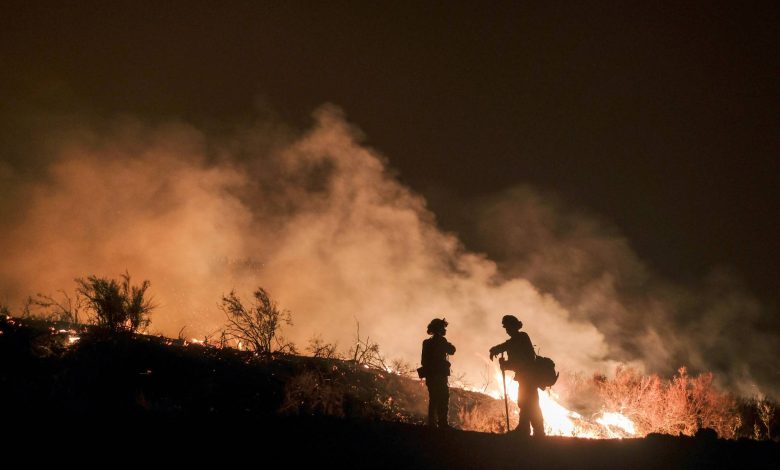
- Federal wildland firefighters will continue to earn overtime pay, even after they hit a legal cap on overtime hours. The continuing resolution that Congress passed last week included a provision to extend a waiver on the cap for federal overtime pay, at least until the end of 2027. Many wildland firefighters work extensive overtime during peak wildfire season. But due to a legal loophole, they often meet a ceiling on earning overtime pay. The National Federation of Federal Employees is calling for the passage of legislation to permanently scrap the overtime limits.
- The Government Accountability Office is urging the Cybersecurity and Infrastructure Security Agency to bolster the screening of people with access to chemical facilities. In a new report, GAO found that high-risk chemical facilities have faced challenges after losing access to CISA’s terrorist screening process. That happened after the authorization for CISA’s chemical security regulatory program lapsed in 2023. GAO said CISA could set up a voluntary screening process. But officials with the agency disagreed with the recommendation, arguing that a voluntary program would raise legal, privacy and resource challenges.
- Lawmakers are asking the Defense Department’s inspector general to investigate whether the Pentagon’s policies are adequately protecting service members from being tracked by adversaries through commercial location data. They’ve previously revealed that DoD has known that foreign adversaries have used commercially available location data to target or surveil U.S. personnel in active war zones but has failed to implement “common sense cyber protections” to protect its workers from the “serious counterintelligence and force protection threat.” The Army, Air Force, Navy and Marine Corps and Special Operations Command have since adopted recommended anti-tracking defense. But the lawmakers say that despite those efforts, location data from DoD personnel continues to be available for sale.
- The CIA is looking to boost its technical talent. CIA Deputy Director Michael Ellis said his agency needs a more technical workforce to take on the competition for artificial intelligence and other economic security challenges. Ellis spoke at the Billington Cybersecurity Summit on Tuesday. “When I think about where we want the CIA workforce to be five years from now, it’s an elite workforce,” Ellis said. “It’s a nimble workforce. It’s one that has more technical background than it has today, and it’s one that is motivated by mission.” Ellis also said the CIA hit its hiring targets this year and recruited the largest class of officers to its operations directorate in the past 20 years.
- The Air Force’s top officer said security forces will keep using “common greetings” at base gates, after people complained that one installation in New Mexico is getting too religious. A nonprofit that advocates for the separation of church and state said dozens of people have reported guards at Kirtland Air Force Base welcoming them by saying “Have a blessed day” or “God bless you.” Air Force Chief of Staff Gen. Kenneth Wilsbach dismissed the concern, saying airmen protect installations while behaving “courteously and professionally.” Defense Secretary Pete Hegseth has publicly criticized the nonprofit as well.
- The Pentagon is telling hundreds of thousands of troops they could lose their military ID cards if they don’t update their personnel files. To get a Common Access Card, troops need to present two current forms of ID, like a driver’s license and a passport. But the Pentagon said around 215,000 people don’t have those identity documents in their personnel files because it doesn’t consistently keep copies of them. That puts troops at risk of losing their CACs, which you need to get into military installations and secure networks. The Pentagon is urging service members to provide proof of identity and said there’s no sign of a security breach.
- The Navy has moved sailors’ personnel records, as well as more than 50 applications that use that data, from an aging data center into the cloud. The Millington data center has housed most of the service’s personnel data and previously operated without a backup. The transition to the cloud means that a “significant risk to the data has now been removed,” and in the event of a critical data center failure, recovery would be “near instantaneous.” It is not clear what will happen to the data center itself or whether the Navy has plans to eventually decommission the facility.
- Federal unions are again suing to stop the Agriculture Department’s major reorganization. A new lawsuit contends that USDA’s planned relocations of thousands of Washington, D.C.-based employees violates federal law, and is happening without congressional approval. A new motion seeking to stop the reorganization comes shortly after a federal judge ruled that the motion belonged as its own separate action, rather than part of a larger case involving the Trump administration’s workforce reductions. The unions filed their new challenge against USDA in the U.S. District Court for the Northern District of California.
Copyright
© 2026 Federal News Network. All rights reserved. This website is not intended for users located within the European Economic Area.