Strong won hits Samsung, SK hynix earnings as Korea chip exports soar
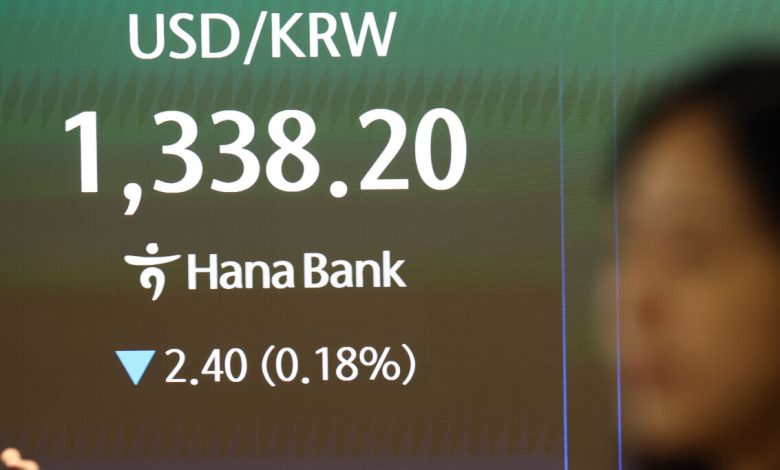
A surge in semiconductor exports has strengthened the won, cutting into earnings forecasts for Samsung Electronics and SK hynix.
Korea’s semiconductor boom has created a so-called currency paradox: The more dollars chipmakers bring home, the more the won strengthens against the dollar, eating away at earnings and stock price outlooks.
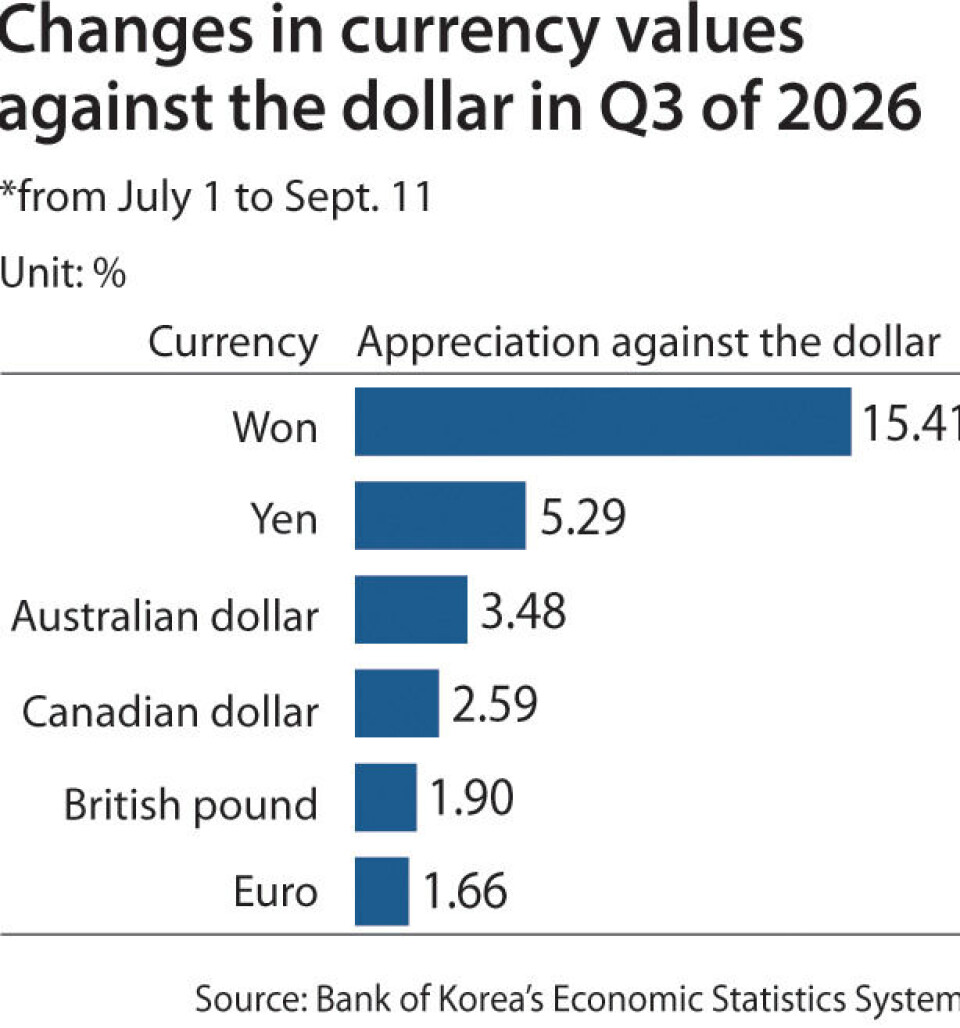
The won strengthened 15.41 percent against the dollar from July 1 through Friday, according to the Bank of Korea’s Economic Statistics System. The dollar-won exchange rate fell to 1,344.1 won per dollar from 1,551.2 won during the period. The won’s march was nearly three times the yen’s 5.29 percent gain against the dollar.
The dollar index — which tracks the U.S. currency against six major currencies — slipped just 0.02 percent over the same period. The won’s particularly sharp strengthening against the dollar is attributed largely to the semiconductor boom and the resulting influx of dollars into Korea.
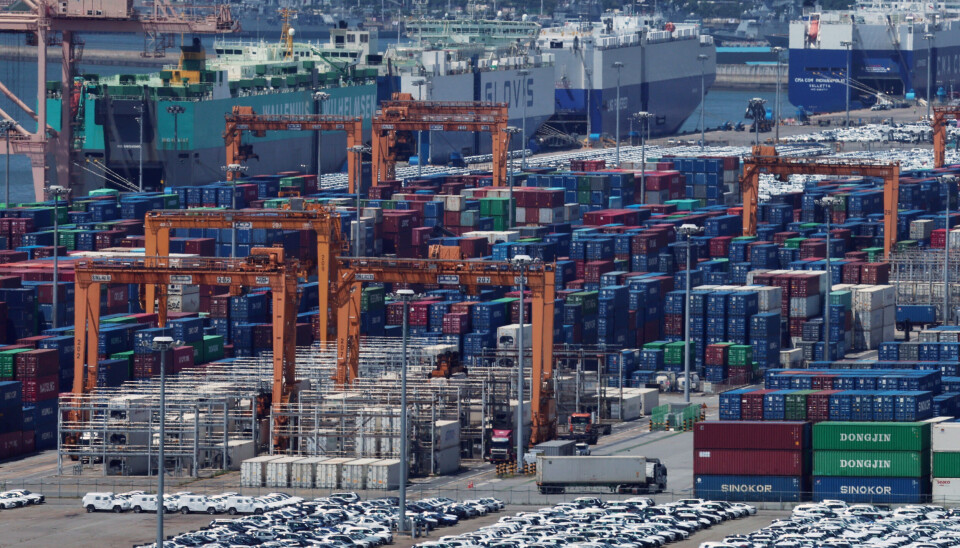
Korea exported $281 billion worth of semiconductors from January through August, up 169.6 percent from the same period last year. The Institute of International Finance has cited Korea’s large current account surplus and domestic investment by Korean semiconductor companies as factors that could keep the won strong over the medium to long term.
But the stronger won is now pressuring chipmakers’ earnings.
Most semiconductor exports are settled in dollars. When the won strengthens against the dollar, the same amount of dollar-denominated sales translates into fewer won. Consequently, the value of those earnings is reduced when converted into the Korean currency.
Analysts have already lowered their forecasts. The consensus estimate for the combined 2026 operating profit of Samsung Electronics and SK hynix fell by 21 trillion won ($15.65 billion) in two months, from 66.1 trillion won on July 10 to 64 trillion won on Friday. The combined third quarter operating profit forecast also fell — from 19.9 trillion won to 18.8 trillion won.
Nomura Securities estimates that a 10 percent strengthening of the won against the dollar could reduce Korean memory chipmakers’ operating profits by about 12 percent in the short term.
SK hynix similarly disclosed in its half-year report that a 10 percent decline in the dollar-won exchange rate could reduce the chip giant’s pretax profit by about 4.75 trillion won.
The stronger won is also weighing on share-price forecasts.
Citi lowered its target price for Samsung Electronics to 430,000 won from 450,000 won on Sept. 3 and cut its target for SK hynix to 3 million won from 3.1 million won. The revisions reflected currency headwinds, according to Citi.
The bigger concern is how quickly the won has strengthened against the dollar.
The dollar-won exchange rate has fallen from around 1,550 won per dollar to around 1,350 won in just over two months. For an exporter, the change means $1 million in export proceeds would translate into about 200 million won less when converted into the Korean currency.
The impact is even more direct for small and midsize exporters with limited ability to protect themselves against currency swings.
“The current pace significantly reduces predictability,” Park Hyung-joong, an economist at Woori Bank, said.
The won’s rapid strengthening, however, may be starting to put the brakes on itself.
“The exchange rate has fallen so far that exporters are now reluctant to sell their dollars,” Baek Seok-hyun, an economist at Shinhan Bank, said.
External factors could also reverse the currency’s direction. The won weakened 6.7 won against the dollar from the previous trading session to close daytime trading at 1,345.9 won against the dollar on Friday. The dollar index also climbed from around 98 to 99.09.
A possible U.S. Federal Reserve rate hike could also change the picture. Policy decisions by the Fed and the Bank of Japan this week could determine the pace of the won’s strength against the dollar.
BY KIM WON [lee.jiwon10@joongang.co.kr]