{{ ‘now’ | timezone: ‘America/New_York’ | date: ‘%b %d, %Y’ }}
|
|
|
|
Welcome back to Dry Powder. I’m Bill Cohan.
It’s a chock-full issue tonight, with an
update on Leon Black’s battle with the House Oversight Committee; the frantic calls to slow down A.I. development (courtesy of my partner Ian Krietzberg, author of The Hidden Layer); and then my timely conversation with the FT’s resident bond expert, Robin Wigglesworth, about the latest market warning signs. Robin’s
new book,
A Fabulous Debt, is out September 29. Of course, as Dry Powder readers know, my book on Apollo and Leon Black, Money to Burn, was released last week. (Sorry, but you must always forgive an author during the heat of promotional season. It is not enough to write a book; you have to sell a book.)
Also mentioned in this
issue: Mike Johnson, Susan Estrich, James Comer, Dario Amodei, Sam Altman, Elon Musk, David Sacks, Kevin Warsh, Scott Bessent, and more.
|
- The Black mark:
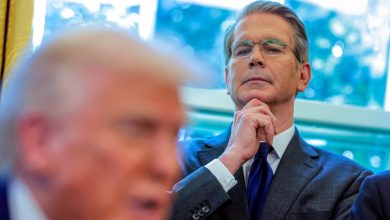
I’m sure you’ve had your fill of Leon Black… but he continues to find himself in the white-hot center of the news. As you will recall, Leon was supposed to testify before the House Oversight Committee on September 3 about Jeffrey Epstein’s involvement with any NDAs that Leon may have signed with various women over the years. Leon has repeatedly claimed that Epstein had nothing to do with any NDAs. But he nonetheless agreed to turn over the one signed with Guzel
Ganieva, with whom Black once had a consensual affair, and a second NDA with another woman if the committee would reach an agreement with him. When no agreement materialized, Leon didn’t show up to testify and decided to sue the committee instead—an unprecedented move, as best as I can tell, and one sure to test the extent of congressional powers against an individual citizen.
On Rosh Hashanah eve, committee chairman James Comer struck back against Leon by
saying that the committee would be convened on September 15 to have a formal markup of a resolution to hold Leon in contempt of Congress. “It doesn’t matter how wealthy, powerful, or connected you are, no one gets to pick and choose which lawful congressional subpoenas they will obey,” Comer said.
In a statement shared with me, Susan Estrich, one of Leon’s attorneys, wrote: “These transparently retaliatory actions by Committee Chairman James Comer in response to our
legitimate and constitutionally protected litigation are outrageous and continue his pattern of overreach. … We intend to vigorously pursue our lawsuit against the Committee and Chairman James Comer individually for abusing their power by unlawfully bullying and destroying legal protections of private citizens.”
If the contempt resolution passes out of committee, it goes to the full chamber, where Speaker Mike Johnson will take control of things. On the House floor,
Democrats will likely try to add provisions to the resolution. At that point, one source told me, “chaos reigns.” If approved by a simple majority vote, the contempt citation will be referred to the D.O.J., and then who knows what happens?
|
|
|
|

|
Ian Krietzberg
|
|
- What slowdown?: In a lengthy
essay published on Saturday, Anthropic C.E.O. Dario Amodei suggested that “We must slow the pace at which we improve the capabilities of A.I. models,” adding to the chorus of dire warnings across the industry calling to decelerate model development. Unlike other recent warnings, though, this one included a “three-step plan” to bring in independent evaluators,
increase coordination across frontier companies, and collaborate with other countries. “Anthropic is unilaterally committing to the first of these steps,” he said. “We’ll provide third-party evaluators with permanent, employee-level access to our systems, so that they can verify adherence to our safety measures, report on incidents, and assess models’ alignment during training.”
In a surprising twist, both Sam Altman and Elon
Musk quickly expressed their agreement. “Committing to having independent evaluators with employee-like access is a great idea, and we will do the same,” Altman wrote. “We’ll have more to share soon,” he added. Musk said simply, “Dario is right.” (In the
midst of the current panic, fueled by the news that an OpenAI model recently escaped containment to hack into Hugging Face, Altman has delayed his I.P.O., telling Fortune over the weekend that “now would be an ill-advised moment to go public.”)
While a seemingly significant step, my sources are skeptical that Amodei, Altman, and Musk will stop competing for A.I. supremacy.
One source described the whole situation as little more than a coordinated P.R. tactic in the face of repeated scandals, such as the Hugging Face hack, and an effort to get ahead of legitimate regulatory action on Capitol Hill. Others scoffed at the performative handwringing. “Go ahead and pace the frontier. You are the ones setting it,” David Sacks wrote
in response. “But stop pretending you need anyone else’s permission. … Stop pretending the motivation to slow down is purely altruistic. After the Hugging Face episode, it is simply good business for OpenAI and Anthropic to trade some raw power for reliability and predictability.”
|
|
|
|
Inflation is still humming along at 3.5 percent a year, reinforcing expectations that new Fed chairman Kevin
Warsh will disappoint the president by refusing to lower short-term interest rates. Herewith, my chat with the FT’s resident bond market expert, Robin Wigglesworth, about how this could shake out…
|
|
|
|

|
William D. Cohan
|
|
|
|
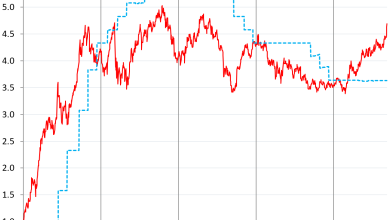
Try as he might, Donald Trump just can’t shake the bond market vigilantes. The news this past week that
inflation was still humming along at 3.5 percent a year, well above the Fed’s historical 2 percent target, has reinforced expectations in the financial markets that new chairman Kevin Warsh will disappoint the president by refusing to lower short-term interest rates. Instead, most keen observers expect that Warsh will actually raise rates—a prospect that helped push the yield on the 10-year Treasury to nearly 5 percent on Friday, up nearly 100 basis points since
February, or 25 percent in about six months. Aside from nearly touching 5 percent in October 2023, the yield on the 10-year hasn’t been at these levels since July 2007—on the doorstep of a huge financial crisis, you may remember.
I don’t see this dynamic changing anytime soon, unless there is some resolution to the Trump administration’s major fiscal and macroeconomic problems. Along with inflation still running relatively hot, there is the $40 trillion of national debt that continues
to swell unabated. (Yes, there is a bill pending in the Senate that would appoint a blue-ribbon commission to come up with ideas to try to reduce the debt. But the bill won’t pass, and we’ve been down this path many times before. The other day on Fox News the president said: “We’re gonna take care of the $40 trillion over a period of time through growth. We’re growing at a faster rate than we’ve ever grown before.” Of course this is documentarily false.) Then there is the annual budget
deficit, approaching 6 percent—wartime levels—that Congress also doesn’t want to do anything about. And of course there is no end in sight to Trump’s foolish war with Iran.
Alas, the White House has its head in the sand about the warnings coming from the bond market. Treasury Secretary Scott Bessent’s initial proposal to buy back some $4 billion worth of government bonds to try to lower longer-term interest rates was akin to trying to drain the ocean with a teaspoon.
Bessent’s plan was naturally met with skepticism by the bond market, which trades more than $1 trillion of Treasuries a day—but instead of abandoning what was a senseless idea, this past week Bessent doubled down, in Trumpian fashion, and upped the buyback proposal to… a mere $6 billion.
To try to get a better handle on all these flashing red warning lights, I rang up Robin Wigglesworth, the Financial Times’s resident bond expert and author of the new book
A Fabulous Debt: The Epic Story of How Bonds Built the Modern World, which comes out on September 29. (I blurbed the book and found it fascinating.) While Bessent would have been better off had he never suggested his meager buyback plan, Robin told me that “it shows that [the administration is] perhaps more acutely sensitive to the level of bond yields and the health of the Treasury market than people appreciate.” It was yet another sign, he added, that the bond market “scares people if
it’s not behaving in the way they want it to.”
|
The $40 Trillion
Question
|
Robin thinks that the best near-term solution is for the Fed to raise short-term interest rates aggressively, by as much as
100 basis points, to show that it is serious about fighting inflation. That will hurt growth, he acknowledged, but it will also, counterintuitively, bring long-term interest rates down by showing the bond vigilantes that Warsh and the Fed are serious about fighting for its dual mandates of low inflation and low unemployment.
He also expressed surprise that Warsh’s August speech in Jackson Hole—where the chairman said, among other things, that the Fed “must be confident that underlying inflation is moving to our objective, clearly and at sufficient speed”—was not more positively received by bond investors. Instead, prices continue to retreat as yields rise. “People don’t quite buy his new tone, as it were,” Robin said. “Maybe [the Fed] just needs to do more to regain a bit of credibility” that it is serious about fighting inflation. “You’d see the
long-end bond market, like the long yield, respond to that,” he added. “On a very basic level, if they crush the economy enough, then suddenly fixed income starts looking a lot more attractive than other assets. It’s finding the balance between credibly committing to bringing inflation down to the target sooner rather than later, but not so much that they crush the economy.”
He continued: “You don’t want bond yields falling because the economy is going into a recession. You want bond
yields falling because inflation is going to moderate, and that’s the tightrope that Warsh and the rest of the Fed have to walk now.” Whether Warsh can raise interest rates after, presumably, promising Trump that he would lower interest rates in order to get the job as Fed chairman is the “$40 trillion question.”
I wondered if Wigglesworth thought the U.S. was at risk of losing its privileged position as the holder of the world’s reserve currency. “I cannot overemphasize how much I
believe the death of the dollar as a narrative has been overdone,” he told me. He said there are two parts to the equation about the role of the dollar as the world’s reserve currency, and they are often conflated. The first is just how it trades against other currencies: “That will go up and down based on economic fundamentals, interest rate differentials, trade, things like that, a general sort of heebie-jeebiness, like people are wary of being over–dollar-exposed.” The second is its
importance as a global currency. “I think that is unassailable,” he insisted. “The Chinese couldn’t even erode it if they wanted to.” The dollar will remain the world’s reserve currency for the foreseeable future, he continued, because the U.S. is “unambiguously” the world’s “hyperpower” and “in finance it’s unparalleled, and I genuinely cannot see anything that will challenge it. It is baked in the cake.” (Sometimes it’s nice to hear an outsider’s perspective. Wigglesworth is from Oslo and has
lived all over the place.)
Robin told me that he decided to write a book about the history of the bond market in order to restore it to its “rightful place [at the] center of the financial universe.” The stock market, he said, gets all the attention, but it’s the bond market that puts fear into the souls of men. Robin called the bond market a “$200 trillion force” that has “reshaped every facet of the world we see today and will continue to do so.” He noted that it is now bigger than
the banking system, which used to be the sine qua non of credit and generates all sorts of “downstream consequences,” including what kind of financial regulation we face and the actions of central bankers.
|
Let’s Talk About the Credit
Markets for a Sec…
|
Robin and I also touched on the private credit market, which now accounts for something like $40 trillion of the $200
trillion, including as much as $2 trillion in leveraged lending and high-yield credit. He said he “loves” private credit, and he would like to see the market continue to grow. “It would be better for the financial system as a whole if more credit were happening in the capital markets, whether it’s private or public, than in the banking system. I think that’s a healthier place for it,” he argued. “I’d love to see private credit blossom and flourish and become not just a corner of the leverage
finance machine but actually something that genuinely does extend credit to middle-sized companies around the world,” he said. “I think that’d be a fantastic thing.”
He did acknowledge that, in recent years, private credit may have gotten over its skis a little bit. He recognized how fast the market has expanded and the increasing number of private-credit deals that are starting to come a cropper, such as for Medallia and the manufacturing company Loparex, which had a senior loan marked
at par a year ago underwritten by Blue Owl, the private credit purveyor, and which was hovering near zero before the announcement, on September 8, of a recapitalization plan and the injection of new capital into the company.
He also worries about the potential for self-dealing that exists with firms such as Apollo, KKR, Guggenheim, and Brookfield owning captive insurance companies, and the move by the industry to try to get more and more retail investors into private credit through
B.D.C.s, or business development corporations. Maybe there needs to be a bit of a pause to make sure the credit underwriting standards are up to snuff. “I got cold calls from people offering me private-credit lines,” Robin told me. “When people offer journalists private credit lines, you know things have gotten pretty crazy.”
|
|
|
|
Join Puck’s chief political columnist, John Heilemann, as he roams the corridors of power and influence in America on this twice-weekly
interview show, taking you beyond the headlines with the people who shape our culture: icons and up-and-comers, incumbents and insurgents, moguls and machers in the overlapping worlds of politics, entertainment, tech, business, sports, media, and beyond. The conversations are rich and revealing, unrehearsed and unexpected… and reliably impolitic. A Puck-Audacy joint, new episodes drop every Wednesday and Friday.
|
|
|
|
Ace media reporter Dylan Byers brings readers into the C-suite as he chronicles the biggest stories in the industry: the future of cable news
in the streaming era, the transformation of legacy publishers, the tech giants remaking the market, and all the egos involved. Also featuring a weekly dispatch from Puck’s crack streaming/media analyst, Julia Alexander.
|
|
|
|
Need help? Review our
FAQ page or contact us for assistance. For brand partnerships, email ads@puck.news.
You received this email because you signed up to receive emails from Puck, or as part of your Puck account associated with {{customer.email}}. To stop receiving this newsletter and/or manage all your email preferences, click here.
|
Puck is published by Heat Media LLC. 107 Greenwich St., New York, NY 10006
|
|
|
|
|