How George Kamel Uses TikTok and YouTube to Spread Dave Ramsey’s Personal Finance Message
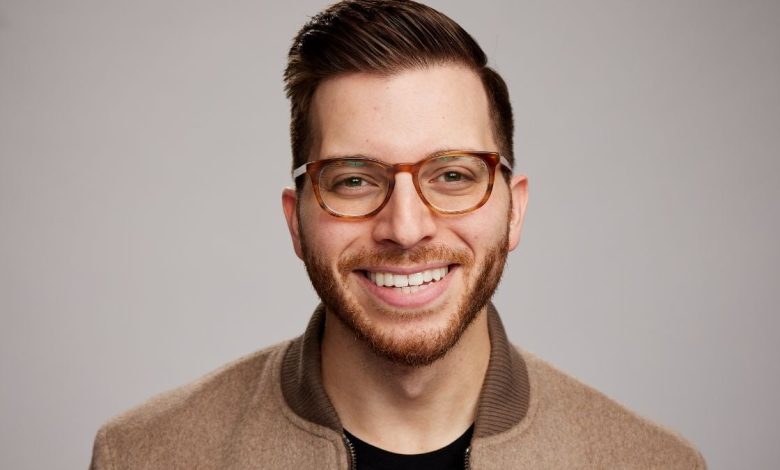
George Kamel never drew up a master plan for his career. Instead, he raised his hand again and again until the Ramsey Network gave him a microphone. Today, the Ramsey personality co-hosts The Ramsey Show alongside Dave Ramsey, Rachel Cruze, Jade Warshaw and Dr. John Delony. He also helps carry Dave Ramsey’s personal finance message far beyond radio.
“I graduated from the University of Mobile with a communications degree, and I always loved marketing and media,” said Kamel. “The through line there, with social media and email and all of that, is that I loved marketing the content as much as I loved making the content.”
That marketing mindset shaped everything that followed. Consequently, Kamel views distribution as part of the creative process.
A Video-First Strategy
The push began with a format problem. Although The Ramsey Show works perfectly on radio, audio-first programming doesn’t always thrive on a video-first platform. So Kamel pitched a different approach.
“We found that The Ramsey Show is such a perfect show for radio, for an audio format,” Kamel said. “What we started doing was dumping everything on YouTube. So when it came time for me to have my own show, I said, ‘Hey, what if we did a video-first show that still works on audio? You could listen to it and still get it, but it’s so compelling that you want to go watch it.’ That’s what we found worked.”
As a result, his channel embraces variety instead of a rigid format. That flexibility lets his team test what audiences want to see.
“We can go down to Broadway in Nashville and ask people about their car payments,” stated Kamel. “We went to the World Cup and asked people how much they spent on their tickets. What’s interesting is that over time, we see trends start to die down.”
Even so, Kamel refuses to chase every platform individually. Instead, he focuses on making strong content.
“You can exhaust yourself trying to be all things to all people,” The Ramsey Show co-host shared. “What I’ve found is a better strategy for me is to just make really compelling content. That way, when you hear it, it’s gold. When you see it, it’s amazing. The long form is brilliant. The short form is compelling and makes me want to go watch the long form.”
Why Man-on-the-Street Interviews Work
Meanwhile, Kamel’s man-on-the-street interviews reflect that same philosophy. Initially, he launched them for his YouTube channel. Specifically, the goal was to show viewers real data rather than tell them about it.
“We started doing these man-on-the-street interviews for my YouTube channel as a voyeuristic take that was data-driven,” said Kamel. “The best part about it is that you have the most random, compelling conversations with strangers that cannot be manufactured inside of a script in a YouTube video. I think in a world where AI can create a perfect script, what people really want is an authentic moment that can’t be manufactured.”
That authenticity extends to his reaction videos. Genuine emotion, after all, beats a scripted monologue.
“We react to 10 TikTok videos about people talking about their car payments,” stated Kamel. “That alone warrants an authentic reaction from me in real time versus me just doing a nine-minute monologue about why car payments are bad. We are in a very show-don’t-tell environment when it comes to the media landscape.
“People are tired of being monologued to. They can get information a thousand ways. What they can’t get is an interpretation of that information or an experiential version of that information with real people.”
Finding His Voice
Finding his voice, however, took more time. Even now, the process isn’t finished.
“Oh boy, I feel like I’m still finding it,” Kamel said. “It’s easier to say what it’s not. We have a team of writers that works on our shows, and one of the most difficult tasks is getting them to understand your voice. I’ve uploaded transcripts of things that I’ve said to AI and said, ‘Hey, you tell me what the thread is with this.’”
Ultimately, writing his book, Breaking Free from Broke, sharpened that voice. In turn, the 300-page project forced him to define how he sounds.
“For me, writing my book, Breaking Free from Broke, was the greatest exercise in figuring out what my voice is,” said Kamel. “It’s easy to write a 62-second script or be on The Ramsey Show and just talk off the cuff. It’s another thing to craft 300 pages that sound like only George could have written this. That’s what we accomplished, and that became my Bible for the writers. If it sounds like something that could have been in this book, then we’re on track. You have different voices: one for writing, one for podcast, one for scripted YouTube content, and one for taking calls on air on The Ramsey Show. You have to be a chameleon depending on the context you’re in.”
What’s Next
Kamel isn’t slowing down, either. In fact, he told Barrett Media he thrives in the unknown.
“I’m always thinking about the next thing, the next tool, the next book, and how we can push the envelope,” said Kamel. “I’ve always been the guinea pig at Ramsey to try the new thing that we’re not sure is going to work. We’re going to be on all platforms trying to reach new people every day, and that mission isn’t going to stop with Dave. You may not connect to Dave or Rachel, but you might connect to me, or vice versa.”
Barrett Media produces daily content on the music, news, and sports media industries. Sign up for our newsletters to stay updated and get the latest information right in your inbox.