The Bond Market Perfect Storm

The bond market hasn’t found a smoking gun. It has found something potentially more troublesome: several loaded chambers, with the possibility that they start firing at the same time.
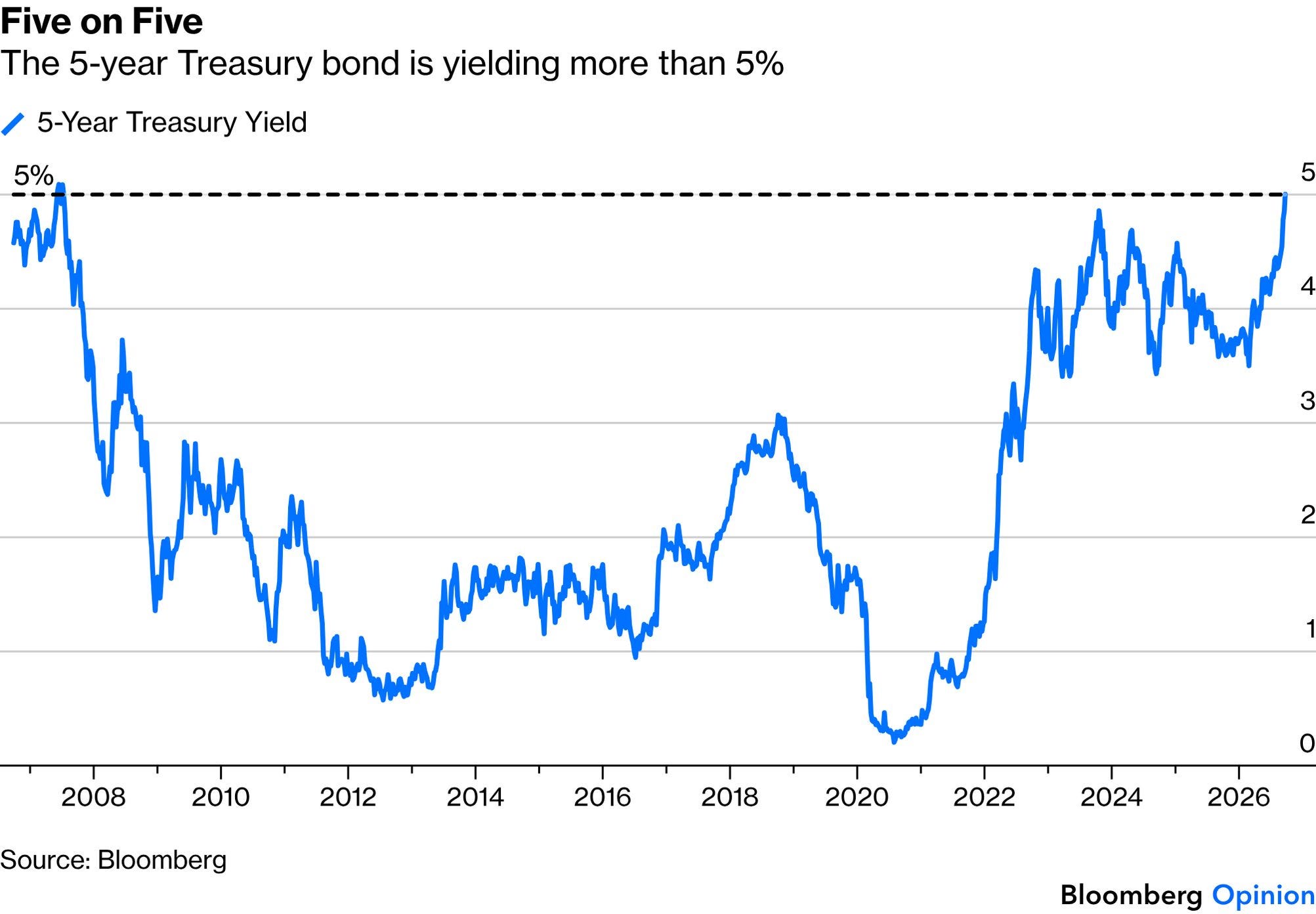
The immediate drama is obvious enough. The 10-year Treasury has pushed to 5.12%, while the five-year has crossed 5% for the first time since 2007. This is no longer another few basis points disappearing into the daily noise. The cost of capital has walked back into the room with its boots on the table, and every other asset now has to decide whether it can live with it.
Takeaways by Dark Side of the Boom™
-
The first leg remains a growth and real-rate shock. Hot US activity and a radically higher Fed path explain far more of the Treasury selloff than an inflation-expectations breakout or foreign buyers abandoning US debt.
-
Fiscal risk is the potential second engine. Deficits have barely featured in the current repricing. If that complacency breaks and term premium begins reflecting the government’s rising interest burden, the long end could face another source of pressure.
-
The US shock is already travelling. Europe, Japan and emerging markets are beginning to absorb higher global discount rates, while the combination of a stronger dollar and $100-plus oil creates the classic tightening vice for weaker borrowers.
The bond market hasn’t found a smoking gun. It has found something potentially more troublesome: several loaded chambers, with the possibility that they start firing at the same time.
The immediate drama is obvious enough. The 10-year Treasury has pushed to 5.12%, while the five-year has crossed 5% for the first time since 2007. This is no longer another few basis points disappearing into the daily noise. The cost of capital has walked back into the room with its boots on the table, and every other asset now has to decide whether it can live with it.
Source: Bloomberg
After a move like this, the temptation is to reach immediately for the scary explanations. Fiscal panic. Foreign liquidation. Inflation expectations coming loose. Treasury oversupply. AI crowding out government borrowing.
Some of those may yet get their turn.
But the first chapter of this selloff is much cleaner.
This was a growth shock.
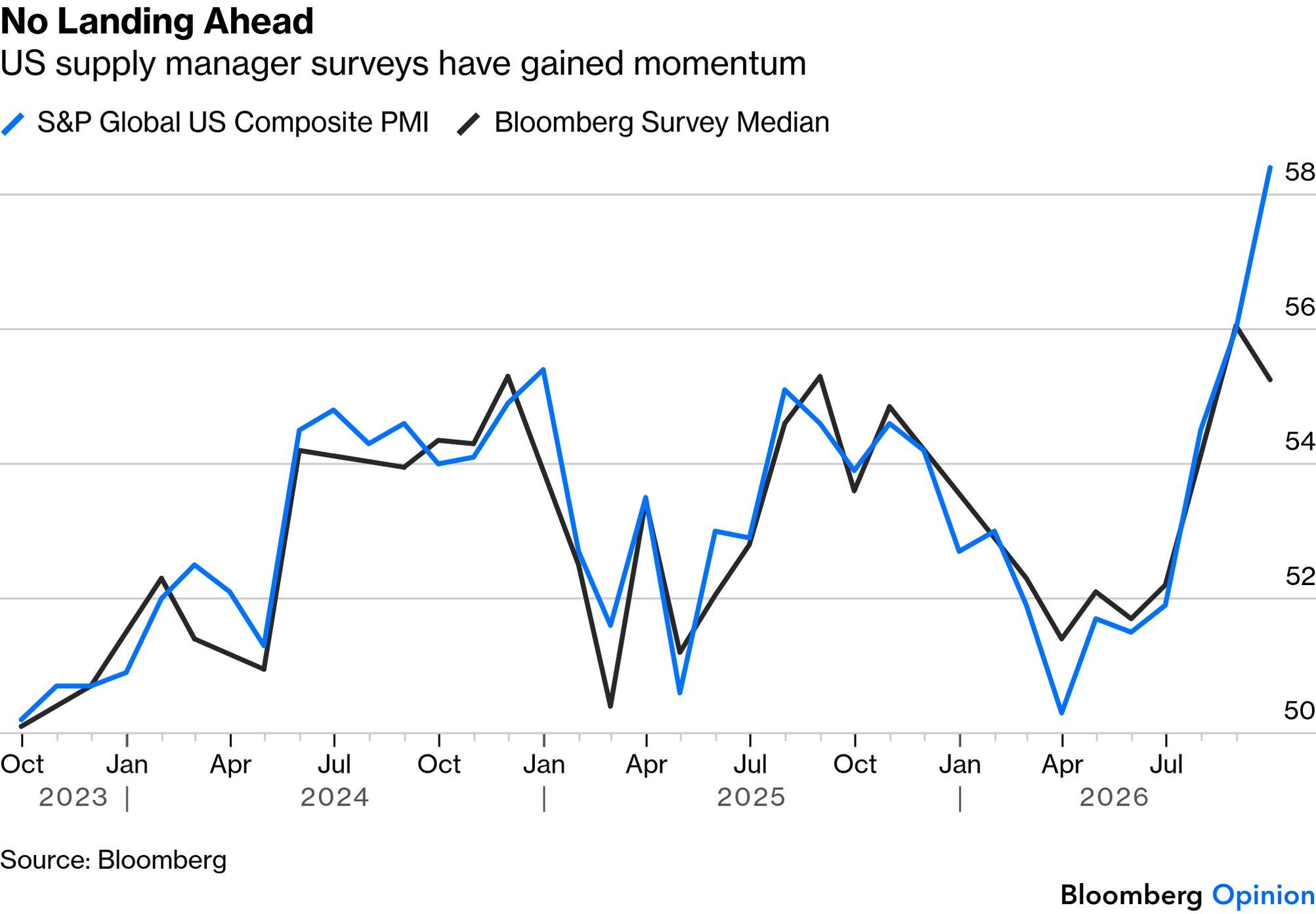
S&P Global’s US composite PMI came roaring in at its strongest since the post-pandemic boom and comfortably ahead of expectations. That is hardly an economy limping toward recession. It is an economy telling the Fed that demand remains sufficiently sturdy for monetary policy to keep leaning against inflation.