Why Canadian Potash Stocks Could Be Sitting On A Major Opportunity
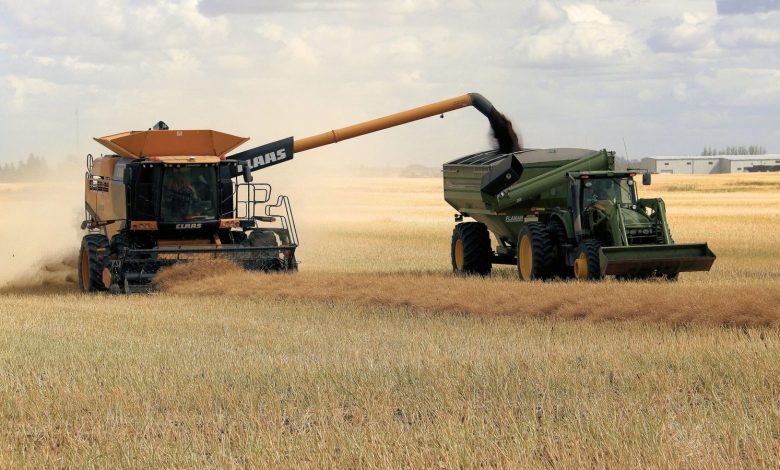
If you’re an investor looking for potash stocks, Canada might be a good place for you to look.
Thanks to enormous deposits in Saskatchewan, Canada produces almost one-third of the world’s potash. With so much potash supply coming from the place usually known for its maple syrup, and its critical role in the manufacture of fertilizer, Canada has become a key player in global food production.
In fact, it is the undisputed leader regarding potash production.
Why is this the case?
Well, it comes down to Canada hitting the geological jackpot.
Why does Canada have so much potash?
Potash is a key source of potassium, which is a core nutrient for crops.
Because of the important role it plays in fertilizer, which is required to grow the food the population requires to live, it has been considered a critical mineral in both Canada and the United States.
Potash forms when ancient seawater or saltwater evaporates, leaving behind deposits of potassium-rich salts.
Millions of years ago, much of Saskatchewan, a province of Western Canada, was covered by a shallow inland sea. As the water repeatedly evaporated, layers of potassium-rich salts crystallised and accumulated.
The result is the world’s largest and most significant potash deposits.
The critical mineral feeding the world
Canada’s potash advantage isn’t just about what is beneath the ground. It is also about where that supply comes from.
Canada produces around one-third of the world’s potash, but global supply is concentrated among only a handful of countries. Canada, Russia, Belarus, and China together account for almost three-quarters of global potash supply.
Because potash is essential to fertilizer production, reliable supply matters for global food production.
Other major producers face different challenges when supplying international markets that Canada doesn’t need to overcome. Russia and Belarus, for example, face sanctions, tariffs and other trade restrictions in some markets. China also restricts potash exports to prioritise domestic supply.
Canada, by contrast, has established trade links with some of the world’s biggest agricultural markets, well-developed infrastructure and close trading relationships with major buyers such as the United States.
This could give Canadian potash stocks an advantage beyond access to the world’s largest potash deposits; they may also benefit from growing demand internationally for reliable potash supply.
An emerging Canadian potash stock
In a recent article, we discussed three emerging potash stocks that also had healthy balance sheets.
One of those companies that was flagged was Buffalo Potash (TSXV:BUFF).
According to a narrative published on the Simply Wall St community, the community author argues that Buffalo is an under-the-radar potash stock whose opportunity is significantly larger than its current market valuation.
It focuses on how the company could leverage Canada’s established potash industry to develop a potentially significant new source of supply.
Its Disley project is located in Saskatchewan alongside major producing mines, while Buffalo’s patented Horizontal Line-Drive technology is intended to provide a lower-capital route to production than conventional potash mining.
Disclaimer
This article was written independently by the author, without issuer input or approval. Buffalo Potash Corp. has a marketing services agreement with Simply Wall St. Details on compensation and other important information can be found in the disclosure and disclaimer at the end of this narrative.
Valuation is complex, but we’re here to simplify it.
Discover if Buffalo Potash might be undervalued or overvalued with our detailed analysis, featuring fair value estimates, potential risks, dividends, insider trades, and its financial condition.
Have feedback on this article? Concerned about the content? Get in touch with us directly. Alternatively, email editorial-team@simplywallst.com
Simply Wall St analyst Andrew Legget and Simply Wall St have no position in any of the companies mentioned. This article is general in nature. We provide commentary based on historical data and analyst forecasts only using an unbiased methodology and our articles are not intended to be financial advice. It does not constitute a recommendation to buy or sell any stock and does not take account of your objectives, or your financial situation. We aim to bring you long-term focused analysis driven by fundamental data. Note that our analysis may not factor in the latest price-sensitive company announcements or qualitative material.