When It Starts Outperforming the U.S. Stock Market, These Three Events Will Trigger in Succession
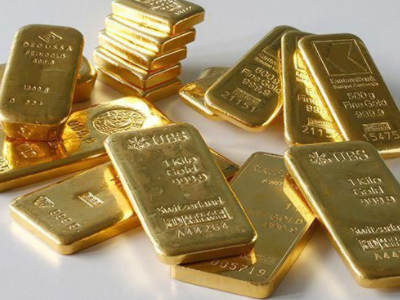
When the yield on gold consistently outperforms the S&P 500 Index, the market will no longer be a simple rotation of assets. Historical patterns indicate that this shift will trigger a triple chain reaction.
“Gold is money, and everything else is merely credit.” JPMorgan informed the U.S. Congress over a century ago. Today, the rise of this precious metal could threaten the gains that investors have long enjoyed from the U.S. stock market.
Following a strong performance in 2025, gold remains robust in 2026. Despite a slight pullback due to easing trade tensions related to Greenland, gold prices hit another record high this week, bringing their year-to-date increase to nearly 12%. In contrast, the S&P 500 index has gained only about 1%.
Charles Gave, founder of research firm Gavekal Research, noted in a Thursday report on assets to avoid in 2026 that the rise of gold poses a challenge for the S&P 500 index.
He believes that over the past three years, investors only needed to hold U.S. stocks and gold. However, this model portfolio becomes less effective when gold outperforms the S&P 500 — as seen since early last year — because it also drags down the U.S. dollar.
He explained that this is problematic because “foreign investors always hold excess dollars, which they must invest, at least temporarily. For some time, holding U.S. Treasuries or cash in dollars has been unattractive. But as long as gold underperforms U.S. equities, they can happily invest in sectors where the U.S. holds relative advantages, meaning buying into the market-cap-weighted S&P 500. This hasn’t affected the dollar.”
However, with gold now outperforming, three things tend to happen: the dollar falls, the equal-weight S&P 500 index outperforms the market-cap-weighted S&P 500, and U.S. stocks lag behind international equities.
This leads him to believe that America’s “exceptionalism” has come to an end. Since the S&P 500 no longer outperforms gold, an ideal 2026 portfolio will differ from those of recent years.
He concluded, “The time has come for investors to use their holdings in the market-cap-weighted S&P 500 as a source of cash to buy: 1) Asian stocks excluding Japan; 2) Chinese stocks; 3) European industrial sector stocks; and 4) the equal-weight S&P 500 index.”
Robert Kiyosaki issues sharp stock market warning
In a post shared on his Facebook page, author and frequently cited financial mentor Robert Kiyosaki urged his followers to take note of surging precious metals prices. Kiyosaki argued that the sharp rise in gold, silver, and even copper prices reflects significant investor distrust in the stock market today.
According to Kiyosaki’s analysis, this is not merely a shift of funds from one type of investment to another, but rather investors are withdrawing and losing confidence.
“Tangible assets are beginning to rise in tandem. Industrial metals, precious metals, growth and fear are walking hand in hand… This indicates that the system is under pressure. Markets are no longer pricing for profits, but for credibility… Smart money is no longer debating sector rotation; it is leaving the casino. Stocks are promises, bonds are promises, currencies are promises. Metals are not. Gold requires no trust, silver requires no policy, copper requires no confidence. They are used, they are needed, they are real,” he added.
At the end of this lengthy post, Kiyosaki reminded his followers: now is the time to build resilience by holding tangible and useful assets — and to prepare, not panic, because ‘preparation has always been the quiet advantage of the wealthy.’
The author of *Rich Dad Poor Dad* and related series of books has long advocated for investing in precious metals. While critics may consider his views repetitive, at least one of Kiyosaki’s recent predictions has come true.
In May 2025, Kiyosaki posted on the X platform predicting that the price of silver would rise from its “current” level of $35 to potentially $70 by 2026. The current spot price of silver has already surpassed $98 per ounce.