Tuberville’s ballot risk, Trump’s endorsement, power politics
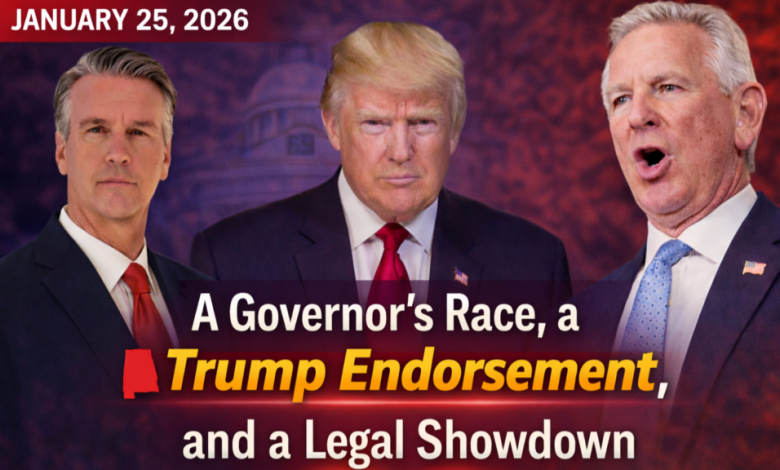
The unresolved legal vulnerability surrounding U.S. Sen. Tommy Tuberville’s residency, President Donald Trump’s latest intervention in Alabama politics, and widening divisions over economic and environmental policy dominated this week’s episode of The Voice of Alabama Politics.
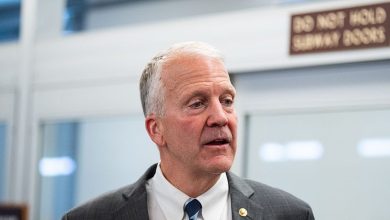
Hosts Bill Britt, Susan Britt and Josh Moon opened with what the panel described as a constitutional problem masquerading as a campaign dispute: whether Tuberville satisfies Alabama’s requirement that a governor be a resident citizen of the state for seven consecutive years before the election.
The question, the panel stressed, is not rhetorical. It is statutory.
Under Alabama law, a challenge to a winning gubernatorial candidate’s eligibility would not be decided by a court, but by the Legislature, acting as a political tribunal empowered to hear evidence, interpret the constitution, and vote on whether the candidate was qualified at the moment voters cast their ballots. Courts are largely barred from intervening.
Moon, an APR columnist and investigative reporter, noted that a narrower judicial path exists before the general election through a quo warranto action, which could be filed after Tuberville becomes a party nominee. That process, unfolding in Montgomery Circuit Court, would permit discovery and subpoenas — including tax records capable of resolving the residency question with precision.
Britt said seven years of Alabama tax filings would end the debate instantly.
“What’s missing is not proof,” he said. “It’s the willingness to demand it.”
The panel also reviewed the legal consequences if a governor-elect were later ruled ineligible. In that scenario, the election would be declared void, the votes legally meaningless, and the lieutenant governor would assume the office automatically.
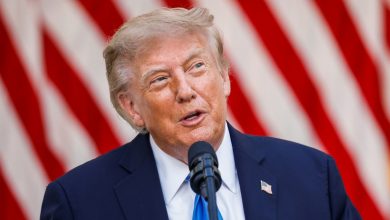
From there, the program turned to Trump’s endorsement of Rep. Barry Moore in the Republican primary for U.S. Senate, a move that injects national politics into a race already shaped by Tuberville’s likely exit.
Polling conducted before the endorsement showed Attorney General Steve Marshall with a substantial lead, Moore trailing far behind and nearly half of Republican voters undecided. The panel noted that Trump’s recent Alabama endorsements have produced more losses than victories, raising questions about how decisive his backing remains.
Moon described the endorsement as “political weather,” capable of changing the temperature of a race without necessarily changing its direction.
The second segment widened the lens, examining what the panel called the steady erosion of limits on presidential power. Britt pointed to court rulings granting immunity for “official acts,” Congress’s routine abdication of its legislative authority and the normalization of executive orders as substitutes for lawmaking.
The danger, he argued, is not sudden tyranny, but gradual acceptance.
“Power doesn’t announce itself as a threat,” Britt said. “It introduces itself as convenience.”
The episode then returned to state policy, focusing on Alabama House Democrats’ push to make affordability the centerpiece of their legislative agenda. Proposals include eliminating the grocery tax, exempting overtime pay from income tax, expanding healthcare access, and linking local farmers directly to grocery retailers to reduce food costs while strengthening rural economies.
The panel contrasted that approach with Republican efforts to restrict SNAP purchases, expand private school subsidies and impose new administrative layers on public assistance programs — moves that could require hundreds of additional state employees to enforce.
The final segment examined legislation advancing in Montgomery that would bar Alabama regulators from adopting environmental standards stronger than federal rules, effectively tying public health protections to whichever administration controls Washington.
Supporters call the bill regulatory reform. Critics call it a quiet surrender of state authority over Alabama’s own air and water.
Moon said the common thread running through the episode’s topics was not ideology, but governance.
“Whether it’s ballot access, executive power, food prices or pollution,” he said, “the question is the same: who is the system designed to serve?”
The Voice of Alabama Politics airs weekly on digital platforms. Full episodes are available online.
Credit: Source link