Promise of hemp in Thailand headed for collapse under politics and regulatory retreat
Thailand’s hemp sector appears to be quietly approaching its end, not because the crop failed, but because the industry was never taken seriously. The political retreat from cannabis now underway is exposing a structural truth that has been present since 2022: an industrial strategy for hemp in Thailand was never designed. It simply caught the wave of a broader cannabis political experiment it did not control.
The country’s 2022 decision to delist cannabis (high-THC marijuana and low-THC hemp) from the narcotics code was pitched as an economic strategy to boost rural development and farm income. Media coverage amplified the narrative, as projections circulated widely suggesting Thailand could build a billion-dollar sector within a few years. Early reporting on expectations for Thailand’s cannabis opportunity underscored high hopes for both domestic growth and export potential.
Lost in the shuffle
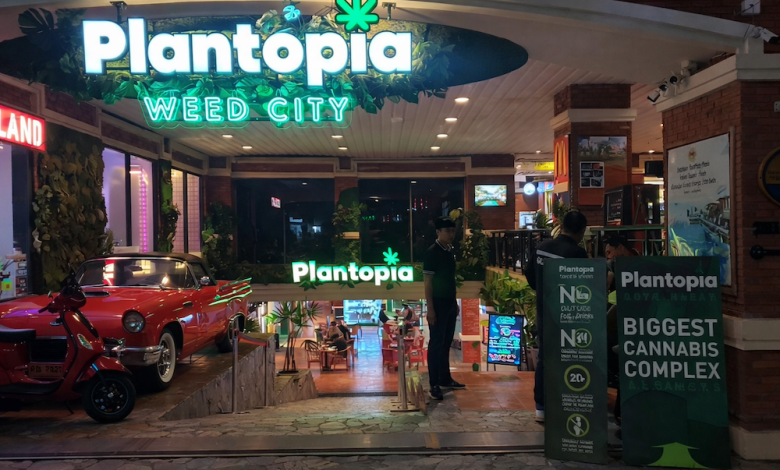
Hemp featured prominently in those early cannabis narratives as a credible, long-term opportunity in fiber, food, building materials, and wellness ingredients, with export markets eyed across Asia. But policy execution never matched that ambition. Meanwhile, retail marijuana sales quickly exploded as tens of thousands of specialty shops opened.
Amid the rush, law enforcement agencies were left to operate without coherent mandates, as ministries issued overlapping and occasionally contradictory rules. As economic activity clustered around retail marijuana and tourism, cultivation, processing and development of industrial hemp value chains were essentially ignored.
Incoherence
Even at the height of optimism, hemp never received a separate, coherent regulatory foundation because it was never treated as its own agricultural and industrial category. Thailand’s evolving THC limit discussions, including debates over whether hemp should be set at a full 1.0 percent THC, highlighted confusion about how the sector should be defined and regulated. It rose and fell with a political project that was unstable from the start – and now looks sure to topple.
The country last year shifted cannabis flower to medical-only use under updated regulations; this also chilled the hemp flower market, since cannabis buds — regardless of intent — attract scrutiny unless clearly compliant and tightly licensed. That regulatory tightening followed rulemaking and enforcement shifts that limited THC content in CBD and shaped the universe of legal products.
Changing politics
Now, in the run-up to national elections Feb. 8, the country’s major political parties have all moved to distance themselves from the 2022 cannabis liberalization and have publicly embraced tighter controls. Cannabis has become an electoral liability, and that political shift is now driving policy in ways that place hemp at risk of being swept up in a blunt regulatory correction.
The immediate future of Thailand’s cannabis market will involve contraction. For hemp, the deeper question is whether there is still a political will to defend it as a distinct economic category. So far, there is little evidence of that.
What was once framed as a serious agricultural opportunity now looks increasingly like a sector abandoned by design. The tragedy is not that hemp failed. The tragedy is that an industry was never allowed to be built.
Credit: Source link