AI in the bond market. How the UK ended coal. Pasolini on Gramsci and Trotsky on Europe.

Thank you for opening your Chartbook email.
Firmin Baes, Lady in Gold (Can’t find the date, but makes me think of 1920s club style).
How Big Tech is bringing AI risk to the bond market.
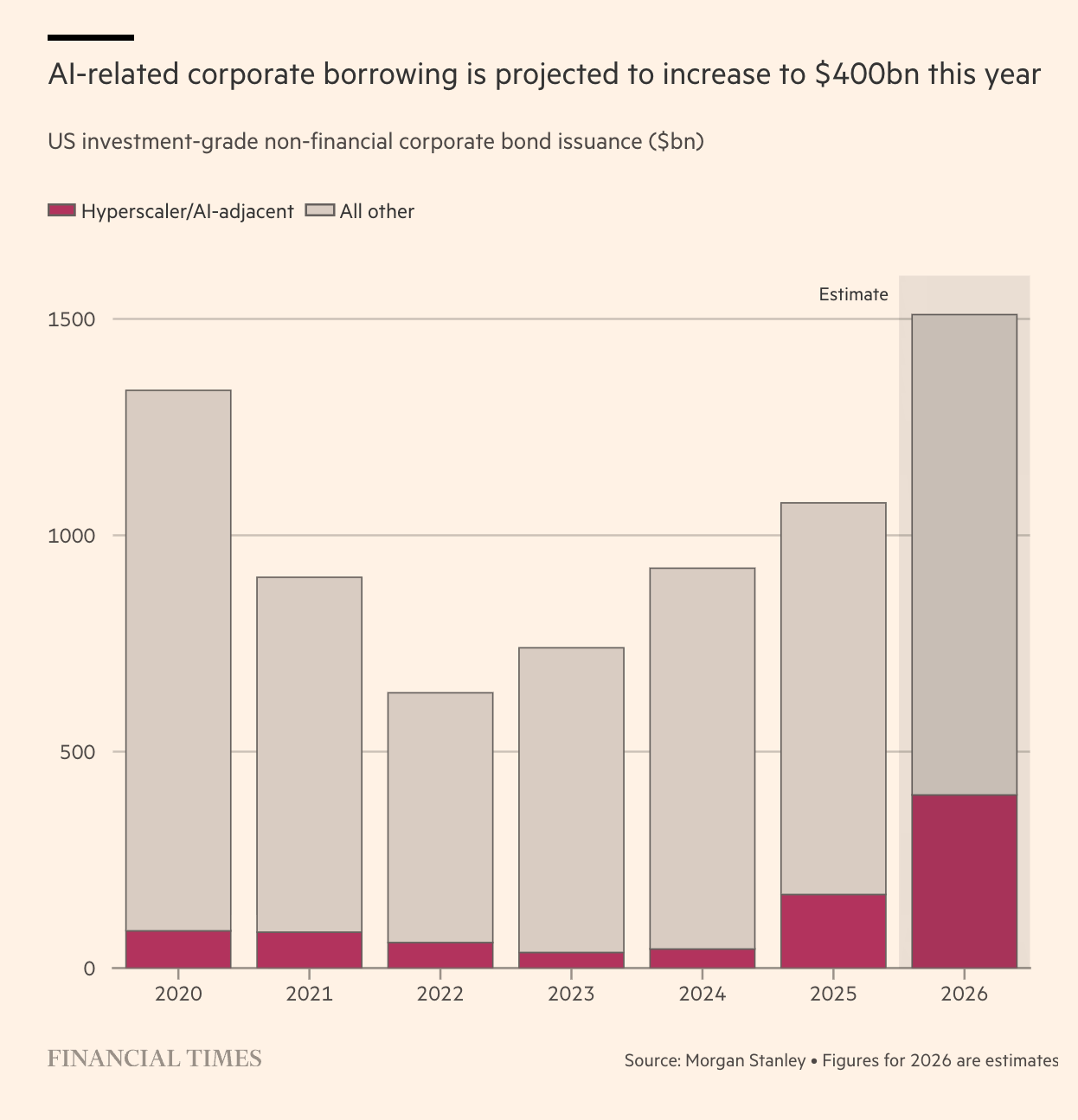
Big Tech companies are on track to dominate borrowing in the US bond market, in a shift that could expose some of the world’s safest securities to greater risk from artificial intelligence. By 2030, half of the 10 largest borrowers in the US investment-grade corporate bond market will be so-called hyperscalers — companies such as Alphabet, Amazon, Meta, Microsoft and Oracle that are building colossal data centres — according to Apollo Global Management. Until now, the major borrowers in the league table have mostly been big banks and telecom companies, meaning that credit investors are largely insulated from shocks in the tech-dominated stock market. Investors have grown increasingly concerned that the gap between runaway capital expenditure on AI and the returns it generates could amount to a bubble that ultimately hits both equities and the credit market.
Source: FT
“Nothing’s changed? Everything’s changed. It’s worse”. – Poverty in the UK
Our Grassroots Poverty Action Group have summarised the last 20 years of poverty data in just 6 words: “Nothing’s changed? Everything’s changed. It’s worse”. We can now look at the position up to the 2023/24 financial year, just before the 2024 UK General Election and can start to evaluate changes under the last Conservative-led Government. The evidence shows that progress on reducing poverty continued to flatline, continuing the trend which began just before the start of the financial crisis all the way back in 2005/06, with overall poverty being between 20% and 22% in every year since then. It happened to be 21% in 2023/24. This is in contrast with the continuous fall over the previous 8 years to 2004/05, which delivered a 5 percentage point fall in poverty. On the surface, it might appear that nothing has changed. But persistently high poverty rates lead to worsening real-world outcomes. Just as evidence shows that the longer a family spends in poverty the worse the effects on that family, the longer we tolerate unacceptably high levels of poverty the worse it is for our country. The corrosive impacts of poverty on families — fatigue, hunger, stress and reduced connectivity — hamper both their participation in society and their scope to make a bigger economic contribution. Failure to address poverty can hold back economic growth itself.
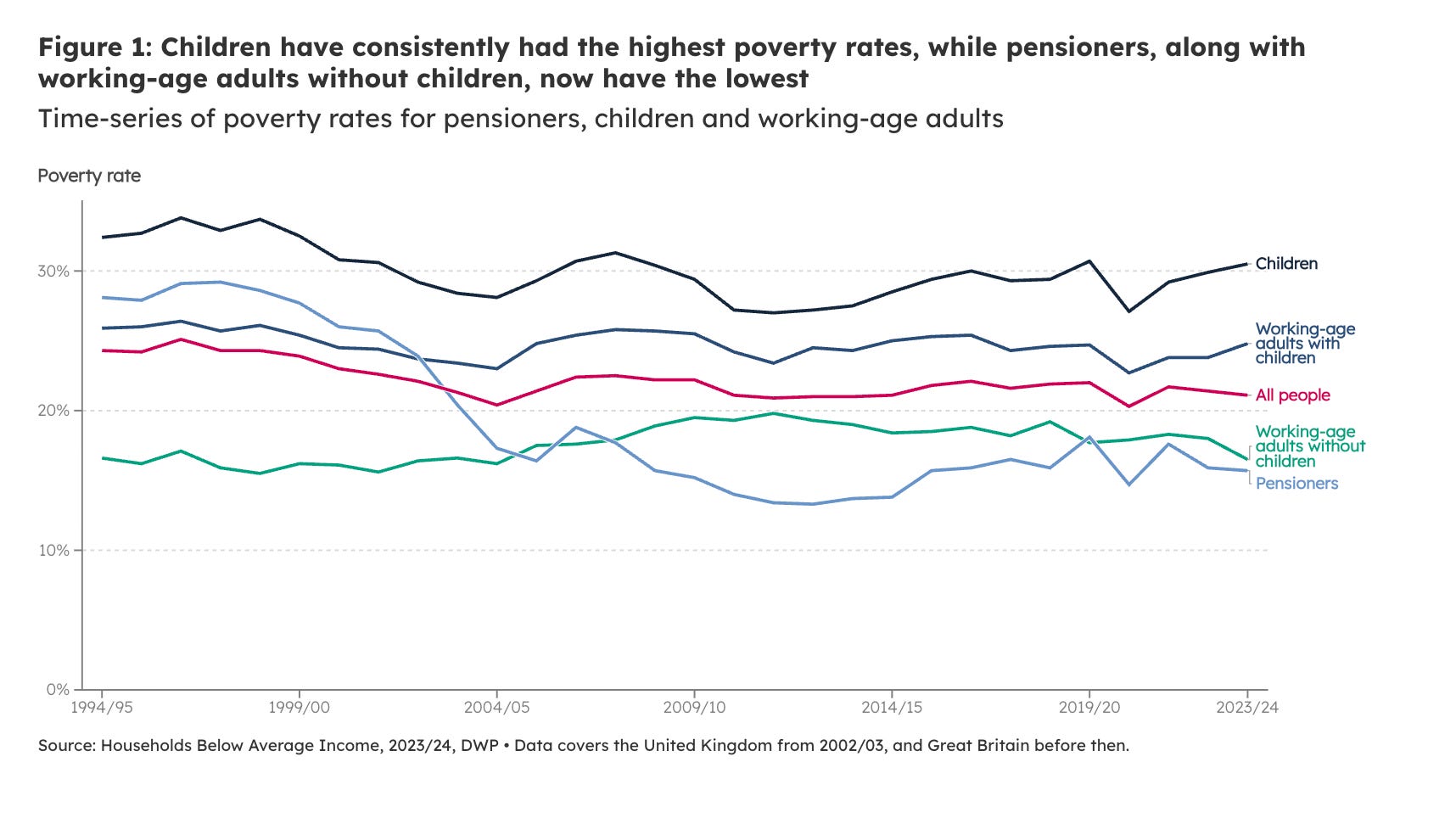
Every year, we see the same groups disproportionately trapped in poverty, with disabled people, people from some ethnic minority groups, people in larger families and renters all experiencing elevated rates. We see that being in work vastly reduces the likelihood of being in poverty, but it is far from a guarantee. Part-time workers, self-employed workers and workers in the accommodation and, food services (hospitality) sector, and in the administration and support activities sector, all see comparatively high rates of poverty, while in-work poverty overall has been rising across time. Looking at benefit rates, we see they remain inadequate, with the basic rate close to destitution levels. But scratch below the surface, there are signs of change: a definitive deepening of poverty. The deeper you go, the further away from the poverty line you look, the worse things are. In 2023/24, 6.8 million people — or almost half of those in poverty — were in very deep poverty, with an income far below the standard poverty line, meaning their incomes are at most two thirds of the poverty line. This is both the highest absolute number of people, and the highest proportion, on record, going back to 1994/95. We will have new information on the extent of the deepest and most damaging form of poverty — destitution, where people cannot afford to meet their most basic physical needs to stay warm, dry, clean and fed — towards the end of this year, but we already know levels more than doubled between 2017 and 2022 (Fitzpatrick et al., 2023). We see further evidence of deepening poverty in the large increases in the number of people who are struggling to access enough nutritious and varied food, with the total number of people who are food insecure increasing by 2.8 million between 2021/22 and 2023/24 (a 60% increase in just 2 years).
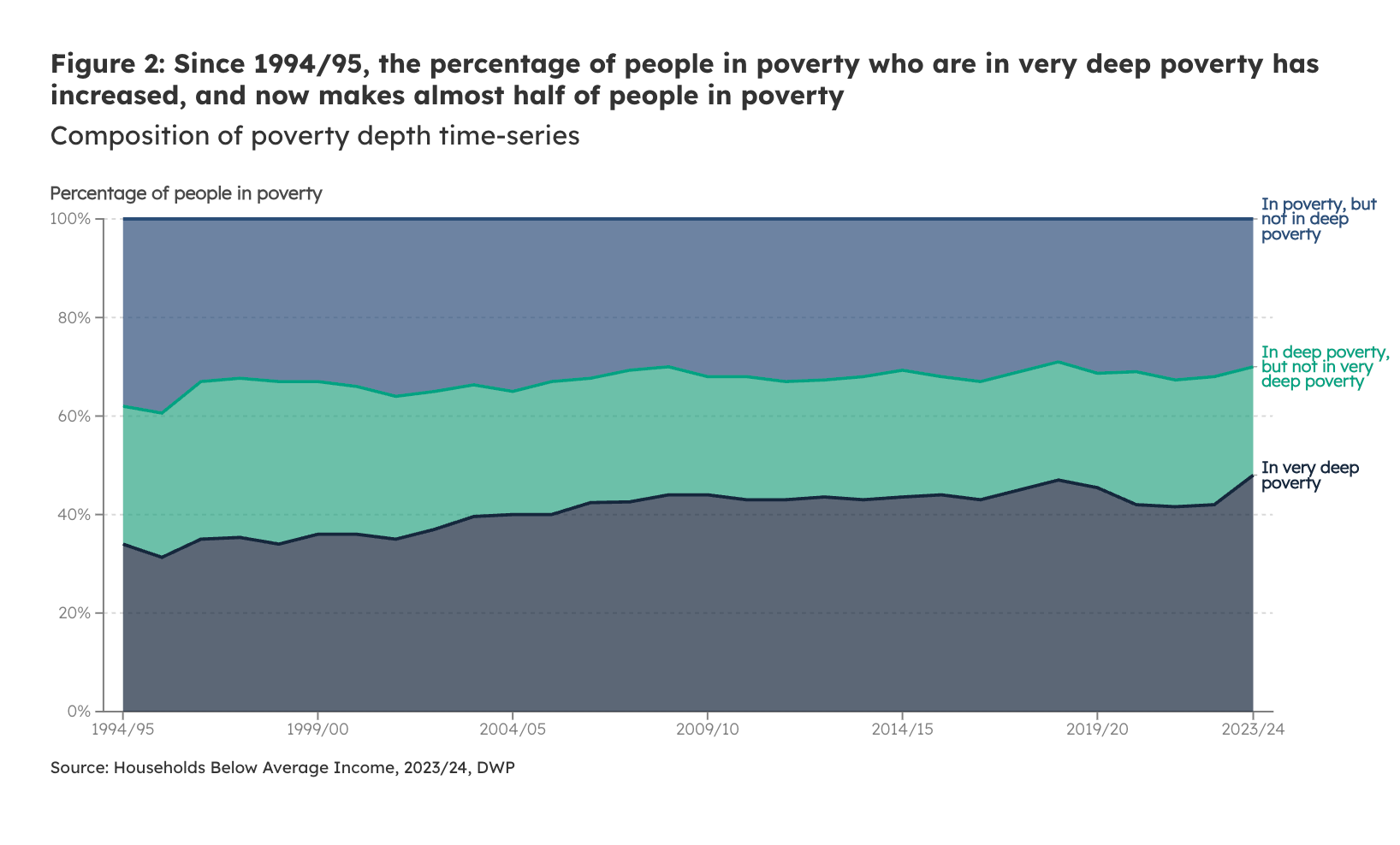
Source: Joseph Rowntree Foundation
HEY READERS,
THANK YOU for opening the Chartbook email. I hope it brightens your day.
I enjoy putting out the newsletter, but tbh, what keeps this flow going is the generosity of those readers who clicked the subscription button.
If you are persuaded to click, please consider the annual subscription of $50. It is both better value for you and a much better deal for me, as it involves only one credit card charge. Why feed the payments companies if we don’t have to.
Indian exports to China are surging
For contributing subscribers only.
How the UK ended coal.
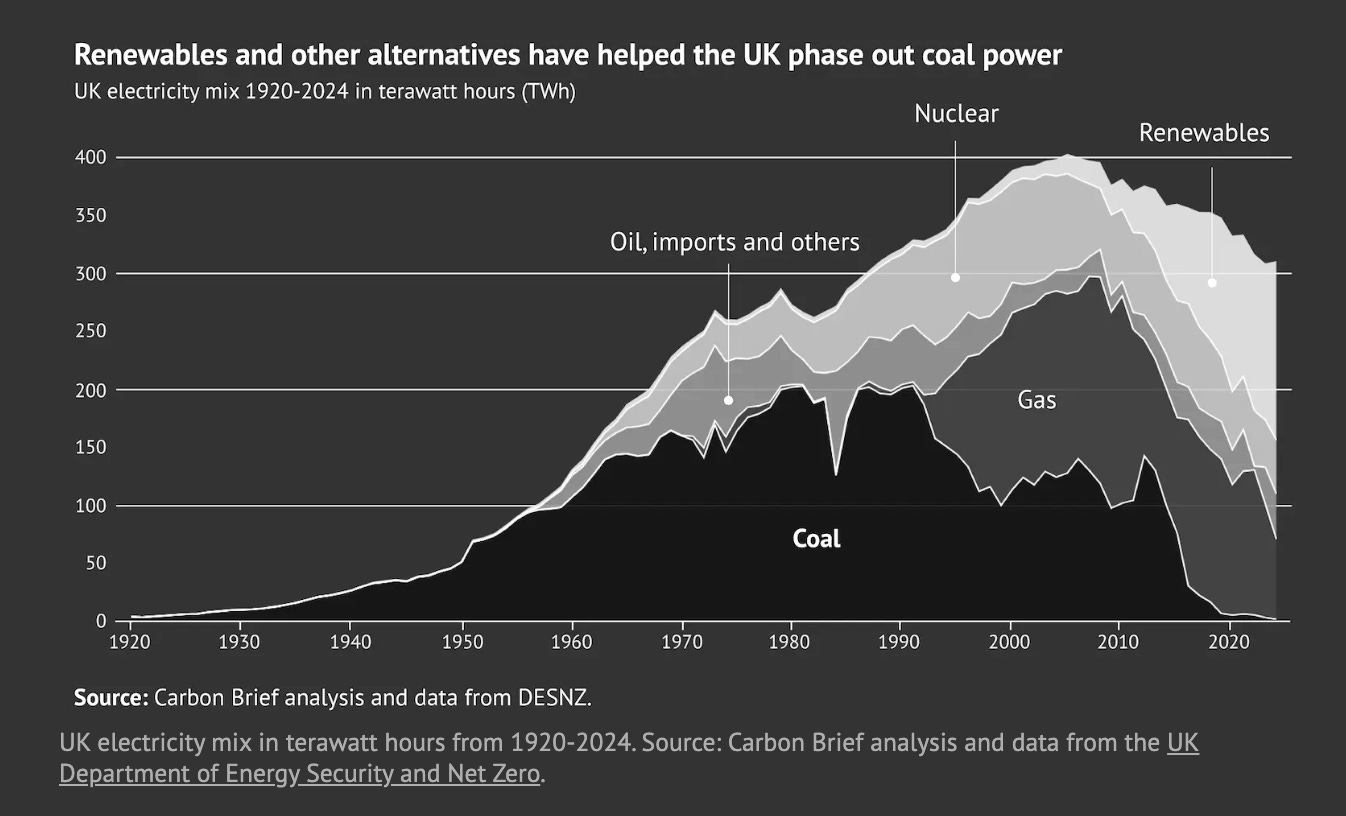
Source: Carbon Brief
Firmin Baes, A Woman at her Toilet 1914

It’s not just “windmills”, MAGA doesn’t like weather balloons either.
For contributing subscribers only.

Extraordinary witness testimony this:
The notion that intelligence is a personal endowment or personal attainment is the great conceit of the intellectual class, as that of the commercial class is that wealth is something which they personally have wrought and possess. John Dewey The Public and Its Problems (1927)
Firmin Baes, Girl with a cabbage 1903

If you’ve scrolled this far, you know you want to click: