What top analysts expect to see in the quarterly report
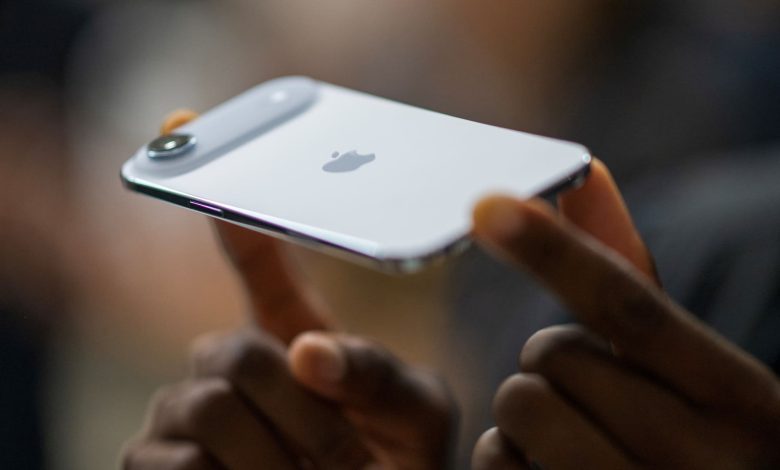
“Magnificent Seven” player Apple is slated to post its fiscal first-quarter results after the bell on Thursday. All eyes are on the iPhone maker’s artificial intelligence strategy and product cycle. Apple stock has long been sitting out of the AI-fueled bull market rally. Shares are down more than 5% this year after posting a lackluster return of about 9% in 2025. The company has not spent as aggressively on AI as its Big Tech peers . Investors have also been concerned about how rising memory prices have affected Apple. Earlier this month, Apple announced a multiyear partnership with Google to use Gemini models for an AI-powered Siri expected later this year. But the announcement follows a series of hiccups in the company’s AI strategy. For one, Apple last year delayed several AI-related Siri upgrades to 2026 despite unveiling it during its flashy Apple Intelligence launch in the summer of 2024 . Analysts are now looking to see further evidence of Apple’s AI strategy, strong iPhone 17 demand that was foreshadowed in the previous quarter’s results and whether memory costs are actually affecting its gross margins. Some top names on the Street remain cautious on Apple’s near-term performance, but are bullish that its upcoming fall iPhone launch and Siri upgrades could give shares a lift in the latter half of 2026. According to LSEG, analysts covering Apple expect the company to report earnings of $2.67 per share on revenue of about $138.48 billion for its latest quarter. For its fiscal fourth quarter , Apple earned $1.85 per share on revenue of $102.47 billion, beating estimates on top and bottom lines. Expecting catalysts later in the year Morgan Stanley analyst Erik Woodring and Bank of America analyst Wamsi Mohan remain bullish on Apple in the long run, even if this upcoming report proves a bit dull. Woodring said that Apple shares appear attractive at current levels but that he “cautious” in the near term due to a more difficult setup for the first half of 2026 with high memory prices and low expectations on Wall Street. “Consensus is 7% too low on March quarter [operating expenditures], and (2) we are 30bps below Street gross margins in the March quarter, which is likely to limit any positive EPS revisions, even if revenue surprises to the upside,” he said in a Monday note to clients. Woodring remains overweight on Apple stock, however, as he expects several catalysts to appear in the second half of the year. “Beyond the short-term, we continue to believe Apple will outperform in 2026 as it re-launches an upgraded Siri/Apple Intelligence (February ’26 and WWDC 2026 in June), introduces its most innovative iPhone in 10+ years (Foldable), becomes first to market with a 2nm-powered smartphone (iPhone 18 family), and benefits from share gains and ASP tailwinds,” Woodring wrote. Bank of America’s Mohan also kept his buy rating in a note to clients earlier this month. Along with catalysts tied to the Siri-Gemini partnership and the next iPhone cycle launch, Mohan believes Apple will benefit from continuous strength in iPhone demand and double-digit year-over-year revenue growth in its Services business despite weaker App Store sales in China. The company’s Services businesses could get a lift from a few factors, Mohan noted, including if Apple Intelligence runs on Apple’s own cloud and silicon, pricing power on first-party services (such as iCloud and Apple TV) and greater attach rates on AppleCare+, which is an extended warranty and coverage plan for devices. Powering through the memory shortage Memory costs — primarily referring to DRAM, or dynamic random access memory used for temporary, short-term semiconductor memory and NAND used for long-term storage — have soared over the past year due to rising compute needs from AI data centers. Apple has been caught in the fray on worries that a tight memory cycle will eat into hardware gross margins, given that products such as iPhones, iPads, Apple Watches and Macs heavily use DRAM and NAND flash memory. But even as several analysts flagged higher memory prices as a potential near-term cost headwind for Apple, they don’t view the phenomenon as a lasting overhang on the stock. They expect the impact to be largely offset by faster growth in Services and the possibility of price increases for a foldable iPhone 18 model expected this fall. Bank of America’s Mohan and Goldman Sachs analyst Michael Ng are among those who believe Apple has enough levers to offset the hike in memory costs. “The products price/mix growth and continued mix shift toward Services should help support gross margins, helping to offset potential headwinds from memory cost inflation,” Ng, who has a buy rating on Apple, said in a Jan. 20 note to clients. Mohan’s conviction in Apple also lies in the company’s strong supply chain relationships with memory providers, as well as its ability to continue raising prices on iPhones if Samsung lifts prices on its Galaxy model phones, he said. AAPL 1Y mountain Apple stock performance over the past year. Concerns over memory shouldn’t overshadow the positive story around Apple shares, according to Craig Moffett, partner at MoffettNathanson partner and senior analyst. In a note earlier this week, he lifted his price target to $241 from $234. He said the increase reflects what “really matters in AI: the Gemini deal and the potential for Apple to capitalize on a unique position as an AI aggregator.” “Apple will surely be affected by the memory industry’s inflation, but likely to a lesser extent than feared, in our view. For one, the company pre-purchases components 12-18 months in advance, and benefits from procurement scale, reportedly pivoting to source a higher percentage of DRAM units from Samsung for the iPhone 17 to secure more predictable deliveries,” Moffett wrote in a Monday note to clients. “More consequential than the DRAM/NAND issue, in our view, is Apple’s recent partnership with Alphabet to use Google’s Gemini models as the basis for Apple Intelligence,” he said.