Why haven’t mortgage rates fallen since the last Federal Reserve decision?
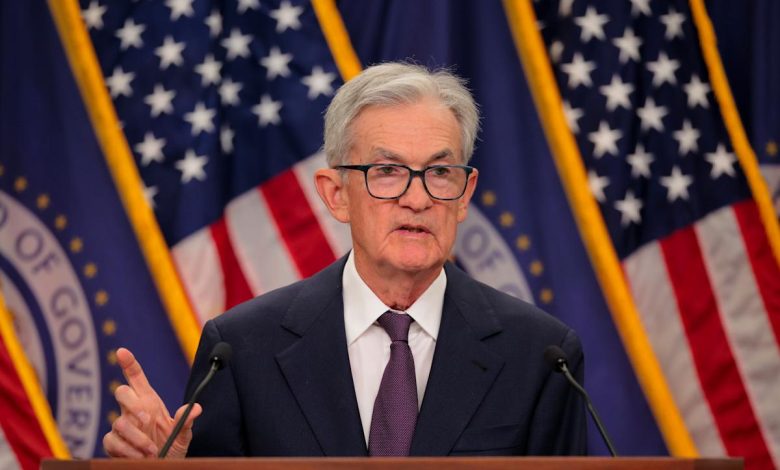
The Federal Reserve has decided to hold off on further cuts to short-term interest rates for an undetermined period. Meanwhile, a new Fed chairman is waiting in the wings. What does all this mean for mortgage rates?
First of all, the Federal Reserve and mortgage rates are working on two ends of a timeline. The Fed steers short-term interest rates, and mortgage rates are influenced by long-term bonds.
When the Fed cuts its federal funds rate, as it did by a quarter-point for the third time in 2025 on Dec. 10, here’s what happened:
-
The fed funds rate fell. That’s the interest rate charged to banks for overnight loans from other banks.
-
The prime rate fell. That is the interest rate financial institutions charge to their most-favored customers.
-
Savings account rates remained low, with meager interest paid on certificates of deposit (CDs), and on checking, brokerage, and cash management accounts.
-
Loan rates slipped slightly. That included personal loans, home equity loans, and home equity lines of credit (HELOCs).
-
Eventually, other short-term rates may move lower, such as credit card interest rates.
Find out how the Fed rate cut affects your bank accounts, loans, credit cards, and investments.
With the Federal Reserve on the sidelines, considering its next move, short-term interest rates remain unchanged. However, the bond market still reacts to economic news, political events, and global unrest.
With the Fed pausing any possible momentum from the bottom of the interest rate scale, mortgage rates will lean on what’s happening at the top.
Here’s what that means.
Mortgage rates are longer-term debt, as anyone with a 30-year home loan knows. That’s a very long debt runway. The fixed rate you pay is evergreen, with a margin built in to last through many interest rate cycles.
That means it’s priced to a longer-term benchmark, such as the 10-year Treasury.
The bond market generally reacts to longer-term events, such as inflation, employment, and macroeconomic trends.
Sometimes, mortgage rates fall after a Fed rate cut. Sometimes, they don’t. Many times, they’ll decline in expectation of falling short-term interest rates in the weeks leading up to a Fed meeting. Then, occasionally, they bounce back up.
In fact, weekly 30-year fixed mortgage rates generally began dropping on May 29, 2025, from 6.89% all the way down to 6.26% by Sept. 18. The Fed cut rates on Sept. 17, and rates bounced up to 6.30% on Sept. 25.
Finally, rates began slipping lower in October.
On Dec. 10, the Federal Reserve reduced short-term interest rates by another quarter point. According to Freddie Mac, the 30-day fixed mortgage rate was 6.22% on the day after the announcement. Four weeks later, it was 6.16%.
It took more than the Fed to move rates much lower.
Mortgage rates fell sharply on Jan. 15, when President Trump issued an executive order banning institutional buyers from buying single-family homes and pressed Fannie Mae and Freddie Mac to accelerate purchases of mortgage-backed bonds.
On January 30, President Trump nominated Kevin Warsh to replace Jerome Powell as chair of the Federal Reserve (though the nomination must be confirmed by the Senate). The president has long advocated for lower interest rates and no doubt expects his pick to lead the Fed in honoring those wishes.
It may not be that simple.
“Kevin Warsh’s selection as the next Federal Reserve Chair will naturally be read as a signal that rate cuts are on the horizon and fast approaching. But that conclusion is too simple and maybe too short-termist,” Jake Krimmel, senior economist for Realtor.com, said in a statement. “As one of 12 voting members, a new chair does not guarantee a Fed policy pivot, regardless of who is confirmed.”
Krimmel noted that “housing affordability should not be reduced to mortgage rates alone.” He contends that stable inflation and a strong labor market will support real wage growth — a key to affordability.
If long-term inflation remains tame, “mortgage rates have room to fall sustainably, and affordability improves in ways that rate cuts alone cannot deliver,” he added.
What will it take for mortgage rates to continue a downward trend?
“The housing market doesn’t turn on a single rate decision — it turns when people can plan with confidence,” Bill Banfield, chief business officer at Rocket Companies, said in a statement. “Even without a rate cut, mortgage rates are nearly a full percentage point lower than they were a year ago, when rates hovered around 6.9%. That kind of steady, year-over-year improvement is what builds buyer confidence and pulls people back into the market.”
It’s not the Fed moving mortgage rates; it’s the economy.
Don’t pin your home-buying hopes on short-term events, day-to-day trends, and all the other things out of your control. Once you have your down payment in hand, a home-buying budget ready to go, and an idea of how much house you can afford, make a real-life plan to buy a house.
Know the mortgage interest rate range you can handle and have your list of potential mortgage lenders lined up.
Then don’t look back.
Laura Grace Tarpley edited this article.