Electrification drives new opportunities in global stocks
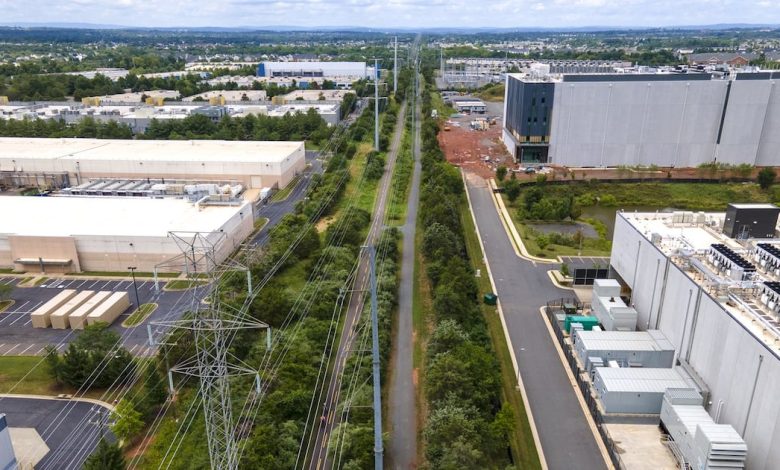
Long-term structural shifts tied to electrification, artificial intelligence and demographic change are reshaping opportunities in global equities, according to one portfolio manager. He says power demand, data-centre investment and health-care needs are driving multi-year capital spending cycles across the U.S. and Europe.
BNN Bloomberg spoke with Jens Peers, CIO and portfolio manager at Mirova U.S., about why select industrial, technology infrastructure and medical technology stocks are aligned with these long-term trends.
Key Takeaways
- Reindustrialization, AI expansion and electrification are driving a sustained increase in power demand and grid investment across North America and Europe.
- Utilities and regulators are increasingly open to long-term capital spending to expand and harden aging electricity infrastructure.
- AI-related data-centre growth is creating durable demand for power and cooling equipment, even as capital spending shifts among hyperscalers.
- Early involvement in infrastructure design can provide visibility and resilience across changing AI investment cycles.
- Aging populations and medical innovation are supporting long-term growth in cardiovascular and neurovascular treatment demand.
Read the full transcript below:
LINDSAY: Welcome back. It’s time for Hot Picks in global stocks. Our next guest has a manufacturer and seller of electrical products as his top pick. He says Hubbell is a play on the enormous hunger for power driven by AI data centres and the expansion of the power grid. Joining us now is Jens Peers, CIO and portfolio manager at Mirova U.S. It’s good to have you with us. Thanks so much.
JENS: Thank you, Lindsay.
LINDSAY: Let’s start with Hubbell. Tell us a little more about it and why you like it.
JENS: Sure. Hubbell is an American company with about a $26-billion market cap. It’s almost a pure play on electrical components for utilities. As you said, there’s an enormous hunger for power these days. Initially, over the last couple of years, that was driven more by electrification of the grid, with electric vehicles, renewables and so on. More recently, it’s also been driven by data-centre expansion, deglobalization and efforts to bring industries back home.
Many countries, including in Europe — Germany, for instance — and certainly the U.S. as well, are bringing industries back domestically. Every new factory needs power and water, and that means the grid needs to be expanded and upgraded. We’re also dealing with more severe winters, more blackouts and more storms, which means the quality of the grid needs to improve. Regulators and utilities are increasingly open to that.
Hubbell is a pure play on the U.S. market, which is very well protected. European competitors have had a hard time breaking into U.S. utilities, which tend to work with suppliers they’ve partnered with historically. Hubbell is very well positioned. Both AI and the reindustrialization of the U.S. are important long-term drivers.
LINDSAY: You touched on this already, but Hubbell is also driven by the reindustrialization of the U.S. and Europe. Can you expand on what you mean by that?
JENS: Sure. Deglobalization plays a role here. For example, President Trump has emphasized bringing industries back to the U.S., or incentivizing foreign companies to produce for the U.S. market domestically. We’re seeing expansion across multiple industries, from traditional manufacturing to pharmaceuticals.
New factories need to be built, and AI-driven data centres as well. All of that requires power and water, which leads to more power generation. Historically, over the last 20 years, there’s been almost no growth in new power generation. We expect that to accelerate to roughly two to five per cent annually for at least the next one or two decades. That requires a major expansion of the grid.
So demand for power is being driven not just by AI and electrification, but also by industries coming back to the U.S. and expanding capacity.
LINDSAY: Let’s move on to your next pick, Vertiv. What do you like about this stock?
JENS: You’re saying it right. Vertiv is a relatively safe play on AI and data centres. The stock has already had a strong run, but it’s close to a pure play, with about 80 per cent exposure to data centres. The company provides products for both power and cooling.
The cooling side is particularly interesting because Vertiv offers both air cooling and liquid cooling, which we believe is the future for data centres. What’s also impressive is the breadth of its customer base. Vertiv works with all the major hyperscalers. Even if capital spending accelerates at some and decelerates at others, Vertiv remains involved.
The company is also involved very early in the investment cycle, working with chip designers and partners such as Nvidia and Broadcom to ensure power and cooling solutions match evolving requirements. Vertiv has a long investment runway, a visible order book, and growth that is expected to accelerate from here.
LINDSAY: Your last pick is Boston Scientific. Why did you choose it?
JENS: This one is less of an industrial play. Global trends such as aging populations and increased longevity mean cardiovascular issues are becoming more prevalent. Roughly one in 10 people globally suffers from heart rhythm issues, and Boston Scientific is a market leader in devices that address those conditions.
The company has also made a recent acquisition in the neurovascular space, which helps with the treatment and prevention of strokes. As populations age and people live longer, demand for these treatments will continue to grow.
Specifically, in March, we expect results from an important clinical trial related to clot prevention in the heart. We expect very positive results, which could make its treatment the preferred option going forward. That would likely accelerate growth and expand the company’s overall addressable market.
LINDSAY: Interesting stuff. That’s all the time we have today. Jens, thanks so much for joining us.
JENS: Thank you very much.
LINDSAY: Jens Peers, CIO and portfolio manager at Mirova U.S.
| DISCLOSURE | PERSONAL | FAMILY | PORTFOLIO/FUND |
|---|---|---|---|
| HUBB NYSE | N | N | Y |
| VRT NYSE | N | N | Y |
| BSX NYSE | N | N | Y |
—
This BNN Bloomberg summary and transcript of the Jan. 30, 2026 interview with Jens Peers are published with the assistance of AI. Original research, interview questions and added context was created by BNN Bloomberg journalists. An editor also reviewed this material before it was published to ensure its accuracy and adherence with BNN Bloomberg editorial policies and standards.