Nepotism claims, gold mine expropriation: Why investors are dumping Indonesia stocks
February 2, 2026
JAKARTA – The Indonesian government scrambled to reassure investors this week after a US$80 billion (S$101 billion) stock market rout , triggered by mounting concerns over governance and market transparency.
This comes on the back of the rupiah’s slide to a historic low a week earlier, and compounds persistent unease over Indonesia’s fiscal imprudence, concerns over nepotism and aggressive state intervention.
The Jakarta Composite Index (JCI) plunged nearly 9 per cent on Jan 28 after MSCI issued a warning that it might downgrade Indonesia from an emerging-market economy to a frontier-market one, citing concerns about the investability of local shares. The index provider said it would immediately pause certain index changes, including additions, until regulators address concerns over tightly held ownership of listed firms.
This echoed investors’ longstanding concerns over the transparency of the “free float”, or the portion of company shares available for public trading.
Many stocks are allegedly thinly traded and effectively controlled by small groups of wealthy individuals, making them vulnerable to price manipulation.
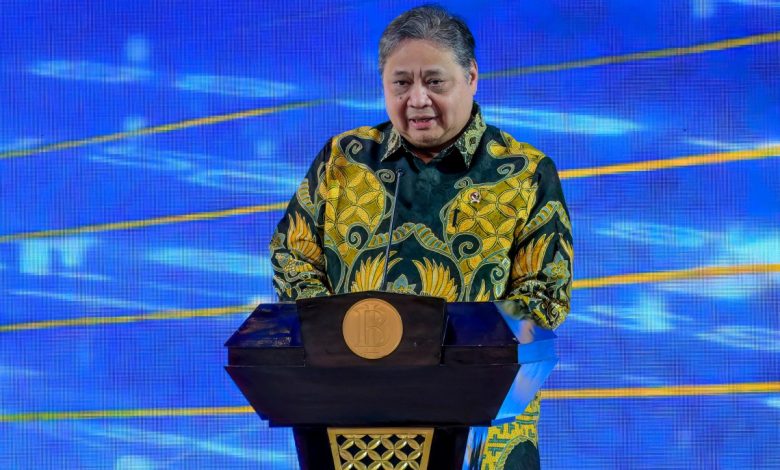
In a bid to calm the markets, Coordinating Minister for Economic Affairs Airlangga Hartarto gave assurances of stock market reform at a media briefing on Jan 30.
He outlined new measures to deepen the stock market, including raising the required minimum free float for listed companies from 7.5 per cent to 15 per cent by March, and allowing pension and insurance funds to invest up to 20 per cent of their portfolios in equities, up from the current 8 per cent cap.
Some 45.5 trillion rupiah (S$3.4 billion) in shares was dumped on Jan 28 alone, with the JCI closing 7.4 per cent down.
Mr Airlangga, however, highlighted that the index rebounded on Jan 30, and stressed the government’s commitment to market stability.
“The economic fundamentals of Indonesia remain strong and the coordination between fiscal and monetary authorities is going well,” he added.
The same day, Financial Services Authority chairman Mahendra Siregar, his deputy Mirza Adityaswara, and Indonesia Stock Exchange chief Iman Rachman simultaneously tendered their resignations.
Compounding the panic on Jan 28, Indonesia’s sovereign wealth fund Danantara announced the forced transfer of the Martabe gold mine to a state-owned entity.
The move shocked the investment community, as the mine was a key asset of PT United Tractors, a subsidiary of one of Indonesia’s largest and most diversified conglomerates, PT Astra International, and a bellwether stock heavily held by foreign investors.
“Such a move is a unilateral expropriation without due process,” a Jakarta-based business consultant who has dealings with state-owned companies told The Straits Times on condition of anonymity. “This is like shattering Indonesia’s reputation for legal certainty.”
Mr Maurice Maulana Situmorang, a senior lawyer and partner at Dentons HPRP, said the government faces a high probability of litigation and international arbitration regarding the Martabe mine.
“There are specific terms, provisions and procedures that must be observed before such rights revocation is taken,” he said.
Adding to investor concerns, Parliament on Jan 27 appointed President Prabowo Subianto’s nephew, Deputy Finance Minister Thomas Djiwandono , as a senior deputy governor of Bank Indonesia.
His nomination by Mr Prabowo earlier in January had been widely criticised as a move to undermine the central bank’s independence and force pro-growth policies such as premature rate cuts, to support the President’s ambitious annual target of 8 per cent economic growth before his term ends in 2029.
News of Mr Thomas’ nomination sent the rupiah plummeting between Jan 19 and 20 to nearly 17,000 rupiah per US dollar – a historic low reflecting the erosion of market confidence on a par with the 1998 Asian financial crisis, when the rupiah peaked around 16,800 to the greenback.
The administration has argued that the rupiah depreciated by only around 4 per cent against the US dollar over the past year.
However, senior economist Wijayanto Samirin of Paramadina University noted that the US dollar itself had weakened by roughly 10 per cent in the past year against major global currencies.
This implies that the rupiah’s intrinsic value has effectively plummeted by approximately 14 per cent, he said.
“The credibility of the rupiah is highly dependent on Bank Indonesia. If Bank Indonesia is neither credible nor independent, the same will be true for the rupiah,” Dr Wijayanto told ST, adding that Mr Thomas’ appointment was a liability for the central bank’s reputation.
Criticism of Bank Indonesia’s objectivity has grown, following recent policy shifts deemed submissive to fiscal needs, such as cutting rates too early and printing money.
The central bank had, for the past two decades, prioritised stability and keeping inflation in check, and resisted government pressure to lower interest rates or print money solely to boost growth.
This monetary instability comes amid a fiscal crunch. In 2025, state revenue fell short of targets while the budget deficit swelled to nearly 3 per cent of gross domestic product, the legal limit, driven by heavy populist spending.
The free nutritious meal programme for students and pregnant women – Mr Prabowo’s flagship campaign promise – kicked off in January 2025 at a cost of around 50 trillion rupiah in the first year.
The budget has been further strained by massive defence spending to modernise military equipment, and the continued capital-intensive construction of new capital city Nusantara, despite a lack of private investor interest.