Global stocks fall as traders await Amazon earnings and digest central bank decisions
Wall Street opened lower on Thursday as traders continued to assess the valuation of AI and technology companies ahead of Amazon earnings. It also came after Alphabet’s reveal of big AI spending plans, and fresh jobs data that signalled weakness in the US labour market.
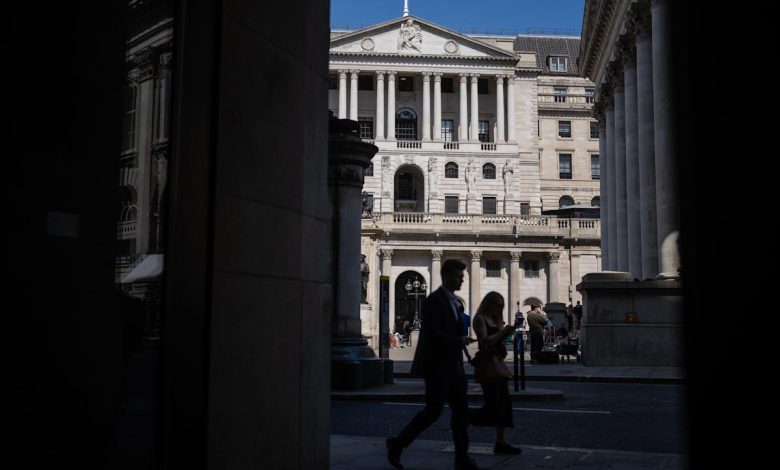
Meanwhile, the FTSE 100 (^FTSE) and European stocks also slipped as traders digested the latest decision on interest rates from both the Bank of England (BoE) and the European Central Bank (ECB).
UK interest rates were held at 3.75% as inflation rose to 3.4% in the year to December. Money markets earlier indicated a marginal 5% chance that Threadneedle Street would lower interest rates to 3.5%, and a 95% likelihood for a hold.
Just five of the Bank of England’s monetary policy committee (MPC) – Andrew Bailey, Megan Greene, Clare Lombardelli, Catherine L Mann and Huw Pill – voted to maintain bank rate at 3.75%. Meanwhile, four of the nine policy makers — Sarah Breeden, Swati Dhingra, Dave Ramsden and Alan Taylor — opted to cut rates to 3.5%.
This means governor Andrew Bailey was once again the swing voter. In December he had voted with the other doves in a similarly narrow vote to cut rates.
Read more: Bank of England holds interest rates at 3.75%
George Brown, Senior Economist, Schroders said: “Today’s rate decision was seen as a foregone conclusion, but the bank’s close vote to hold rates suggests cuts are not a matter of if, but when.”
“The bank’s guidance had been cautious and non‑committal, reflecting unease about the persistence of underlying inflation. That had left governor Bailey holding the deciding vote – an unusually fine balance that underlines just how delicate this stage of the rate cycle has become. But his messaging suggests there should be further easing, with Mann also now leaning towards easing rates. The temporary disinflationary window ahead should offer enough cover to justify one or two more cuts.”
“However, the bank will have to act soon if it intends to cut, before that window closes and the opportunity for further easing slams shut in the second half of the year.”
Meanwhile, the European Central Bank (ECB) also left interest rates on hold at 2%, as widely expected, after inflation in the eurozone came in at 1.7% in the year to January.
This means rates across the eurozone have been paused for a fifth consecutive time, since June last year, after inflation slipped back to the bloc’s target.
“With interest rates already far lower than its peers, inflation closely aligned with target and economic growth relatively steady, the ECB’s policymakers can afford to remain patient. For now, and likely for the remainder of the year, the ECB is in a comfortable ‘wait‑and‑see’ position,” Lindsay James, investment strategist at Quilter, said.