The Bond Market Is Flashing a Clear Warning About the Fed: 3 Stocks to Buy

The bond market is speaking more loudly than the stock market about the likely direction of the Federal Reserve.
What should investors make of President Trump’s nomination of Kevin Warsh to be the next Federal Reserve chair? Don’t look to the stock market for guidance. Instead, focus on the bond market.
We’ve seen two things occur since the announcement about Warsh last week. Shorter-duration U.S. Treasury bond yields have drifted lower. However, longer-dated yields have risen. These two factors translate to what’s called a bear steepening yield curve.
Given this bearish steepening of the yield curve, it appears the bond market is flashing a clear warning to the Fed: Higher inflation is likely on the way. If this warning is correct (and I suspect it is), I think three stocks stand out for investors to buy right now.
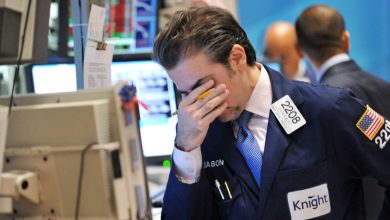
Image source: Getty Images.
1. Berkshire Hathaway
Janus Henderson expects greater market volatility under Warsh’s leadership of the Fed. Few stocks are as well-positioned to navigate a turbulent market as Berkshire Hathaway (BRK.A +0.74%) (BRK.B +0.83%). And Warren Buffett’s decision to step down as CEO doesn’t change Berkshire’s resilience in the slightest.
Buffett led Berkshire Hathaway to amass a record cash position of roughly $382 billion. Most of this amount is held in short-term U.S. Treasuries. If the Federal Reserve keeps short-term interest rates relatively steady while long-term rates rise, Berkshire will be able to continue earning safe and attractive yields on its Treasury holdings.

Today’s Change
(0.83%) $4.20
Current Price
$508.09
Key Data Points
Market Cap
$1.1T
Day’s Range
$502.89 – $509.66
52wk Range
$455.19 – $542.07
Volume
4.4M
Avg Vol
5M
Gross Margin
24.85%
If inflation surges and prompts the Fed to increase rates, the stock market would likely sink. Berkshire’s huge cash position gives it plenty of financial flexibility to buy stocks on the cheap in this scenario.
Berkshire’s insurance businesses would also benefit. Insurance companies collect premiums now and pay out claims later. They then invest this float, typically in bonds. Berkshire’s investment income from its insurance units could grow in an environment of higher long-term yields.
2. Vertex Pharmaceuticals
Higher long-term bond yields can be bad news for many growth stocks. However, Vertex Pharmaceuticals (VRTX +4.16%) stands out as an exception.
For one thing, Vertex doesn’t need to borrow money to fund operations or advance its pipeline programs. The big biopharmaceutical company generates ample cash flow. Its cash stockpile also totaled $12 billion as of Sept. 30, 2025.

Today’s Change
(4.16%) $19.10
Current Price
$477.91
Key Data Points
Market Cap
$121B
Day’s Range
$458.95 – $478.16
52wk Range
$362.50 – $519.68
Volume
62K
Avg Vol
1.4M
Gross Margin
86.29%
Importantly, Vertex’s business is largely immune to market volatility for both stocks and bonds. There aren’t any other approved drugs that treat the underlying cause of cystic fibrosis other than Vertex’s five CF therapies. Physicians aren’t going to quit prescribing non-opioid pain medication Journavx because of macroeconomic factors, either.
Another reason this biotech stock can perform well even during a market downturn is that positive news from clinical studies and regulatory approvals can serve as strong catalysts. For example, Vertex expects to complete its rolling U.S. regulatory submission for accelerated approval of povetacicept in treating chronic kidney disorder IgA nephropathy in the first half of 2026. Approval of the drug could send shares flying higher, regardless of what’s going on with the rest of the stock market.
3. Walmart
You might not be surprised to see Walmart (WMT +3.42%) on the list. The stock has proven to be a safe haven in the past during market volatility.

Today’s Change
(3.42%) $4.34
Current Price
$131.28
Key Data Points
Market Cap
$1.0T
Day’s Range
$127.09 – $131.69
52wk Range
$79.81 – $131.70
Volume
1M
Avg Vol
30M
Gross Margin
23.90%
Dividend Yield
0.72%
A steepening yield curve, in which long-term Treasury yields rise, usually translates into higher rates for car loans and mortgages. Consumers could feel pressure on their discretionary income in such an environment. As the largest discount retailer known for its low prices, Walmart could directly benefit as consumers watch their spending more closely.
If inflation increases across the board, it could also help Walmart. To be sure, higher inflation can raise the company’s costs. However, higher costs also force many consumers to pinch pennies — and drive them to Walmart’s stores.