India’s Peak XV sees more senior departures after recent IPO exits
Welcome back,
Peak XV, the VC firm formerly known as Sequoia India and Southeast Asia, is once again in the news for management departures following the exit of three senior personnel.
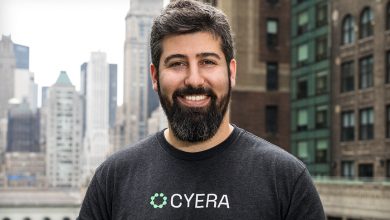
Partners Ashish Agrawal (13 years), Ishaan Mittal (9 years) and Tejeshwi Sharma (7 years) are leaving to start their own fund.
Managing Director Shailendra Singh told TechCrunch the trio left due to an internal disagreement, which he did not elaborate on. The issue was reportedly related to compensation. Peak XV had a hugely successful end to 2025 with five portfolio companies going public, including Groww, which made the company more than $1 billion in profits, long-term bet Pine Labs and e-commerce company Meesho.
Agrawal led the Groww deal, so it isn’t hard to imagine disagreements which might cause him to go solo with his own fund.
Singh played down the exits, saying such departures were not uncommon at large, multi-stage venture firms. For once, I agree.
VC by its very nature is about finding a handful of huge wins that return a fund handsomely, allowing partners to make bets and give the LPs whose money they manage outsized profits. Hence the windfall generational wins like Groww must be shared around. Striking a balance can’t be easy.
But Peak XV is a fund that intrigues from the outside with big talk, big stakes and seemingly frequent disagreements.
One year ago, two even more senior partners left the firm. Shailesh Lakhani, a 17-year veteran of Peak XV, and Abheek Anand, who co-led investments in Southeast Asia. India-based Harshjit Sethi and Singapore-based Peter Kiemps also departed. The firm now has seven MDs, down from 12 at its peak last year, Economic Times wrote.
When Peak XV broke away from the global Sequoia family in 2023, I wrote that we would finally see what the firm and its partners stand for. But nearly three years later, it doesn’t seem tremendously clear.
Yes, the high-profile IPOs have been great and, so far, none of the implosions we saw with Zilingo and GoMechanic. But Singh points to Peak XV’s laser focus on AI deals, which he sees as the future.
All of this feels like Peak XV is still trying to be that US shop out in India and Southeast Asia. Maybe with even more long-timers gone, we will finally see the vision.
Speaking of US funds in Asia, don’t miss our story last week on Y Combinator’s downturn in Asia, despite striking it rich with its first two Indian IPOs.

Have a great week,
Jon
Southeast Asia’s startup scene was rocked by stories of fraud last year, and already we have our first of 2026. Kuldeep Singh Rajput, the former CEO of biotech startup Biofourmis, is set to be charged in Singapore with over seven charges which include falsifying $16 million in invoices from the Ministry of Health.
Biofourmis appeared to be the next breakout startup when it closed a $300 million Series D round in April 2022 which was led by high-profile US investor General Atlantic. But behind the scenes, things weren’t as expected, according to The Straits Times:
Police said between Aug 18, 2021, and Feb 28, 2022, the 34-year-old Indian national had allegedly instigated his staff to falsify company invoices purporting that Biofourmis Singapore had rendered services worth US$16,491,375 (S$20,941,600) to MOH.
Charge sheets state that the invoices were for services relating to the Biovitals Sentinel Platform, which remotely monitors patients and provides clinicians with their vital signs, according to past reports.
Between March 28 and April 25, 2022, Rajput allegedly made, and also instigated others to make, false representations about Biofourmis Holdings and its subsidiaries.
The representations involved false revenue figures and financial statements, and claims that “discussions with the MOH on payment are ongoing”, according to charge sheets.
Singh Rajput is out on $600,000 bail, but both parties have since moved on.
Biofourmis merged with remote health monitoring CopilotIQ in 2024.
Singh Rajput, meanwhile, runs a healthcare startup called Outcomes AI which uses AI to scale nursing care. It has raised over $10 million and has a partnership with SingHealth. It remains to be seen what impact the charges will have on Outcomes AI.
It’s easy to think Uber left Asia when it sold its China business to Didi and its Southeast Asia business to Grab, but that’s not the case as two small but strategic moves last week showed.
The US ride-hailing giant announced plans to launch robotaxi services in Hong Kong, which would be its first autonomous ride market in Asia. Hong Kong is one of 15 cities that it aims to be operational in by the end of this year. Others include Madrid, Houston and Zurich.
Uber also returned to Macau, the special administrative region of China best known for gambling. The company left in 2017, and this is a rare new market launch in Asia. It may be a small market, but I was in Macau last year, and I can tell you it wasn’t easy to get a taxi and pay for it, too.
Again, not major launches but a reminder that Uber is still very much in Asia, and that Asia is still very much part of Uber’s roadmap. Its other markets in the region include Japan, Korea, Taiwan, Australia and New Zealand.
Food delivery giant Meituan agreed to buy on-demand grocery platform Dingdong in a deal initially valued at $717M, according to a Hong Kong exchange filing link
Nvidia’s H200 AI chip sales to China remain pending nearly two months after Donald Trump approved exports, as Washington conducts a national security review before issuing licences link
Elon Musk wants Tesla to manufacture its Optimus humanoid robot in the US, but the effort will remain heavily reliant on China’s robotics supply chain link
Short drama platforms with business ties to China are rapidly reshaping Latin America’s media landscape as surging demand drives a structural shift in consumer attention link
Ford is reportedly in talks with Xiaomi about a potential partnership that could include a US-based joint venture to manufacture electric vehicles—but Ford has spoken to BYD and other Chinese EV players link
Beijing wants to lead the world in developing cutting-edge artificial intelligence, but it also wants companies to adhere to an increasingly complex set of rules link
Alibaba is spending over $430M to promote its Qwen app over the Lunar New Year, triple the spending announced by rivals Tencent and Baidu link
Leading PC makers including HP and Dell are weighing Chinese memory chips for the first time as a global DRAM shortage drives up costs and threatens product launches link
Cambricon Technologies reported a 2025 net profit of $316M, its first profitable year link
A software update mechanism for the popular text editor Notepad++ was hijacked by suspected Chinese state-sponsored hackers, allowing them to silently redirect some users to malicious update servers link
The US will launch a $12B critical minerals stockpile to counter China’s dominance link
Chinese open-source AI models are gaining traction with OpenClaw, the viral AI platform, after it added support for products from Moonshot AI and MiniMax link
Chinese regulators fined Kuaishou Technology $17.2M for pornographic content flooding its platform in December link
Norway’s domestic security agency confirmed that Salt Typhoon, the Chinese state-sponsored espionage campaign, compromised network devices in Norwegian organizations link
New US rules ban Chinese software in vehicles on national-security grounds link
Kai-Fu Lee, the former head of Google China who now runs AI startup 01.ai, told the FT why he believes China will beat the US in consumer AI link
Baidu announced a three-year stock buyback program of as much as $5 billion and plans to issue its first dividend in 2026 link
French authorities detained four people on suspicion of spying for China in a tech-espionage probe targeting Elon Musk’s Starlink link
Accel’s early bets on India’s startup ecosystem delivered outsized returns that cemented its reputation as one of the country’s most successful venture firms, but performance data shared with investors shows its newer, larger funds have struggled to return cash at the same pace link
Meanwhile, Accel led a $5.7 million seed round in Fibr AI, which develops AI-driven tools to personalise website experiences, it previously backed the US-India startup at pre-seed stage link
India is emerging as a key battleground in the global AI race, as US tech giants pour tens of billions of dollars into data centers and cloud infrastructure encouraged by generous incentives including a newly announced 20-year tax break on overseas revenue from data services based in the country link
Google is planning a major expansion in India, which could house up to 20,000 additional staff link
Apple set up its first education hub in India, located in Bengaluru its the fourth globally and it will offer skill-building and training programmes to its suppliers’ employees link
India is in talks with Ant International to allow Alipay+ to be linked to UPI for cross-border transactions link
The Supreme Court warned Meta it would not be allowed to “play with the right to privacy,” ordering WhatsApp to halt data sharing while its appeal over the 2021 privacy policy is heard link
Unicorn India Ventures closed its third fund at $144M which will focus on semiconductors, spacetech and AI infrastructure link
India will grant overseas data centre operators a 20-year tax holiday on global services provided from the country, under a new incentive announced in the federal budget link
Apple got a budget boost as foreign firms can now supply machinery to contract manufacturers in designated areas for five years without triggering “business connection” tax rules, removing a risk that had pushed Foxconn and Tata to fund machines themselves link
Singapore is setting up a national space agency to attract global space companies link
KKR and Singtel are buying out ST Telemedia Global Data Centres at a valuation of over $10B—KKR, a minority owner, will take a 75% share with Singtel owning the remainder link
Samsung and SK Hynix have overtaken Alibaba and Tencent in combined market cap for the first time, reaching $1.14T above the Chinese duo at $1.07T link
Bithumb said it accidentally gave away more than $40B worth of bitcoins to customers as promotional rewards, triggering a sharp selloff—it has recovered 99.7% of the 620,000 bitcoins link
A South Korean court sentenced a local crypto asset management firm CEO to three years in prison for manipulating token prices to earn $4.88M link
TSMC will start producing advanced 3-nanometer chips in Japan, upgrading plans for its second Kumamoto plant and lifting total investment to about $17B link
Analog chipmaker SiTime agreed to acquire Renesas Electronics timing unit in a cash-and-stock transaction valued at about $2.9B link
3C AGI Partners, founded by former SenseTime MD Esther Wong, is launching a new AI venture fund aimed at $100M, it has already completed a $50M first close link
AI chip design firm Montage Technology is set to price its Hong Kong listing at the top of the range, raising about $902M link
An Asian cyber-espionage group spent the past year hacking government and critical-infrastructure networks across more than 37 countries, breaching 70 organizations to steal sensitive diplomatic, financial and security data, according to a report from Palo Alto Networks link