Central bank uncertainty boosts demand for precious metals
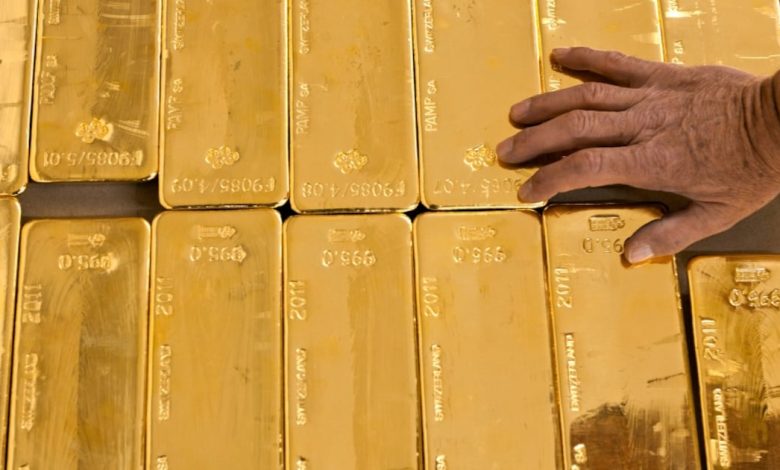
Barrick Mining’s plans to spin off its North American gold assets are drawing pushback from a joint-venture partner as gold prices surge and investor focus shifts toward safe-jurisdiction assets amid rising global uncertainty.
BNN Bloomberg spoke with Dan Rohinton, portfolio manager at iA Global Asset Management, about tensions surrounding the proposed spinoff, why sustained gold prices matter more than short-term rallies, and how political shifts in Japan and the U.S. are influencing precious metals and global capital flows.
Key Takeaways
- Disputes over Barrick’s proposed gold spinoff highlight the growing value of mining assets in stable jurisdictions during periods of geopolitical uncertainty.
- Investors need confidence that gold prices can remain elevated before higher valuations fully translate into mining profitability.
- Japan’s landslide election victory points to increased fiscal stimulus and a more assertive geopolitical stance, adding volatility to global capital flows.
- Rising Japanese bond yields could pull capital back home, reducing liquidity in global markets.
- Concerns about blurred lines between fiscal policy and central banks are reinforcing demand for gold while increasing bond market risk.
Read the full transcript below:
ANDREW: Barrick Mining does want to spin off part of its massive North American gold assets into an initial public offering later this year. However, Newmont, which is a partner in a joint venture in Nevada, sounds unhappy. According to Bloomberg, they say, “We want more input,” and they’re apparently implicitly saying, “We could block the initial public offering.” They’re not happy with the way those assets have performed, but there’s wheels within wheels here, because there’s been speculation that Newmont itself wants to just buy those assets.Let’s get more from Dan Rohinton, portfolio manager at iA Global Asset Management. So it sounds like a bit of a frenemy situation. They’re partners, but there’s some bad blood.
DAN: Yeah, you know, joint ventures and minority stakes can do that to friends, if you will. But the best way to think about what’s going on is these are all in the context of the interest in gold and precious metals has been very, very, very strong, to say the least. And that marks up assets.And then when you have safe jurisdiction assets, like the assets here would be, yeah, this creates that extra urgency on the part of both parties to come to that solution. I would say Barrick has, more likely than not, the latitude to make these decisions on their own. And this isn’t the first time that you’ve seen some of the seniors, like Barrick, spin off assets. I’m old enough to remember Barrick Africa, where they spun off those assets.Yeah, there are times where you spin off your assets that come at big discounts. There are times when the safety premium is particularly high for durable assets and safe jurisdictions. I think that’s what’s really going on here, but I would expect some element of this to come through.
ANDREW: Yeah, so there’s a one-year for Barrick stock. Maybe we could put up a five-year. According to my Bloomberg screen, actually over five years, Barrick has been marginally ahead in terms of return over Newmont, but a lot of that is recent gains in the shares.
DAN: Yeah, a lot of this is really the precious metals rally, the resiliency of that precious metals rally. And I think that’s important when you’re looking at miners, Andy. It’s not just that the metal is up. The metal has to stay up for the investor base, for these companies, to come around to the idea that they’ll realize these prices.So it’s not like in oil and gas, where you have hedges or anything like that. If memory serves, we’re mostly spot exposed for the whole complex of these companies. But it really comes down to investors need to believe that gold can stay around 5,000, and then they start pricing that in and put that through to the profitability of these companies. So it takes time, which is why the lagged reaction does happen.
ANDREW: Would you be overweighting portfolios in gold right now, Dan?
DAN: I’m very cautiously along for the ride, and I’m quick to exit, would be how I’d put it. The reason I say that is, when you think about the structure of what’s going on, you have geopolitical tensions, you have weak U.S. dollars, you have conversations about central bank independence. I can’t think of a better precious metals environment than that, which also means if some of these things start stabilizing a bit, then there’s potentially an air pocket down.Please look at silver, for reference, from a few weeks ago.
ANDREW: Let’s have a look at a one-year, or even a one-month, for silver, because that was quite a ride up and well down from its high.
DAN: Yeah. And one more thing to add on that, Andy, if I may, is when you look at what’s going on, it’s not just that. There’s real money investors coming in. We live in a very different market structure than years past, where high-frequency trading, leverage, purchasing, trading bots are very active.So these types of big once-in-a-six-sigma events, or eight-sigma, just deeply unlikely events, statistically, they happen because the structure of the market is a lot more algorithmic than it was before. So price chasing can lead to big drops like that.
ANDREW: Because the algorithms, well, one model is they try to jump on a trend?
DAN: Exactly, that’s right.
ANDREW: And then, of course—
DAN: When the trend changes.
ANDREW: They’ll try to get off. Exactly, yeah. Scramble among the robots.
The prime minister of Japan winning a landslide victory, she has plans for massive spending. What’s that mean for global markets? What does that mean for Canadian investors?
DAN: Yeah, and I think gold — gold and precious metals, and energy as well, indirectly — that’s how these global trends tend to impact the Canadian stock markets. But I’ll speak to just what’s been going on in Japan.Japan is going through a big change in its structure when it comes to how it handles geopolitics, the history of pacifism, being more hawkish towards China. Along with this victory came the idea of a significantly greater military buildup in Japan. So that is very much on the cards now, and a lot more directly facing up to China in those contested areas.And on top of that, a domestic policy that’s far more, call it, fiscal stimulus-oriented than generations past. So that creates an awkward tension with the central bank of Japan, along with how the actual fiscal environment in Japan proper is going to go.So a lot of what you talk about in the U.S., in terms of just what we’re seeing spending-wise and the relationship with the Federal Reserve, just copy and paste that over to Japan, Andy, because I think that’s increasingly where we’re going. And that’s why these conversations about precious metals that we just had, also that’s how it filters into the Canadian economy.
ANDREW: Sorry, give us that again. So radical uncertainty over the direction of Japan?
DAN: And inflation. Inflation. Less focus on inflation, more fiscal stimulus. That’s part of the reason why gold has been so aggressively bid as well.
ANDREW: Yeah.
DAN: So Japan is very significant as a capital pool, because Japan was a big savings economy, huge export economy, which means you have a lot of dollars that you send back and flush into the global economy. You buy treasuries, you do foreign aid, things like that.
All of that, when your local Japanese government bonds are going up in yield, those Japanese pension plans, those investment funds, don’t need to go out to the world for four per cent if you can get it right there in the JGB market.So that drains capital out of the system globally and brings it more locally. I know that’s a lot of balance-of-payments mumbo jumbo, but what I’m really trying to say is Japan has an outsized role in the global economy, outside of just exports. It’s because of the money. It’s the world’s banker in some ways too.
ANDREW: Yeah. And also, people have borrowed, traditionally, in Japan at super-low interest rates and bought houses, for example, in Eastern Europe.
DAN: Yeah, that was known as the JGB carry trade. Yeah. And that’s kind of inverted now too.
ANDREW: What about the Fed? I know we go on and on about it, but is there one thing we should remember about the new guy there, Kevin Warsh?
DAN: Yeah, most likely the new guy, by the looks of it and the way he gets confirmed. Yeah, sorry, yeah, of course.And when I think about just the bugaboo that’s being made a little bit about the 1951 accord, stepping away from the separation of, call it, church and state, which was the Treasury and the central bank, yeah, that era of independence post-Second World War.I think Kevin Warsh — I would give a little bit of credit where credit is due — he’s criticized that that hasn’t been the case for a while. I think there’s some truth to it.So if you go to any periods of crisis, like ’08-’09, if you look at Timothy Geithner, Hank Paulson and Ben Bernanke, you’d be hard-pressed to tell that there was separation of church and state.
DAN: There wasn’t much daylight between them. Yeah, yeah, yeah.
DAN: And if you take what happened actually with Silicon Valley Bank, Andy, the same dynamic. So I think the blurring of the lines between the Federal Reserve and the actual U.S. government proper itself, the Treasury Department, is greying already. And I think this is just going to move further down that road.I’m not sure yet that that’s a good thing or a bad thing. I’m inclined to say it’s probably not great, but it’s too early to say. And the continuum with which we started in ’08-’09, through COVID, through the banking crisis, to where we are today, I think you can draw a clear line from there.
ANDREW: Before we let you go, you are a longtime observer of the auto industry, and I was amazed — I actually had no idea — that three-quarters of the cars made in Canada last year were made by those two Japanese manufacturers, Toyota and Honda. So we’ve already had, in relative — well, we have had a major retreat from the U.S. market by the U.S. automakers.
DAN: Yeah, and the way to think about automobiles as a whole is what’s going on. And a lot of this is, we don’t actually invest in these companies, but growing up in Whitby, Oshawa, so close to home that you can’t help but follow the nature of the combustion engine, the nature of autonomous driving.All of those trends are really coming to a head where we sit today. So we are moving from a car ownership world to something that resembles a lot closer to Uber, a few AI models from now, where machine vision is good enough that a few hundred Waymos can already accommodate 10 per cent of the traffic in a minor city in the United States.So just imagine playing that forward a few years. Car ownership starts dropping. Yeah, car ownership and the need to do so. It’s just cheaper to get in an autonomous vehicle as we move forward.So I think these companies, they’ve taken, I call it, the hybrid approach by doing hybrids. But the world of EVs plus autonomous driving, I think, is coming a lot closer to today.
ANDREW: Can Canada really be a player in the global auto market?
DAN: The tough part about that conversation is it’s probably not, because we lack what’s known as network effects in an industry. There’s a reason why Silicon Valley became what it was. It was Fairchild Semiconductor, then came some other firms, and then finally came the internet boom that led to where modern Silicon Valley is.So there’s a continuum. China has invested hundreds and hundreds of billions of dollars in building a big, deep ecosystem of automotive, and it’s at a scale where it’s cheaper to export on a ship than it is to build locally.
ANDREW: I’d love to have you back. Always love hearing from you. Thanks very much indeed.
Dan Rohinton, portfolio manager at iA Global Asset Management.
—
This BNN Bloomberg summary and transcript of the Feb. 9, 2026 interview with Dan Rohinton are published with the assistance of AI. Original research, interview questions and added context was created by BNN Bloomberg journalists. An editor also reviewed this material before it was published to ensure its accuracy and adherence with BNN Bloomberg editorial policies and standards.