Investors First: The New Rules of Retirement
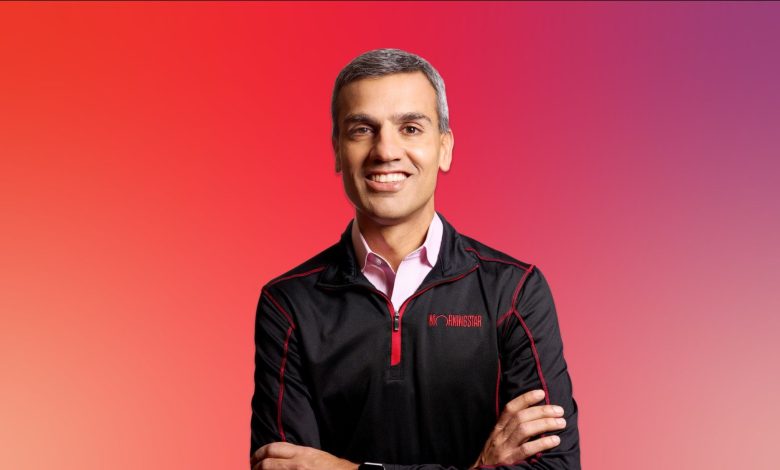
Kunal Kapoor: Good afternoon everybody, and welcome to the latest episode of our Investors First series. Today, we are going to talk about the new rules of retirement planning, and I’m thrilled to welcome two of my colleagues and friends here to join me today: Brock Johnson, who leads Morningstar’s retirement business, and Christine Benz, who’s our director of personal finance and retirement planning. Welcome, both of you. Great to have you here at a moment when it feels like we’re at an inflection point when it comes to retirement planning, and just broadly, the discussion about retirement here in the US. And there’s all kinds of forces at play. There’s longer life spans. There’s more choice. You have this question about whether new types of vehicles from the private markets should be entering 401(k) plans. You also have increasingly a discussion about whether we have the right system or not, and whether people are participating appropriately. There’s a lot to talk about. And Brock, let’s just start with you. Maybe give us a survey of the landscape and some of the bigger shifts that you’re seeing in the retirement market today.
Brock Johnson: I’d mention a couple that just jump out that I think are shifts from today than what they’ve been over the years. The first one I’d say is that I think participants today are just far more financially aware of their situation than they were a decade ago. They understand that they need to be saving. They understand that a 401(k), as an example, is a great vehicle to save for retirement. It doesn’t mean that the behavior has caught up. Many still are not saving enough. But it does mean that the conversation within plans has shifted from educating people about the importance of saving, to instead, about how much you should be saving, what you should be investing in, and how do you translate that to retirement income. I think that shift opens up the door to more sophisticated solutions, more personalization, and more outcome-focused tools in the marketplace. I think that’s one big shift, just the awareness of participants.
The second one I’d mention is just the retirement and wealth management continue to come together. I think the advisor community is increasingly recognizing that the defined-contribution plan can be an on-ramp to longer-term relationships. Advisors who get in and serve the plan sponsor, serve the participant, they’re building a relationship that can last well outside of that retirement account. Those are two big shifts that I’m seeing within the plans, more financially aware participants, and then the convergence of retirement and wealth.
Kapoor: For all of that to happen in many ways, you also need to see the friction that exists today, for people to invest and participate in their plans, and for advisors to help them with those plans, start to melt away a little bit. Christine, I’ll turn to you. What do you see as the biggest opportunities to reduce some of the friction that maybe keeps people from being successful when it comes to investing for retirement?
Christine Benz: Kunal, I’ve been very obsessed with this whole retirement decumulation problem. I do think there’s more work to be done in that area. Because arguably, it’s the hardest problem in all of financial planning, where you are tasking people with taking this nest egg that they’ve managed to save and translating it into sustainable cash flows over an unknowable time horizon, over unknowable market returns, unknowable inflation over that time horizon. I think there’s more work to be done to help support people as they move into that drawdown phase. It’s really kind of a missing link in our retirement landscape today. There are some innovations that are happening, and more people are staying in plan in their 401(k) plans. I think there’s an opportunity there to help them. But right now, that seems to be one of the main spots where advisors can add value and where, certainly, plans can consider helping their participants understand what is a sustainable stream of income.
Kapoor: It feels like that’s been an intractable problem for a very long time. People have been talking about it forever.
Benz: Yes. But the Secure Act did put in place this option that allows plans to include an annuity. And I think we’ll see more there. BlackRock, of course, was the kind of first mover, but Vanguard recently as well. I think there’s going to be more action on that front.
Kapoor: When I think two of intractable problems, Brock, it feels to me like one of the reasons a lot of people are not getting to the outcome that they want for retirement is that perhaps they’re not investing early enough and on a regular basis. Recently, there’s been a debate about why our system in the US is perhaps not as strong as the system that Australia has in superannuation. It feels to me like, if we solve two things: One, mandating to a certain degree that people have to invest a certain portion of their earnings in a 401(k), and two, limiting withdrawals. You essentially have a version of the Australian Superannuation Plan with the infrastructure that we have today. And how do you think about that? And what do you see as the pros and cons yourself, as we think about this point about how to create successful retirees?
Johnson: I think it’s a great point. It gets discussed a lot. I don’t claim to be an expert on the Australian system, the nuances of it, but they do have a lot of things that I think are very positive. You mentioned the mandatory savings. That’s led to just massive amounts of assets that they’ve been able to put in there, more participants being involved, but they are required to do so. That is a big distinction, and not to get too philosophical on it, but there is a little bit of a freedom versus mandatory-type decision that we’d need to make in adjusting the system here in the US. But I do think that there are a lot of things that we could take from that system, but I would argue that the defined-contribution plans and systems here in the United States have a lot of things that are really good about them. But obviously, there’d be things to change. I think the mandatory aspect of it would be one. I also think it would be, if I were to kind of recreate the US system, I’d probably also have personalized advice be front and center and be part of every plan as a default option, not just an upgrade. Our research continues to show that personalized advice. Things like managed accounts tend to lead to better outcomes for employees, so let’s get that out there.
Kapoor: Double-click on that. Why do they lead to better outcomes?
Johnson: Basically, our research shows a lot of different variables that go into it. I would say that people tend to, in managed accounts, they tend to save more just because they’re seeing it as an overall financial picture. Our research also shows that in up and down markets, regardless of what the markets are doing, people in a managed account offering tend to stay the course a little bit longer. A lot of people who are do-it-themselves, as an example, are doing the last thing you want to do. They’re buying high and selling low. Managed accounts kind of helps alleviate that. And it’s not just for people do-it-themselves. We’re seeing a lot in comparison to target-date funds. I would argue that target-date funds were a fantastic default vehicle 20-plus years ago. And I still think it’s a good one today. But we have so much more data today. We have so much more technical integrations that we can provide personalized advice at scale. And a managed account can just do some things that …
Kapoor: Taking more of a person’s overall financial picture and integrating that into the information that goes into giving them a portfolio, essentially, is what you’re saying.
Johnson: Exactly. And we can do it without them actually even being engaged. The amount of data we get on participants today versus what we got five, 10 years ago is almost doubled, tripled. In some cases, with certain recordkeepers. We can just provide a much more personalized solution. And we believe that personalized advice leads to better outcomes.
Kapoor: I want to quickly mention that I will soon shift to some audience questions. Please do feel free to submit those, and we’ll start to pull those in. But, Christine, as I hear Brock speak, I want to connect it back to what you were talking about earlier. What do you think are some of the mistakes people are making when they shift from an accumulation mindset to a saving-and-spending type of model?
Benz: One of the big ones is that they anchor on these heuristics that they may have heard, the 4% guideline, for example. It’s a really handy rule of thumb if you’re, say, in your 40s and 50s, trying to figure out the viability of what you’ve managed to save in terms of supporting your retirement. But once you come into retirement, it’s helpful to shift away from that, to embrace a mindset of flexibility. In terms of your spending, rather than sort of anchoring on this idea that I will spend the same amount unwaveringly, year in and year out. In reality, people don’t spend that way. One pattern that we observe is that people do tend to spend a little bit less on an inflation-adjusted basis as they age. As they move into their mid-70s or early 80s, certainly, people spending tends to trend down. If people aren’t incorporating that natural pattern, it will tend to mean that they’re underspending. And they will leave fairly significant leftover balances at the end of their lives. Some people might say, it doesn’t really matter, if that money is left there as a bequest, it doesn’t matter that I underspent. But for people with tighter financial plans, there are meaningful trade-offs that they’re making in terms of their shortchanging their quality of life and retirement. That’s a biggie. Is this assumption that a 4% guideline is a good way to think about spending down your retirement portfolio. I think you can do better.
Kapoor: That’s helpful. You heard it here first, Christine Benz is saying, you can spend, which is a first. But Christine, for that to happen, what do you think is the mindset shift that investors are going to have to make?
Benz: This whole idea of spending after a lifetime of saving is a very difficult psychological transition. It’s one I’ve been thinking a lot about and talking to actual retirees. They really struggle with this, that the thing that made you good as a saver, makes you uncomfortable as a spender. And I do think that a financial advisor can really help in this context to give clients that permission to spend, to give them a sense of how much they can reasonably spend. This is far from settled science, safe spending rates. I find it really interesting to interact with financial advisors and hear about the different systems that they’re using. But there are lots of great innovations in terms of the different spending systems, like the guardrail system or Derek Tharp system that looks at probability-based guardrails. I’m happy about the innovation that we’re seeing in this area.
Kapoor: That’s great. Brock, on the other end of the spectrum, if you’re earlier in your career and you’re younger, how do we do more to get people excited in early stage and investing? And what are you hearing from younger investors?
Johnson: I think it goes back a little bit to maybe a comment I made on one of the earlier questions. I do think the younger investors are a little bit more aware of their financial situation today. When I entered the workforce, I think a lot of my co-workers, and potentially even myself at the time, weren’t even aware of what a 401(k) was, let alone how to use it as part of an overall financial plan. Again, the biggest shift for younger participants today is that they’re looking for real-time, personalized guidance, not just kind of generic rules of thumb. And that’s, again, it’s a meaningful change. They know that they should be doing something. And the challenges they’re also facing, a lot of things Christine deals with on a regular basis, they have more barriers, student loan debt, they’ve got the need for emergency funds. I’d say the big change for them is how does the 401(k) fit into their overall financial picture that addresses all these barriers that they have to work with? That’s just a change. It’s not siloed as it once was. It’s all part of a broad picture. And you need to take the 401(k) into account as probably the best savings vehicle out there for retirement. And make sure that’s part of your overall financial plan.
Kapoor: And here’s a question from Jane, and maybe Christine, you can take a first crack at it, and Brock, feel free to weigh in as well. Jane’s asking, How do you include lower earners in the thought that they should engage with a wealth manager when you’re struggling to pay for essentials, can you really pay for the concept of a wealth manager? It seems out of scope.
Benz: Yes, and maybe I would use a financial advisor or financial planner for a person at that level. But I’m loving some of the different business models that are available to address small consumers who need financial advice. The hourly model certainly has been around for a long time, but the subscription-based models, which at a lower price point, are making financial advice more accessible. And then, increasingly, some of the in-plan advice services that are being offered, often at a very low cost or no cost to participants, especially at larger employers. I like to see some of these innovations to make advice accessible to consumers who don’t have substantial nest eggs.
Kapoor: Everything you both have said so far seems to indicate that. Overall, the retirement market in the US is in pretty good shape, options are getting better, costs are lower, and choices are expanding. Particularly when it comes to who you work with. Stuart is asking what I think is a good question, Brock, which is, is there really a retirement crisis in the US? You read about it all the time, and is there one? What are we going to do about it if one exists?
Johnson: You could take this one in a lot of different directions. I think how you would define a crisis is a key one on this. But I do think there’s a problem. I’m going to go with that. I do think there are still way too many people who are not going to have the retirement that they want or need. And I do think that is legitimate. Our statistics show it. We look at millions of participants across a variety of different recordkeepers. And we see a lot of people who are simply not on track to have the retirement that they want or need. I definitely do think it is an issue. I do think that we need to, as an industry, do a better job of allowing participants more access to a retirement plan. Depending on the statistic that you look at, it’s still showing that about 40% to 50% of private-sector employees do not have access to an employer-sponsored retirement plan, arguably the best retirement savings vehicle out there. Even if these individuals who are part of these companies wanted to save for retirement, they don’t have access to one of the best tools out there to do so. And I think that, as an industry, just getting more people access to that. Would go a long way in diverting the crisis and helping solve what I would call a significant problem.
Kapoor: That’s a great point. And access is a really good term, I think, to just transition to thinking. Also, about whether private investments, private market investments, make sense in the context of a 401(k). Christine, Anthony is thanking you for all the advice over the years that you’ve given. And he’s asking, given that he’s got a 60/40 low-cost portfolio, it feels to him that private markets are a bridge too far and unnecessary, potentially for him. And I just say, I would assume you would agree with that thinking. But for either of you, how do you think of the entrance of private credit, in particular, into some potential portfolios? And Brock, as it pertains to our methodology, how are we thinking about whether it actually makes sense to include anything from private markets in a managed account?
Johnson: Maybe I’ll start, Christine, with that specific one. Within Morningstar Retirement, our methodology has taken into account private market data for years and years. We have recordkeepers that we are in the market with actively making recommendations around that too. I would say I feel very strongly about this point right now is that I do not, I’m not in the camp where private markets should be part of a core investment lineup within a 401(k). I think they should be part of noncore lineups and be part of whether it’s a target-date fund or a managed account. It becomes a sleeve of a portfolio. It’s not on the core menu where individual employees could come in and maybe put all of their money into that spot. It’s more about a choice and, again, goes back to the individual participant situation as to whether it would be appropriate or not. My view on that may change over time, but right now, I think having it outside of the core menu and part of a professionally managed type of a portfolio is where it makes sense.
Kapoor: Christine, I assume you agree with that thinking as well?
Benz: I do. I do. I tend to be kind of a minimalist overall. And I would say, the longer I do this, the more minimalist I get. I would tend to be in the camp of it being a nonessential ingredient for most investors. Certainly, the studies are out there regarding returns, but I would rather see investors focus on ways to cut costs as a means of amplifying their returns.
Kapoor: Lydia is asking, Christine, perspectives on long-term disability plans that pay out through an annuity. You referenced this a little bit earlier.
Benz: The hybrid-type products, I think, are super-interesting. The long-term care hybrid, I’m assuming that’s what the question is about. And I do think they’re worthy of exploration for people who are kind of in the middle zone for long-term care, where they don’t have sufficient assets to fund long-term care, and they’re not going to be eligible for government-provided resources. The hybrid products have come on strong, really, replacing the pure long-term care insurance. Certainly, they’re not all good, but worth looking into for people who are.
Kapoor: Costs matter there as well.
Benz: Absolutely.
Kapoor: Brock, Stephanie is asking, why is it so difficult for people to get specific advice for investments across their households? You talked about this earlier, but what’s actually preventing the industry from delivering the personalized advice that you talked about?
Johnson: The challenge really is, where is the data housed, and what are the technical integrations that would allow to be able to get that full picture? You think of it as like, if someone’s got a 401(k), the recordkeeper might be holding that data. If they have a retail wealth account, that might be held at a registered investment advisory firm. And in a lot of cases, that information is not connected. I would argue Morningstar is well-positioned to help kind of bridge that gap, and we have some things in the works that we’re trying to look at to do that. But it’s the data. I think this is maybe slightly off the question a little bit, but I think data is going to be a real battleground within the retirement industry over the next couple of years. Who owns the data? Who controls it? Who can access it? How can we use that data? The more high-quality data that you have, wherever it’s located, whoever can access that, and pull that together, if you have the data, you can then provide more personalized solutions. You can deliver more meaningful advice, again, not just in the retirement plan, but across all their accounts. My simple answer to the question is that the data and information and accounts are too spread out right now. Once you get those all connected, then you’re able to basically provide that holistic picture. And another important point …
Kapoor: And you can do that at scale for smaller accounts as well. There’s a question here from William about the fact that if you have less than a million-dollar balance, do you really get access to the best solutions? And I’m wondering what your answer there would be in this context, especially with income features included.
Johnson: Our research says you do. Our research says that whether it’s a large account or a smaller account, over time, the benefits of the managed account, again, things I mentioned about, it’s going to increase your savings rate. You’re going to stand firmer, whether you have a lot of money in the account or a little money in the account. In those up and down markets, it does have a benefit to you. We’ve always been agnostic. We’ve always felt like, the person who would be considered a high-net-worth individual, they could leverage our advice in one way. But the person who might have a lower balance, they still need advice. They still need help. Just because it’s a lower balance, they could still improve their retirement outcomes with these types of services.
Kapoor: Makes sense. Christine, if we’re sitting here five years from now and having this conversation, and Brock, you should answer this, too. What would you say has changed about retirement planning and the state of retirement in general?
Benz: I think the decumulation piece will start to be solved for retirees, that for the person who is inert, who’s hands off, who doesn’t get it, who’s not into it, that there will be solutions that will kind of take them by the hand. That’s really a missing link in the system today, where Jason Zweig once described it as when you’re in a 401(k) plan, everyone’s on the bus, they’re riding along, then they get off at their destination, they hop into private cars, people might not even know how to drive. That’s really where we are today. I think we’ll move at least a little bit closer toward solving that for people.
Kapoor: That’s a really nice analogy. And Brock, what about for you?
Johnson: If we’re sitting here five years from now, I hope we’ll look back and wonder why advice and retirement plans were optional for as long as they were. Again, I’m going to stay on my point here. We are big believers in personalization. We’re big believers that advice does lead to better outcomes. I think we’re going to—Some form of personal advice is simply going to become expected over the next five years. As more research continues to demonstrate the impact advice can have, and it can get people to better outcomes, I think it’s going to become almost like a fiduciary duty for plans to look to adding it to their plan as an offering. Again, big believers in advice, big believers in personalization.
Benz: Kunal, can I jump in with another idea? Absolutely. Which is just that I think we’ll continue to see nudges get taken further. Nudges have been the home run over the past couple of decades for retirement savers.
Kapoor: Christine, just explain what a nudge is in this context.
Benz: A nudge is a default that helps get someone into a better outcome. The great nudge was the Pension Protection Act of 2006, which enabled 401(k) plans to allow target-date funds to be the default option. And allowed plans to default participants in at certain levels. We’ll continue to see building on that research because there is a lot of power in harnessing people’s natural tendency to do very little.
Kapoor: Christine, just to finish with you here, what’s one mindset shift that you think investors should start making today, based on your research?
Benz: Thinking about retirement income holistically. I think sometimes when people anchor on this whole safe spending rate idea, it’s like you’re joining a movie already in progress. Ideally, as retirement approaches, you should start thinking hard about your budget and what lifestyle changes you might be making. And then look hard at your nonportfolio sources of income. Most of us will have Social Security coming to us. Some people, a shrinking share, will have a pension. Whatever you can do to enlarge those nonportfolio sources of cash flow, it makes everything easier in terms of retirement spending.
Kapoor: Great. And Brock, final word from you. If investors take one thing away from everything you’ve said today, what should it be?
Johnson: I think the retirement industry is in a transition phase. If you look back at a lot of the changes that have happened over the last couple of decades, they’ve been incremental, they’ve been evolutionary, and I think there’s some things coming in place that are going to be a lot bigger than that. They’re going to be more transformative. They’re going to, as one of the questions that I was just asked, as accounts become more connected, you’re just going to be able to bigger things. It’s going to be less incremental, less evolutionary, and there’s going to be some kind of bigger changes that have the potential to impact the retirement industry going forward.
Kapoor: Awesome. Christine, Brock, thanks for joining. This was super fun. And thanks everybody for watching. I appreciate it. Have a good day.