Astera Labs (ALAB) Now 58% Below Wall Street Price Targets Following Earnings Plunge

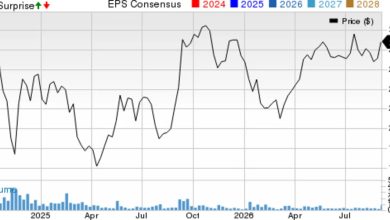
Astera Labs (Nasdaq: ALAB) closed at $129.32 on February 13, 2026, down 23.86% over the past week. Wall Street’s average price target sits at $204.47, implying 58% upside from current levels. That gap widened dramatically after the company reported Q4 earnings on February 10, triggering an 11.85% pre-market decline followed by continued selling through mid-February.
The semiconductor company designs connectivity solutions for AI and cloud infrastructure, focusing on signal conditioning, smart cable modules, and AI fabric switches. Its technology sits at critical junctions in data centers, enabling communication between GPUs, CPUs, and memory systems. Hyperscalers like Amazon, Microsoft, and Google rely on Astera’s products to build out massive AI training clusters. Revenue grew 115% year over year in 2025, reaching $852.5 million. Despite that growth, the stock has now given back most of its 2026 gains, falling 22.26% year to date compared to the S&P 500’s modest positive return.
Earnings Beat, But Margins Disappointed
Astera reported Q4 revenue of $270.58 million, beating the consensus estimate of $250 million. Non-GAAP EPS came in at $0.58, also ahead of the $0.51 estimate. Sequential revenue growth of 17% and year-over-year growth of 91.8% demonstrated continued momentum in AI infrastructure spending.
The market focused on what came with those beats: margin compression and rising operating expenses. Non-GAAP gross margin declined due to a higher mix of hardware sales, and management flagged increased operating expenses as a near-term headwind. Q1 2026 guidance called for operating expenses between $112 million and $118 million, a significant jump from Q4’s $96 million. CFO Mike Tate explained the increase: “We’ve been having a lot of advanced dialogue with our customers, and they’re presenting us with significant revenue opportunities that we really feel now is the time to really invest in.”
Two other factors weighed on sentiment. Amazon was granted a warrant to acquire up to 3.26 million shares at $142.82 per share, tied to potential purchases of up to $6.5 billion in Astera products. While that validates the technology, it raised concerns about dilution and customer concentration. Additionally, CFO Mike Tate announced his retirement effective March 2, 2026, with Desmond Lynch taking over. The timing, combined with the margin pressure, created uncertainty about operational execution.
Analysts Still See the AI Infrastructure Story Playing Out
Despite the selloff, Wall Street maintains a bullish stance. 23 analysts cover the stock, with 7 rating it Strong Buy, 11 rating it Buy, and 5 rating it Hold. No analysts rate it Sell or Strong Sell. The average price target of $204.47 sits well above current levels, with some targets as high as $225 from RBC Capital.
The bull case centers on Astera’s position in AI scale-up networking. CEO Jitendra Mohan told analysts the company’s addressable market will expand “by more than 10 times over the next five years to reach $25 billion.” He pointed to “exceptionally strong spending commentary coming from the top US hyperscalers, with Google and AWS alone guiding nearly $400 billion in total CapEx spending for 2026.”
Product momentum supports the optimism. The Scorpio fabric switch family exceeded 10% of Q4 revenue and is the “only PCIe six fabric shipping in volume in the market.” Management expects Scorpio to ship to “at least two additional major hyperscalers” in 2026. The Taurus smart cable module line grew “more than four times year over year” in 2025, with the transition to 800-gigabit switching platforms providing the next catalyst.
Analysts also point to Astera’s expansion into optical connectivity and custom solutions. The company announced a new Israel design center and expects optical connectivity engines to double the merchant scale-up switching market opportunity. Management projects the merchant scale-up switching market will grow to “roughly $20 billion annually by 2030,” with Astera positioned to capture at least half of that.
Where Things Stand
Current Situation:
- Current Price: $129.32
- Average Analyst Target: $204.47
- Implied Upside: 58%
- Number of Analysts Covering: 23
- Recent Performance: Down 23.86% over past week, down 24.88% over past month
Analyst Ratings Breakdown:
- Strong Buy: 7
- Buy: 11
- Hold: 5
- Sell: 0
- Strong Sell: 0
Comparison to S&P 500:
- ALAB YTD: Down 22.26%
- ALAB One Year: Up 46.64%
The technical picture shows a stock approaching oversold territory. The RSI reading of 38.82 as of February 13 marks a sharp decline from 60.27 on February 9, consistent with capitulation selling. Historically, ALAB has recovered from similar oversold conditions, including periods in March 2025 when RSI dropped to 27.65.
Key Factors Investors Are Watching
The investment thesis depends on whether management’s operating expense investments translate into revenue growth over the next 12 to 18 months. The company’s claim that they’re investing to capture a market opportunity that’s “substantially larger than we initially anticipated” will be tested through execution on several fronts.
Key catalysts to monitor include Scorpio design wins at two additional major hyperscalers in 2026, optical connectivity development staying on track for 2028 deployment, and whether the Israel design center accelerates custom solution revenue. The current 58% discount to analyst price targets reflects uncertainty around these execution milestones.
Risk factors include margin pressure persisting beyond Q1 2026 and increased customer concentration with Amazon. The company trades at 106 times trailing earnings and 26 times sales, a valuation that leaves little room for execution missteps. If operating expenses continue climbing without corresponding revenue acceleration, or if the Amazon warrant leads to unfavorable pricing dynamics, further downside is possible.
The technical setup shows RSI hasn’t reached extreme oversold levels yet, suggesting more downside is possible if macro conditions worsen. However, AI infrastructure spending remains robust, and Astera’s position as the only volume shipper of PCIe 6 fabric switches provides competitive differentiation. The company’s expanding product portfolio offers multiple paths to growth, though volatility will likely persist through at least the next earnings report in early May 2026.