Elections are all or nothing these days. Such is the case in Korea, the United States, and Japan. In..

Elections are all or nothing these days. Such is the case in Korea, the United States, and Japan.
In addition, the Democratic Party won a landslide victory in the April 2024 general election with 161 seats. In November of the same year, President Donald Trump won in the United States, and the Republican Party took control of both the Senate and the House of Representatives. The election of the Japanese House of Representatives (House of Representatives) held on the 8th is dramatic. Prime Minister Takaichi Sanae’s “early general election” gamble worked, and the ruling party (LDP) won 316 seats, more than two-thirds of the total seats. All three countries are winner-take-all structures of a particular party.
Next to the winner is the loser who lies down with an internal injury. The power of the U.S. Democratic Party and the Korean people is in such a slump. Japan’s main opposition party (Central Reform Alliance) also slumped from 167 seats to 49.
In a situation where the ‘balance of power’ in Congress has weakened, the tail question that naturally sticks is like this. Who can keep the ruling party in check on behalf of the broken opposition party. The clue to the answer is which side the powerful and the ruling party leadership are looking at when making policy decisions. Without exception, they are sensitive to the number of markets.
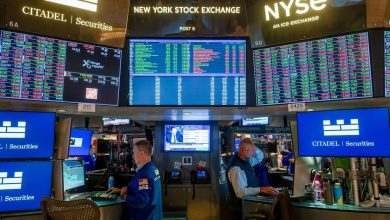
With technological advances and the advancement of financial products, representative democracy these days seems to be working in a cogwheel with the stock, bond, and foreign exchange markets. If a false policy comes out, the movement of money changes and judges that “the policy is wrong.” In the market-friendly policy, the stock index wags upward, and in the expansionary fiscal, which threatens the country, the interest rate on government bonds surges (bond prices fall) without exception.
How should I put it? For speedy legislation, voters give power to the ruling party, and investors spare no effort to weigh the irrationality of the government and the ruling party’s policies through the market. The market’s new narrative of one big, beautiful opposition party is firmly building up.
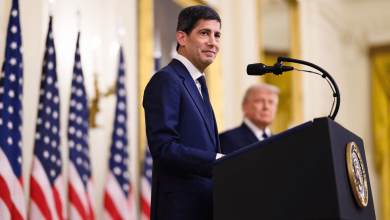
Let’s look at President Trump. Even if tariffs or fiscal policies are strongly pushed forward, they will take a step back if the stock and bond markets are seized. “TACO” is a mockery of Trump, the supreme power, and a word that contains dopamine from investors who check political power. President Trump’s recent nomination of hawkish Kevin Wash as the next head of the Central Bank (Federal Reserve) is also a result of market observation.
Wouldn’t the political opponent that bothers Trump be the “10-year Treasury Bond Rate,” which directly affects the interest rate on household mortgage loans, not the Democratic Party.
Korea doesn’t seem to be any different. In October 2020, when the KOSPI was “boxy,” investors threw out KOSDAQ stocks when the Moon Jae In government tried to strengthen the standard for major shareholders subject to stock transfer tax from 1 billion won to 300 million won. Surprised by the downward pressure, the party decided not to revise the tax law. In September last year, the Lee Jae Myung government tried to take the same step, but met market headwinds and tailed it with “maintaining the current (5 billion won).
Last month, when the word “extra budget” came out at Cheong Wa Dae, interest rates on government bonds were seized, and the government should be careful, especially when bond market interest rates talk. If the stock index is a friend who usually talks a lot, the bond rate is silent. The weight of the horse is different. An interest rate shock of 30bp (1bp = 0.01 percentage point), which is seized by the dumping of government bonds, could twist the government and Cheong Wa Dae’s policy grip with a stronger grip than the people’s power.
The participants in the capital market, where stocks and bonds, real estate, virtual assets, and raw material investments are intertwined and overlapped, are not specific forces, but the entire people. The clunky market message of the ruling party, the government, and the presidential office, which do not see this market identity, may be curious, but it does not seem wise. Not long ago, the government’s multi-homeowners started a skit in which they put out their houses so that they would not be a case of selling their conscience. If it’s a policy message that 50 million people listen to, shouldn’t it be restrained from expressing it if it’s not a deep scent.
[Editor Lee Jaechul]