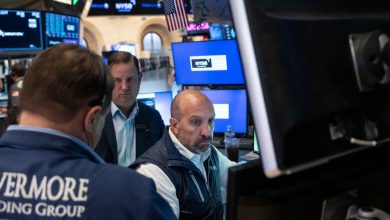
Tech Stocks And Crypto Plunge Amid Global Turmoil
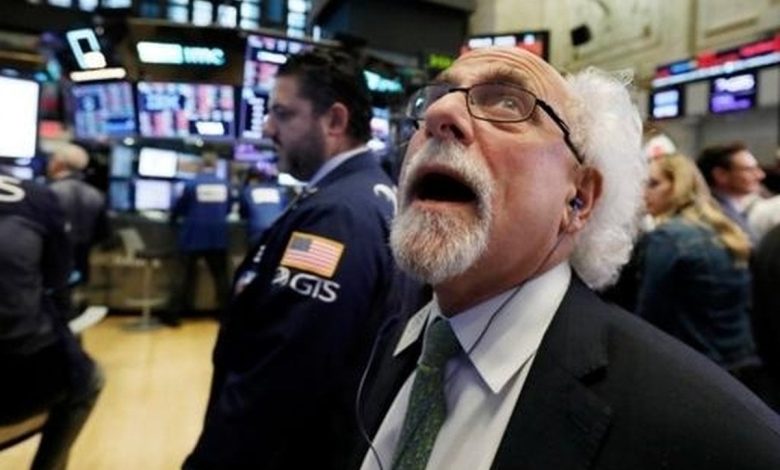
In a week marked by volatility and uncertainty, both Wall Street and the global cryptocurrency markets have been rocked by a cascade of unsettling developments. From surging short interest in tech giants to the ripple effects of geopolitical tensions and inflationary fears, investors across the globe are feeling the heat as February 2026 draws to a close.
According to The Wall Street Journal, short selling has surged on major technology stocks listed on the New York Stock Exchange, with Nvidia, Oracle, and Palantir at the center of this bearish storm. The Philadelphia Semiconductor Index, a bellwether for the sector, has fallen sharply—mirroring the rising skepticism that’s gripping the market. The situation isn’t limited to equities: cryptocurrencies such as Bitcoin, Ripple, Ethereum, Solana, and Cardano have also tumbled, echoing the broader anxiety that’s taken hold.
At the heart of the Wall Street drama is Nvidia, the world’s most valuable company by market capitalization. Despite delivering record-shattering financial results, the company faces intensifying scrutiny. In its fiscal fourth quarter, which spanned November 2025 to January 2026, Nvidia reported revenue of $68.13 billion—a staggering 73% increase from the previous year and well above market expectations. The lion’s share of this windfall, $62.3 billion, came from its data center segment, reflecting the ongoing boom in artificial intelligence (AI) infrastructure. Adjusted earnings per share hit $1.62, beating Wall Street’s forecast of $1.53. For the full year, Nvidia clocked $215.9 billion in revenue, up 65% and setting a new company record.
Yet, despite these blockbuster numbers, short sellers are circling. The reason? Many investors worry that the current frenzy for AI investments may not be sustainable, and that companies like Nvidia could be overextending themselves. Nvidia’s purchase obligations—a measure of its commitments to buy components and inventory—have soared from $16.2 billion a year ago to $95.2 billion as of late February 2026. This massive leap, as noted by CNBC, is part of Nvidia’s strategy to secure supply for AI chips in anticipation of future demand. Colette Kress, Nvidia’s Chief Financial Officer, explained during the company’s latest earnings call, “We have strategically secured inventory and production capacity with a longer-term view than usual, preparing for demand that stretches across several future quarters.”
Not everyone is convinced. Michael Burry, the famed investor portrayed in the film The Big Short, compared Nvidia’s current situation to Cisco Systems during the dot-com bubble. “What’s happening now is not a temporary phenomenon or an external shock. It’s a result of internal business planning,” Burry wrote in his Substack newsletter, warning that Nvidia’s aggressive supply commitments could backfire if demand falters—just as Cisco’s did two decades ago. Back then, Cisco’s overestimation of internet infrastructure demand led to massive inventory write-downs and a catastrophic 90% drop in its stock price.
Burry acknowledged that Nvidia’s profit margins are much higher than Cisco’s were, but cautioned, “If demand changes, these margins could normalize (fall) quickly.” The company’s gross margin for Q4 FY2026 was 75.2%, up 1.6 percentage points from the prior quarter—a figure that both dazzles and worries analysts.
Oracle, another tech heavyweight, is also feeling the pressure. Short interest in Oracle exceeded 2% by the end of January 2026, up from 1.5% a year earlier. Investors are skeptical about Oracle’s $300 billion contract to provide computing power to OpenAI, especially as competition from rivals like Anthropic heats up. Bank of America strategist Michael Hartnett has even advised clients to short the bonds of hyperscalers like Oracle, Meta, and Microsoft, citing concerns over their ballooning AI investments.
Some hedge funds are placing big bets on a pullback. Mark Spiegel of Stanphyl Capital Partners recently shorted Nvidia, believing that the hyperscalers’ spending spree is unsustainable. “It’s inevitable they’ll have to cut back. Even a hint of that, and Nvidia’s stock will crash,” Spiegel predicted. Meanwhile, Ben Eifert of QVR Advisors has wagered millions on OpenAI’s valuation coming in below $300 billion a year after its IPO, betting that data center spending will retreat sharply.
While the debate over AI’s future rages on, the market has been rattled by other forces as well. On February 25, 2026, geopolitical tensions flared after news broke of U.S. and Israeli attacks on Iran. The resulting uncertainty sent shockwaves through the financial world. International crude oil prices jumped 3.02% to $67.18 per barrel on April 2026 futures, fueled by fears of further escalation. The three major U.S. stock indexes opened sharply lower on February 28, reflecting the jittery mood.
Cryptocurrency markets, ever sensitive to global events, bore the brunt of the panic. As reported by Cointelegraph and OKX exchange data, Bitcoin plunged over 6% to around $63,000. Other major coins followed suit: BNB fell more than 5% to $593, Ethereum and XRP both dropped over 8% to $1,860 and $1,200 respectively, and Solana suffered the steepest decline, losing more than 10% to settle at $78. Within just four hours, forced liquidations across crypto exchanges exceeded $250 million, underscoring the ferocity of the sell-off.
Despite these dramatic moves, Bitcoin’s key support levels managed to hold by late February 28, offering a glimmer of hope to beleaguered investors. Still, the mood remains cautious. Bitcoin’s February 2026 drop brings its price perilously close to levels last seen a year earlier, raising the specter of a rare five-month losing streak—the first in seven years. Market analysts, such as the team behind the Cobie Letter, noted on X (formerly Twitter) that “the U.S. and Israel could be facing a second confrontation with Iran in just eight months,” adding to the sense of unease.
Adding fuel to the fire, U.S. inflation data came in hotter than expected. The January Producer Price Index (PPI) rose 0.5% month-over-month, outpacing market expectations of 0.3%. Core PPI surged 0.8%, the largest jump since July of the previous year. These figures have reignited concerns that the Federal Reserve may have to keep interest rates higher for longer, further dampening risk appetite.
“Today’s high inflation data adds another wrinkle to the classic economic analysis of price stability and full employment,” observed Chris Zaccarelli, Chief Investment Officer at Northlight Asset Management. “Even before investors consider the disruptive impact of AI on the economy, anxiety is already setting in.”
Across sectors, the pain has been uneven. Financial stocks have dropped more than 2%, with technology down 1.37%. Meanwhile, online payment firm Block saw its shares surge 17% after announcing it would halve its workforce by leveraging AI—a stark reminder that automation is beginning to reshape the financial industry. Netflix, for its part, jumped over 8% after pulling out of the race to acquire Warner Bros. Discovery.
As February 2026 winds down, the world’s financial markets are at a crossroads. With AI investment fever, geopolitical flashpoints, and inflationary pressures all vying for attention, investors are left to navigate a landscape where the only certainty is uncertainty itself. The coming weeks will test whether the optimism fueling tech and crypto booms can withstand the growing chorus of caution.