A toast to ugly politics
I’ve seen quite a few opinion articles lately exalting compromise, consensus and saying please and thank you when you’re debating with your racist uncle at Thanksgiving. This makes sense. The anger and vitriol that politics brings out of people is unpleasant. People will throw a level of decency out the door that they never would when discussing any other topic. Who really likes ugly politics?
I do, and I’m going to tell you why I’m right and you’re a bad person for thinking otherwise. In all seriousness, mutual respect and compromise are essential parts of a productive political process, but politics will always generate a certain degree of friction — it’s inevitable when people disagree strongly on important issues. The quest for politics free of tension or antagonism is, I fear, fruitless. Acceptance of the antagonistic nature of politics though, does not mean that compromise is pointless. I think once we understand that politics has a certain degree of inherent antagonism, we can build more stable compromises.
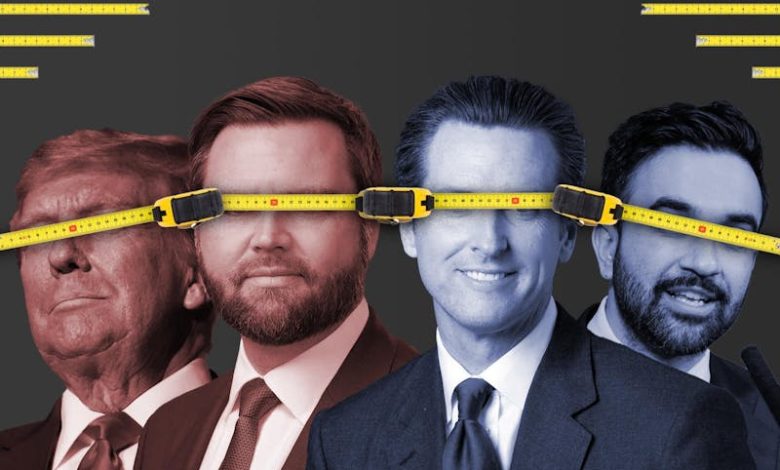
I don’t want to suggest that politics is a zero-sum game, but to an extent it is. So much of our life is dependent on what the government does and doesn’t do, and often policies will have some negative effect. As an example, let’s get away from the contentious issues that dominate the news to something less controversial (unless you’re an engineer): changing to the metric system. While many laud the metric system as a vastly superior system compared to imperial, switching to it would make everything involving measurements more costly. Industrial equipment set to cut or bend or shave something based on imperial measurements would either have to be re-made or tossed. The same goes for signs on the side of the road, components in our electrical devices and a bunch of other things that I’m too much of a humanities kid to think of.
Even if the theoretical benefits of policy decision outweigh the costs, there still will be a cost. For some, that cost might be small, but for others, it could be the difference between being able to pay rent or afford their groceries.
The moral implications of political decisions must also be considered. The great political debates of our time often hinge on moral valuations that are impossible to objectively measure. How can you argue that the security benefits of increased surveillance outweigh the cost to privacy when both are abstract concepts which are valued differently by different people?
Ultimately, there are no political decisions that can be made without some great price. Someone, somewhere will pay some cost for every decision. And even if the benefits outweigh the costs in our eyes, they probably won’t to someone else. However, we can’t just refuse to make changes. If we allow the fear of offending others, the fear of friction, to paralyze us, we will end up with a government that fits our reality less and less. The only thing worse than making a decision is doing nothing.
This leaves us the question of how we should compromise. If there are going to be “losers” and “winners” in every political decision, then how do we get people to be willing to be losers? I believe that the answer lies in the fact that today’s losers can be tomorrow’s winners. We may not get political outcomes we 100% agree with, but we get to live in a society that can actually implement the policies we do agree with. Recognizing our mutual dependence on each other, I think, is a much more stable foundation for compromise, than a moral imperative to engage in polite politics.
Politics will always suck. Someone will always be worse off due to a political decision. However, we should not let that fact paralyze us. Instead, we must bear the burden of politics cautiously, minimizing collateral damage and maximizing benefits. We must recognize that our political opponents are motivated by a similar love of neighbor and country as us, and we must compromise for the sake of the wider project of American democracy.
Contact Patrick Kompare at pkompare@nd.edu.
The views expressed in this column are those of the author and not necessarily those of The Observer.
Credit: Source link