BDP Foundation builds futures while honoring Clarendon’s civil rights past
by Melissa Foust-McCoy
History is often told through dates and events, but its true legacy lives through people. This Black History Month, The Manning Times is sharing stories of Clarendon County residents and organizations whose lives reflect strength, service and progress. Through their experiences, readers will gain a deeper understanding of the sacrifices made, the barriers overcome and the ongoing work that continues to shape our community today.
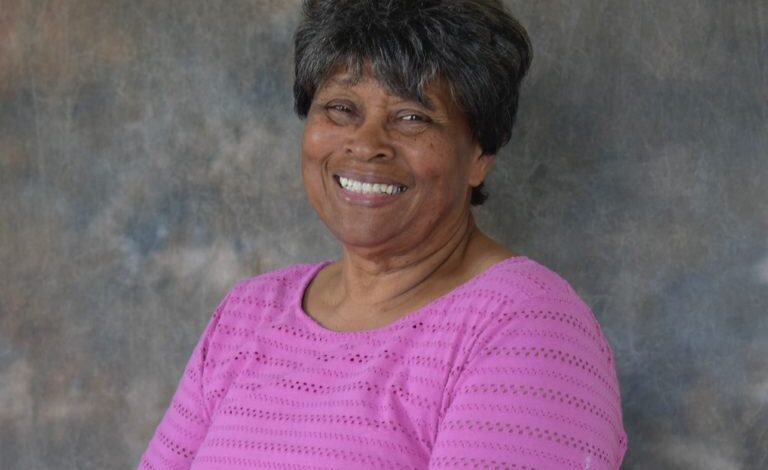
Long before the Briggs-DeLaine-Pearson Foundation opened its doors to students needing homework help and a warm meal, Marguirite DeLaine remembers what it meant to chase an education in rural Clarendon County — sometimes on foot, sometimes in overcrowded buses, often with secondhand books stamped for “colored schools only.”
Now the retired educator and board chairperson of the foundation — and niece of civil rights leader the Rev. J.A. DeLaine — is helping lead a new generation through those same doors her family once fought to unlock.
The BDP Foundation, a 501(c)(3) volunteer nonprofit based in Summerton, was founded in 1993 to memorialize the participants of Briggs v. Elliott, the Clarendon County lawsuit that became the first of five federal cases consolidated into the U.S. Supreme Court’s 1954 decision in Brown v. Board of Education.
The foundation’s work today is rooted in the same premise that sparked the case decades ago: education is the pathway to opportunity — but only if children can access it, and only if communities are willing to invest in it.
DeLaine, who grew up in Manning and graduated from the former Manning Training School, now Manning Elementary School, traces the fight back to a problem that sounds simple in hindsight: getting children to school.
“It started with the lawsuit for bus transportation,” she said. “It was not to necessarily integrate the schools. It [started] to get transportation so that the kids could get a better education, especially those who were living in rural areas where the schools would end at either fifth or seventh grades.”
When that effort failed, the focus shifted to what was described as equal opportunity and ultimately to the reality the courts would later affirm: separate was not equal.
DeLaine remembers opening her books as a student and finding pages torn, answers written in, and notes left behind by earlier users — white students.
“The books that we had were passed down and they had stamped in the cover ‘For Use in Colored Schools Only,’” she said. “We had to also rent those books and if there were any marks in them, we would have to pay a damage fee.”
Those memories, she said, are not shared to dwell on the past, but to help the present make sense.
“If we don’t know our history, it’s bound to be repeated,” DeLaine said. “A history unknown is a history that’s bound to be repeated.”
On the foundation’s website, the BDP Foundation describes its mission as serving individuals from low-income backgrounds, with its primary service area spanning Clarendon County. The group also highlights the long aftermath of Briggs, noting that plaintiffs and supporters faced years of economic reprisals and threats, and that South Carolina schools were not integrated until nearly a decade after Brown.
DeLaine’s family history sits inside that timeline, too. She spoke of relatives who walked miles to school each day, and of the leadership her uncle provided as families faced pressure and harassment.
Education, she said, was the constant.
Her mother, Lula Mae Green DeLaine, devoted decades to teaching in Clarendon County — first through seventh grades in the sanctuary of a small Baptist church, back when many Black schools operated in churches, community-built buildings, and private homes. When she retired from public schools, DeLaine said her mother continued working in Head Start.
“She put in about 50 years in education,” DeLaine said.
That legacy shaped Marguirite DeLaine’s own path. She and her sisters attended Allen University, and DeLaine went on to teach in rural areas for years — first in predominantly Black schools, before and during the era of integration. Even then, she said, rural poverty and limited resources created barriers that crossed racial lines.
“When the schools were integrated, I found that some of the lesser affluent white kids had some of the same problems,” she said.
DeLaine eventually returned home, joining the BDP Foundation in 2002 after living and working outside the county.
“I always said when I retired, I wanted to come back home to give back to the community that gave to me,” she said.
That idea — giving back, and lifting up — is built into the foundation’s current “buzzword,” as she calls it: “Honor and prepare.”
“We want to honor our past but we also want to prepare our young people so that they will be able to go forward and live a better life,” DeLaine said. “Education is the key.”
That preparation now happens inside the foundation’s education center on Alex Harvin Highway, where students receive homework support, reading and math help, mentoring and meals. DeLaine often repeats a guiding phrase.
“A hungry child can’t learn,” she said.
She’s blunt about why food matters: many children eat lunch around midday, then arrive for after-school programs hours later. Hunger makes it hard to focus, she said — and can be embarrassing for children who are already struggling.
“If your brain is not provided the right nutrition, it is not going to work,” she said.
DeLaine said families and teachers have shared positive feedback, including improvements in students who attend. But she also said the organization is operating below its capacity and needs the community’s help to grow.
The building includes seven classrooms, she said, but only two are being used.
“We have the grant for about 60 kids, but we only have 20,” DeLaine said. “We need the kids to come in.”
The foundation also needs workers — both volunteers and qualified teachers — including people willing to work one-on-one with students who are behind grade level.
“A volunteer wouldn’t have to spend but half an hour a day,” she said. “Just work with that kid, to try to bring that kid up to grade level.”
Partnerships have helped support the work. DeLaine said the foundation works with Clemson University to secure a grant that helps pay teachers and materials and supports curriculum planning connected to education standards. She said book donations have also helped stock the center.
The organization also works to expand students’ horizons through educational trips designed to help them identify career interests — including paths beyond a traditional four-year college route.
“Everybody’s not made for college,” DeLaine said. “We want to introduce our students to alternatives.”
She pointed to their partnership with Classic Remodeling, a Johns Island-based contractor that has pledged to help provide several trips a year. In December, DeLaine said the group took students to Charleston, including visits to the visitor center and an African American museum, with a meal included. A trip is also being planned for March to Oconee County to tour a Duke hydroelectric facility.
“If a child does not know what’s out there, they cannot develop an imagination for what they can do,” she said.
As Black History Month begins, DeLaine said she hopes young people in Clarendon County understand that the doors opened by the Briggs plaintiffs were not meant to end the work — only to make it possible.
“They opened the door so that they could walk through it by being prepared,” she said. “And it’s up to them to get prepared because we have not overcome yet.”
She also challenged parents and guardians to stay engaged.
“We got where we got because our parents pushed us every day,” DeLaine said. “We can’t just let them to their own devices and not expect a child to do what a child is going to do. The child’s gonna play.”
The foundation is also continuing to raise funds for a multipurpose room that would serve as a cafeteria and gathering space for meetings, programs and an end-of-year awards ceremony.
For more information, to volunteer, or to donate, visit briggsdelainepearsonfoundation.org