Bitcoin More Attractive Than Gold, This Scenario to Propel Bitcoin to $266,000
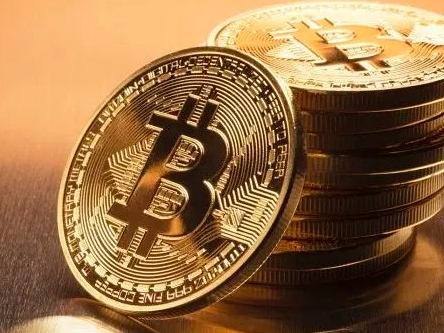
FX168 Financial News Agency (North America) reported that in recent weeks, the positioning of Bitcoin in institutional capital discussions has been shifting. Reports indicate that analysts at JPMorgan now believe that, after adjusting for risk measurement methods, Bitcoin may be more attractive to long-term investors than gold. Considering that gold has been the market’s default “safe-haven asset” for decades, this perspective represents a significant turning point.
The upward momentum of gold cannot be overlooked either. After experiencing sharp volatility, the price of gold rebounded following a steep decline in early February, returning to approximately $5,000 per ounce. Several major banks predict that gold will continue to strengthen later in 2026. This rebound occurred after gold reached new all-time highs; JPMorgan even forecasted that gold prices could reach around $6,300 per ounce by the end of the year.
In contrast, Bitcoin’s performance appears more volatile. Since peaking above $126,000, Bitcoin has retreated nearly 50%, hovering between $65,000 and $70,000 in early February. Analysts estimate that this level is now below its “production cost” (mining cost), which stands at approximately $87,000.
The “bridge” connecting price and risk
The “mathematics” behind JPMorgan’s viewpoint is not merely about comparing the current price levels of the two assets but focuses more on the intensity of their price fluctuations. Previous price increases were accompanied by rising uncertainty—amid geopolitical turmoil and macroeconomic disruptions, gold’s volatility has risen significantly, while Bitcoin’s volatility has moderated compared to its historically extreme levels.
This convergence is reflected in the so-called “Bitcoin-to-Gold Volatility Ratio.” According to JPMorgan, this ratio has fallen to a historical low of approximately 1.5. On the surface, this means that the risk associated with Bitcoin is only about 1.5 times that of gold—a closer alignment compared to historical norms. With the risk gap narrowing, Bitcoin becomes more competitive in risk-adjusted return comparisons.
Within this framework, analysts further estimated that if Bitcoin were to match the scale of gold (with private-sector gold investment totaling approximately $8 trillion), its market capitalization would need to increase substantially. If such an alignment occurs, relevant models suggest that Bitcoin’s price could approach $266,000. While JPMorgan does not view this as a short-term target, this “theoretical calculation” illustrates the potential upside for Bitcoin should market sentiment and capital allocation shift.
Market movements offer another reminder
From a broader market perspective, tokens such as XRP, Ethereum, and Solana, alongside Bitcoin, have recently been caught up in the selloff of risky assets. As traders retreat from higher-risk bets, these cryptocurrencies have experienced noticeable declines in recent trading sessions, with buying interest and liquidity under pressure. This also implies that Bitcoin’s relatively milder volatility may not be sustainable in the long term, particularly during periods of tightening market conditions.
Gold’s sharp fluctuations also test investor sentiment. At the beginning of 2026, gold experienced rare and significant volatility, including double-digit drops and rebounds, challenging its reputation as a “stable safe haven.” However, the recovery of gold prices to near $5,000 per ounce underscores that defensive buying remains intact.
What investors are weighing
JPMorgan’s position does not claim that Bitcoin will immediately replace gold in asset allocation. Analysts are emphasizing how the market is currently reassessing relative risks and potential returns. The recent decline in Bitcoin’s volatility, coupled with the ‘significant theoretical upside’ extrapolated from the size of the gold market, has made it more attractive from certain long-term perspectives.