Blockade Politics: How U.S. Control of Venezuela Is Choking China’s Oil Lifeline
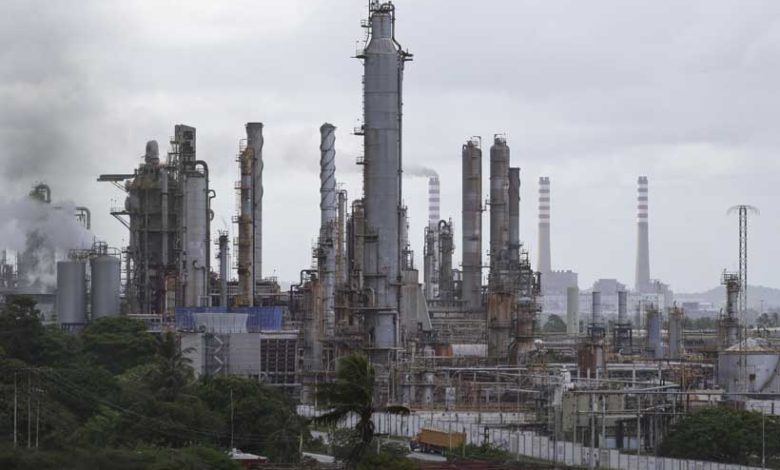
China’s oil imports from Venezuela are expected to decline sharply from February as U.S. enforcement measures disrupt crude shipments. The downturn follows Washington’s declaration of a naval blockade in December on vessels transporting Venezuelan oil, part of a broader pressure campaign against President Nicolás Maduro that culminated in a U.S. military operation resulting in his capture.
Following the operation, U.S. President Donald Trump asserted American control over Venezuela, a founding member of OPEC, and called on U.S. companies to re-enter the Venezuelan energy sector. Since then, the United States has seized five vessels linked to Venezuelan crude exports, creating a chilling effect across the shipping industry and constraining Venezuela’s oil flows to its largest customer, China.
Disruption of Oil Shipments
The blockade has significantly reduced the number of tankers departing Venezuela for Asia. Several shipowners have either rerouted vessels or returned to Venezuelan waters after loading, seeking to avoid seizure risks. While around a dozen tankers initially departed with transponders switched off during the January 3 U.S. raid, most later reversed course following negotiations between Caracas’ interim authorities and Washington over a 50-million-barrel oil supply arrangement.
Only three tankers carrying roughly five million barrels of fuel oil and Merey heavy crude have continued toward China and are expected to arrive by late February. This equates to approximately 166,000 barrels per day far below Venezuela’s 2025 average exports to China of 642,000 bpd, which previously accounted for nearly three-quarters of the country’s total crude and fuel oil exports.
China’s Stockpiles and Market Response
Despite the anticipated decline in arrivals, China is not facing immediate supply pressure. Large volumes of Venezuelan crude were stockpiled in late 2025, and tens of millions of barrels remain in transit. Estimates from shipping trackers suggest between 43 and 52 million barrels of Venezuelan oil are currently heading eastward.
Chinese imports peaked at a record 660,000 bpd in November before falling to around 450,000 bpd in December as storage capacity tightened. This buffer has allowed Chinese refiners to delay seeking alternative supplies, at least in the short term.
Impact on Independent Refiners (Teapots)
The supply disruption is expected to disproportionately affect China’s independent refiners, known as “teapots,” which have been the primary buyers of Venezuelan heavy crude. These refiners typically process Merey and fuel oil into bitumen for road construction. Although Venezuelan crude accounts for only about 4% of China’s total seaborne oil imports, its importance to teapots is significantly higher.
Some refiners still have cargoes scheduled for March and April that departed before the blockade, but uncertainty surrounds supply availability beyond the first quarter. For the second quarter, teapots may turn to alternatives such as Canada’s Cold Lake or Access Western Blend, particularly if Venezuelan barrels are redirected to the U.S. market under American oversight.
Implications
Geopolitically, the blockade signals a decisive shift in U.S. strategy from sanctions enforcement to direct control over energy flows. By restricting Venezuelan exports to China, Washington is effectively using oil as a coercive geostrategic tool—reshaping trade routes, influencing market behavior, and constraining Beijing’s energy diversification efforts.
Economically, the disruption introduces volatility into heavy crude markets, potentially benefiting alternative suppliers such as Canada. For China, the episode underscores the vulnerability of relying on sanctioned producers and the limits of sanction-evasion practices, such as rebranding Venezuelan crude as Malaysian or Brazilian supplies.
Personal Analysis
From a geopolitical perspective, this development illustrates the evolving nature of energy geopolitics in a multipolar world. Control over production alone is no longer sufficient; dominance over shipping, insurance, and maritime enforcement has become equally critical. The U.S. blockade demonstrates how naval power and financial jurisdiction can be leveraged to reshape global energy flows without formally rewriting trade rules.
For China, the situation reinforces the strategic importance of stockpiling, diversification, and overland energy corridors that reduce exposure to maritime chokepoints and U.S. enforcement mechanisms. In the longer term, sustained interference in Venezuela–China oil trade may accelerate Beijing’s investments in alternative heavy crude suppliers and deepen its pursuit of energy security beyond seaborne routes.
With information from Reuters.
Credit: Source link