BSE, Groww, Angel One shares crash 13% as Budget 2026 raises STT on futures and options
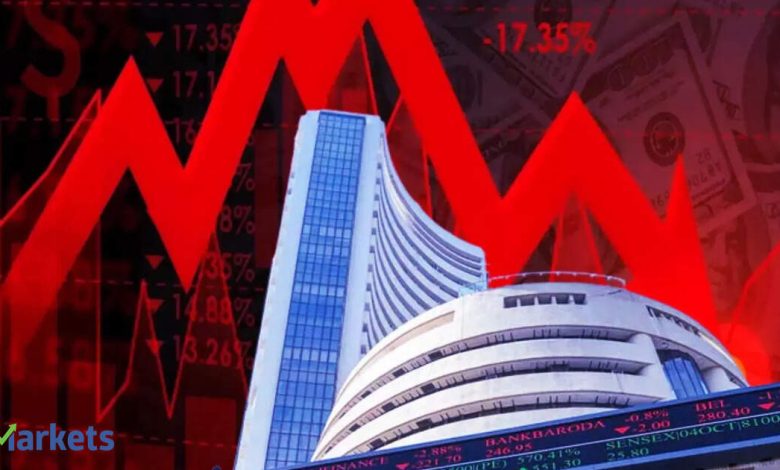
BSE shares fell to as low as Rs 2,517.30 on the BSE, while Angel One declined to Rs 2,284.70, as investors reacted to higher levies on derivatives trading announced in the budget presented earlier in the day.
Under the Budget 2026 proposals, the STT on futures transactions was increased from 0.02% to 0.05%. The STT on options premium was raised from 0.10% to 0.15%, while the levy on options exercise was increased from 0.125% to 0.15%.
“To introduce a measured course correction in the F&O segment of the capital markets and generate additional revenue for the government, it has been proposed to increase the Securities Transaction Tax (STT) on futures to 0.05% from 0.02%. Additionally, the STT on options is proposed to be raised to 0.15%, from the current rates of 0.1% on options premium and 0.125% on exercise of options. The move is aimed at moderating excessive speculative activity while augmenting tax collections.” Finance Minister Nirmala Sitharamn said.
The changes mark a significant jump in transaction costs for derivatives traders and are expected to weigh on trading volumes, which have surged in recent years and form a key revenue driver for stock exchanges and retail brokerages.
“The steep increase in STT on futures and options, coming on top of last year’s hike, is likely to raise impact costs for traders, hedgers, and arbitrageurs. This could cool derivative activity and lead to a reduction in volumes. The intent appears to be volume moderation rather than revenue maximisation, as any potential revenue gain could be offset by lower derivative volumes,” said Shripal Shah, MD & CEO, Kotak Securities said.
Commenting on the increase in Securities Transaction Tax (STT) on futures and options, Archit Gupta, Founder and CEO of ClearTax, said the sharp hike sends a clear policy signal aimed at curbing excessive short-term trading. The Budget proposes a 150% increase in STT on futures and a 50% hike on options, underscoring the government’s intent to temper speculative activity in the derivatives market.Gupta noted that despite STT collections remaining largely flat at around Rs 45,000 crore between FY25 and FY26, against a target of Rs 78,000 crore, the more significant shift has been in investor behaviour. Retail participation has not declined but evolved, with over 21 crore demat accounts and record SIP inflows exceeding Rs 31,000 crore in 2025, indicating a clear move from frequent trading toward long-term investing. The policy stance, he said, reflects a preference for encouraging stable capital formation over maximising short-term transaction revenue.
“The increase in Securities Transaction Tax (STT), especially in futures and options, is likely to act as a marginal negative for foreign portfolio investor (FPI) flows in the near term, particularly for high-frequency and derivative-focused global funds,” said Aakash Shah, Technical Research Analyst at Choice Equity Broking.
Recent data already shows that FPIs have been cautious, with equity outflows of over Rs 41,000 crore in January 2026 alone, reflecting global risk-off sentiment, elevated US bond yields, and currency pressures, Aakash Shah noted, adding that “in this context, a higher STT further reduces post-tax returns, making India relatively less competitive for short-term and derivative-oriented foreign flows.”
However, for long-only, fundamentally driven FPIs, the STT hike is unlikely to be a deal-breaker, Aakash Shah said, noting that their investment decisions are more influenced by earnings visibility, currency stability, and policy predictability.
Securities Transaction Tax (STT) is a levy charged on the value of securities transactions executed on recognised stock exchanges in the country. It applies to trades in equities, equity mutual funds, and derivatives such as futures and options. STT is collected at the time the transaction takes place, irrespective of whether the investor makes a profit or incurs a loss.
(Disclaimer: Recommendations, suggestions, views and opinions given by the experts are their own. These do not represent the views of The Economic Times)