European Stocks Lower as Crude Oil Jumps, Ships Are Hit in Strait of Hormuz
Key Takeaways
- Brent crude prices rose in afternoon trading.
- US markets were flat as investors digested inflation data.
- Government bonds also came under pressure again, sending yields higher.
European stocks closed lower on Wednesday, while US stocks were flat, as oil prices rebounded and traders weighed further energy supply disruption due to the Iran war, despite the release of emergency oil reserves.
The Morningstar Europe Index was down around 0.50% at the close, as the German DAX benchmark led losses among major regional indexes, shedding 1.6%.
The Morningstar US Market Index was little changed, as inflation came in line with expectations. Asian stocks in the Morningstar Asia Index closed 0.8% higher in dollar terms.
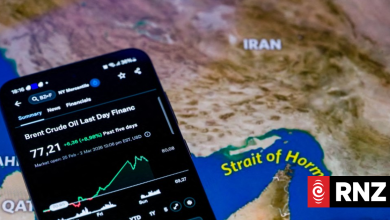
Oil prices rose again on Wednesday, undoing some of Tuesday’s cool-down, even as the International Energy Agency launched a historic release of emergency oil reserves to help shore up global energy markets. However, experts are skeptical such a move would be a game changer.
“If you actually look at what’s being proposed … that is minuscule in terms of what we’re actually losing from the Middle East,” Christopher Haines, head of oil at Energy Aspects, says.
The release of 400 million barrels of oil—which accounts for around one-third of the agency’s total emergency reserves—will have limited impact in compensating for the 7 million barrels per day of crude that typically flows through the Strait of Hormuz, according to Haines.
Brent crude and West Texas Intermediate crude were both up around 4% to USD 91 and USD 87, respectively, following the announcement.
Oil trading had turned volatile in the prior session, with Brent briefly dipping below USD 80 after US Energy Secretary Chris Wright wrongly claimed on social media that the US Navy had escorted a tanker through the Strait of Hormuz. He later deleted the post.
Meanwhile, the US military said overnight that “multiple” Iranian vessels, including 16 minelayers, had been struck near the Strait of Hormuz amid reports that Tehran had begun laying explosives in the critical energy gateway.
Government bonds also came under pressure Wednesday as investors again weighed the impact of a sustained higher oil price on inflation.
“The key point is that even if equities appear relatively stable day to day, markets remain sensitive to geopolitical headlines and energy prices, which could still influence inflation and central-bank policy expectations,” Saxo Bank writes.
Yields on the UK’s 10-year gilt benchmark rose 0.09 percentage points to 4.64% and those for Germany’s 10-year bunds rose 0.03 percentage points to 2.89%. The US 10-year Treasury yield was 0.02 percentage points higher at 4.16%.
The author or authors do not own shares in any securities mentioned in this article. Find out about
Morningstar’s editorial policies.