Geothermal on public markets and the Fervo IPO
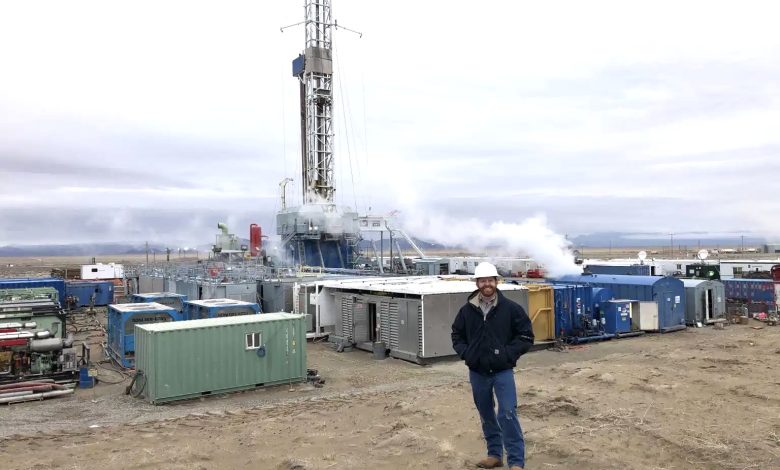
A look at geothermal’s uneven stock market history and what it may mean for Fervo Energy’s reported IPO and market valuation debate.
Fervo Energy’s reported confidential IPO filing is reviving an old geothermal question: what, exactly, will public markets pay for drilling risk and scale-up claims?
A familiar moment for geothermal investors
Reports that Fervo Energy has confidentially filed for an initial public offering have triggered renewed discussion about how public markets value geothermal energy companies. The reported move comes at a time when interest in firm, low-carbon power is rising, driven in part by data centre demand and broader energy system constraints.
At the same time, market commentary suggests that Fervo’s expected valuation may be lower than what some late-stage investors were led to anticipate during its most recent private funding round. According to reporting by Axios Pro, pre-IPO valuation discussions are said to be in the range of USD 2-3 billion, a figure that reflects ongoing uncertainty about how to price geothermal technologies that have yet to be proven at large commercial scale.
This article is an opinion and context piece. It reflects on the historical performance of geothermal companies on public markets and discusses how those precedents may inform the current debate around Fervo Energy’s reported IPO filing. Valuations cited are based on public reporting and market commentary.
When geothermal first met public equity markets
Geothermal energy has been here before.
Between roughly 2006 and 2010, a wave of geothermal developers listed on the Toronto Stock Exchange and TSX Venture Exchange. These included Nevada Geothermal Power, Western GeoPower, Sierra Geothermal Power, Magma Energy, and Ram Power. At the time, strong commodity markets and growing interest in renewable energy created favourable conditions for exploration-driven equity stories.
The investment thesis was familiar. Identify high-quality geothermal resources, advance projects through drilling and permitting, and build a diversified portfolio of assets that could support long-term growth. In practice, the path from exploration to stable cash flow proved longer and more capital-intensive than many public investors expected.
Several of these companies ultimately merged, restructured, or exited the public markets. Ram Power, for example, combined with Polaris Geothermal and Western GeoPower in a consolidation that reflected the pressures facing early-stage geothermal developers operating in public equity environments.
What public markets rewarded and what they did not
Looking back, the lesson from this period is not that geothermal failed as a technology. It is that public markets struggled to price the specific risk profile of geothermal development.
Equity investors were often willing to support early exploration narratives but less patient when drilling results, permitting timelines, or capital costs deviated from expectations. Subsurface uncertainty, front-loaded capital expenditure, and long development cycles created a mismatch with public market time horizons.
Companies that could demonstrate repeatable execution, operating cash flow, and disciplined capital management fared better. Those that remained primarily exploration-driven found it difficult to sustain valuations once early enthusiasm faded.
Ormat and the value of operating scale
One notable exception to this pattern has been Ormat Technologies.
Listed on the New York Stock Exchange, Ormat represents a different geothermal equity profile. The company combines an established operating fleet with equipment manufacturing and long-term power sales contracts. This mix has allowed public investors to model revenues, margins, and growth with greater confidence than is typically possible for early-stage developers.
Ormat’s experience underscores an important point. Public markets have shown they can value geothermal businesses when operational risk is reduced and performance can be demonstrated across multiple projects and cycles. See the company’s investor pages and recent news on the acquisition of a stake in Sage Geosystems, that was announced last week.
Lessons from Australia and Europe
The geothermal equity story has not been limited to North America.
In Australia, a group of companies including Geodynamics (back then with backing of energy company Origin Energy), Petratherm, KUTh Energy, and Green Rock Energy attracted attention in the late 2000s around enhanced geothermal system (EGS) concepts. While technical progress was made, most struggled to convert early promise into commercial viability at scale under prevailing market and policy conditions. These companies are no longer listed.
In Europe, companies such as Climeon illustrate a different challenge. Even with a clear geothermal-adjacent technology focus, public valuations can be volatile when order intake, margins, or growth expectations fall short of investor assumptions.
Vulcan Energy Resources represents yet another category. Its public market story is driven primarily by lithium production, with geothermal positioned as part of an integrated low-carbon extraction model. As such, its valuation dynamics are shaped more by battery materials markets and project finance milestones than by power generation alone.
Fervo as a price discovery moment
Against this backdrop, Fervo Energy’s reported IPO filing can be seen less as a judgement on a single company and more as a potential price discovery moment for geothermal as a sector.
Fervo is widely described as a next-generation geothermal developer, leveraging horizontal drilling, fibre-optic sensing, and data-driven reservoir management to expand geothermal beyond conventional hydrothermal settings. The company is expected to deliver first power from its Cape Station project in the near term, with further technical validation planned later this year.
According to reporting by multiple outlets, including Houston Business Journal, Latitude Media, Barron’s, and AInvest, investors are still debating how to value this combination of near-term power generation and longer-term technology scale-up.
A wider market inconsistency
The discussion around Fervo’s valuation also sits within a broader energy market context.
Other frontier energy companies, including advanced nuclear developers, have at times attracted public market valuations far in excess of near-term revenue potential. This contrast highlights an unresolved question in capital markets: how to price firm, low-carbon energy technologies that combine infrastructure-like characteristics with venture-style technical risk.
Geothermal often occupies an uncomfortable middle ground. Once built, geothermal plants behave like stable infrastructure assets. Before that point, they require investors to absorb subsurface risk that is difficult to diversify and slow to de-risk.
Still early days for geothermal as a public equity story
From a historical perspective, the reported valuation range discussed for Fervo suggests that public markets remain cautious. That caution reflects decades of experience, not a lack of relevance for geothermal energy itself.
If Fervo succeeds in demonstrating repeatable well performance, predictable costs, and scalable project delivery, it may help shift how geothermal is priced in public markets. If not, the sector may continue to rely on private capital, strategic investors, and project-level financing for longer than many advocates would like.
Either way, this IPO process will be closely watched. Not because it will provide a final answer, but because it will offer new data points in a long-running discussion about geothermal’s role in the energy transition and its place in public equity markets.