Global Stocks

Global stocks fall as traders await Amazon earnings and digest central bank decisions
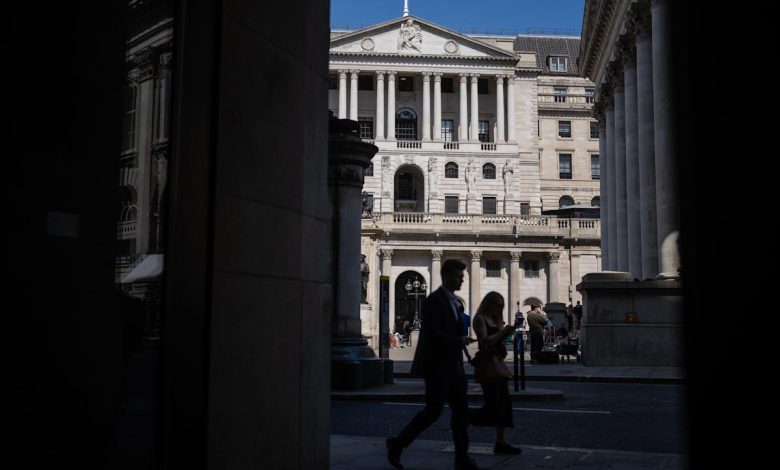
Wall Street opened lower on Thursday as traders continued to assess the valuation of AI and technology companies ahead of Amazon earnings. It also came after Alphabet’s reveal of big AI spending plans, and fresh jobs data that signalled weakness in the US labour market.

Meanwhile, the FTSE 100 (^FTSE) and European stocks also slipped as traders digested the latest decision on interest rates from both the Bank of England (BoE) and the European Central Bank (ECB).

UK interest rates were held at 3.75% as inflation rose to 3.4% in the year to December. Money markets earlier indicated a marginal 5% chance that Threadneedle Street would lower interest rates to 3.5%, and a 95% likelihood for a hold.

Just five of the Bank of England’s monetary policy committee (MPC) – Andrew Bailey, Megan Greene, Clare Lombardelli, Catherine L Mann and Huw Pill – voted to maintain bank rate at 3.75%. Meanwhile, four of the nine policy makers — Sarah Breeden, Swati Dhingra, Dave Ramsden and Alan Taylor — opted to cut rates to 3.5%.

This means governor Andrew Bailey was once again the swing voter. In December he had voted with the other doves in a similarly narrow vote to cut rates.

Read more: Bank of England holds interest rates at 3.75%

George Brown, Senior Economist, Schroders said: “Today’s rate decision was seen as a foregone conclusion, but the bank’s close vote to hold rates suggests cuts are not a matter of if, but when.”

“The bank’s guidance had been cautious and non‑committal, reflecting unease about the persistence of underlying inflation. That had left governor Bailey holding the deciding vote – an unusually fine balance that underlines just how delicate this stage of the rate cycle has become. But his messaging suggests there should be further easing, with Mann also now leaning towards easing rates. The temporary disinflationary window ahead should offer enough cover to justify one or two more cuts.”

“However, the bank will have to act soon if it intends to cut, before that window closes and the opportunity for further easing slams shut in the second half of the year.”

Meanwhile, the European Central Bank (ECB) also left interest rates on hold at 2%, as widely expected, after inflation in the eurozone came in at 1.7% in the year to January.

This means rates across the eurozone have been paused for a fifth consecutive time, since June last year, after inflation slipped back to the bloc’s target.

“With interest rates already far lower than its peers, inflation closely aligned with target and economic growth relatively steady, the ECB’s policymakers can afford to remain patient. For now, and likely for the remainder of the year, the ECB is in a comfortable ‘wait‑and‑see’ position,” Lindsay James, investment strategist at Quilter, said.


Economists still expect no change in the coming months from the ECB, which has predicted that inflation will average 1.9% in 2026 after hovering at 2.1% last year.

Interest rates in the eurozone are already at the ECB’s target of 2%, with inflation falling to 1.7% in January thanks to lower energy costs and a stronger euro.

Read more: Eurozone inflation cools to 1.7% as ECB set to hold interest rates

  • London’s benchmark index (^FTSE) was 0.8% lower in afternoon trade.

  • Germany’s DAX (^GDAXI) was 0.8% down and the CAC (^FCHI) in Paris headed 0.5% into the red.

  • The pan-European STOXX 600 (^STOXX) was down 1.1%.

  • The S&P 500 (^GSPC) moved roughly 0.9% lower, while the Nasdaq Composite (^IXIC) shed 1.3%. The Dow Jones Industrial Average (^DJI), which includes fewer tech names, edged about 0.5% lower.

  • The pound was 0.7% down against the US dollar (GBPUSD=X) at 1.3555.

Follow along for live updates throughout the day:

LIVE 18 updates

  • Eurozone economy remains resilient, says Lagarde

    ECB president Christine Lagarde told reporters on Thursday:

  • Stepping away from central banks for a brief moment, the countdown is now on to Amazon’s (AMZN) quarterly report, set for release after Thursday’s market close.

    Eyes are on the all-important AWS cloud unit, expected to deliver a 21% jump in sales.

    Amazon’s results come after Meta (META) and Microsoft (MSFT) announced their earnings last week, drawing opposing reactions from the Street. While traders cheered on Meta, they sold off Microsoft despite both companies saying they are increasing their AI spending.

    The report also follows Amazon’s announcement that it is cutting 16,000 jobs as it seeks to “strengthen our organization by reducing layers, increasing ownership, and removing bureaucracy.”

    It’s a familiar strategy across Big Tech, with companies like Microsoft and Meta “flattening” their organizational structure by laying off workers.

    Amazon also said it is closing its Amazon Fresh and Amazon Go stores, replacing some with Whole Foods locations.

    Amazon and Microsoft shares have been major laggards over the past 12 months, trailing Google by a wide margin.

  • ECB in comfortable ‘wait and see’ position

    Lindsay James, investment strategist at Quilter, said:

  • ECB holds interest rates at 2%

    The European Central Bank (ECB) has left interest rates on hold at 2%, as widely expected, after inflation in the eurozone came in at 1.7% in the year to January.

    This means rates across the eurozone have been paused for a fifth consecutive time, since June last year, since inflation slipped back to the bloc’s target.

    Economists still expect no change in the coming months from the ECB, which has predicted that inflation will average 1.9% in 2026 after hovering at 2.1% last year.

    However, Andrzej Szczepaniak, an analyst at Nomura, said he expects its next move to be an increase rather than a cut, although he expects rates to “remain on hold for the foreseeable future”.

    He forecasts unemployment in the eurozone to fall further, “adding to wage growth and inflationary pressures”. He predicted at least two quarter point increases in rates in 2028 to “bring inflation back to target”.

    ECB president Christine Lagarde is set to speak at the bank’s press conference at 1:45pm UK time.

  • Traders increase bets on rate cuts

    Traders have raised their bets on interest rate cuts this year after the latest comments from governor Andrew Bailey.

    Money markets indicate a 59% chance of a rate cut in March, up from just a 21% chance before the Bank of England’s latest decision was announced.

    A rate cut is priced in by April, with traders forecasting an 83% chance of a second reduction in borrowing costs by the end of the year.

    The chances of two cuts were around 50/50 before it emerged that the MPC voted to hold rates by a surprisingly 5-4 split.

  • Why today’s BoE hold is a “distraction” for UK savers

    On the back of the Bank of England rate hold, Karen Barrett, founder and chief executive of financial advice Unbiased argues that while the breathing space is good news for savers, the constant speculation around rate decisions is becoming a distraction that leads many consumers into making knee-jerk financial decisions.

    She said:

  • Bank split 5-4 on rate decision

    Just five of the Bank of England’s monetary policy committee (MPC) – Andrew Bailey, Megan Greene, Clare Lombardelli, Catherine L Mann and Huw Pill – voted to maintain bank rate at 3.75%.

    Four of the nine policy makers — Sarah Breeden, Swati Dhingra, Dave Ramsden and Alan Taylor — opted to cut rates to 3.5%.

    This means governor Andrew Bailey was once again the swing voter. In December he had voted with the other doves in a similarly narrow vote to cut rates.

    Lindsay James, investment strategist at Quilter, said:

  • BREAKING: Bank of England holds interest rates

    The Bank of England has left interest rates on hold at 3.75% as expected, but relief may be coming for UK borrowers within months.

    The rise in inflation to 3.4% in December made it near impossible for BoE policymakers to vote to cut interest rates. But looking further ahead, two quarter-point cuts are expected by the end of this year.

    Nick Leeming, Chairman of Jackson-Stops, said:

  • UK construction slows in January

    The UK construction sector slowed again last month, data firm S&P Global reported.

    Housebuilding, civil engineering and commercial building activity all continued to drop, however, the decline in activity was the smallest drop in seven months.

    Housebuilding was the weakest-performing segment in January, although the pace of contraction eased to its slowest for three months.

    Survey respondents cited a lack of new residential development projects and subdued demand conditions, a sign that the government is struggling to hit its home building targets.

    Overall, the construction PMI index climbed to 46.4, up from December’s five-and-a-half year low of 40.1. But this still came in below the 50-point mark showing stagnation.

    Tim Moore, economics director at S&P Global Market Intelligence, said:

  • Silver price plunges to $80 as demand for safe-haven assets wanes

    Gold (GC=F) and silver (SI=F) prices fell on Thursday as a stronger dollar and signs of easing US-China trade tensions reduced demand for safe-haven assets.

    Gold futures climbed 0.2% to $4,958.40 a troy ounce, while spot prices lost 3.1% to $4,936.24 at the time of writing.

    Spot silver plummeted 11% to $80.75 an ounce after reaching a record high of $121.64 last week, while silver futures fell 5.2% to $80.01.

    The decline came as the US dollar hovered near a two-week high, supported by US president Donald Trump’s nomination of Kevin Warsh as chair of the Federal Reserve. The move has fuelled speculation that the central bank could take a less dovish approach than previously expected, providing further support for the dollar.

    “With the blink of an eye, volatility in the precious metals returns with silver falling 16% in quick time. It is common after a period of extreme volatility to experience a sequence of volatility aftershocks,” said Tony Sycamore, an analyst at IG.

    “After the 20% plunge from $5,600, gold hit $4,400 before rebounding to $5,065. Extreme volatility like this typically brings aftershocks, and more turbulence is expected in the short term,” he added.

    On the geopolitical front, Tehran and Washington are due to hold talks in Oman on Friday, according to officials from both countries. Separately, China may step up purchases of US grown soybeans, Trump said, following what he described as “very positive” talks with Chinese president Xi Jinping on Wednesday.

    UBS (UBSG.SW) said that silver prices would need to fall even further “to make the metal attractive to us.”

  • Alphabet 2026 spending forecast soars past Wall Street expectations

    Alphabet (GOOGL, GOOG) stock dipped 1% during premarket hours Thursday as the tech giant’s 2026 capital expenditure forecast soared past analyst expectations.

    In its fourth quarter earnings report, Google parent company Alphabet forecast 2026 capital expenditures of $180 billion at the midpoint, well above the $119.5 billion projected by analysts tracked by Bloomberg. That would be roughly double the $91 billion Alphabet saw in capex in 2025, which the company said it spent on servers and data centre infrastructure to power AI.

    Investors have been concerned about whether the billions of dollars in AI investments that Big Tech hyperscalers are making will pay off. Alphabet stock pared losses to trade down more than 2% Wednesday evening.

    Alphabet CFO Anat Ashkenazi said on a call with analysts following the company’s earnings release that the higher 2026 spending would go toward AI computing infrastructure as the company looks to develop frontier AI models and meet demand for its Cloud and Services segments.

    “The investments that we’ve made in AI — it’s already delivering results across the business,” said Ashkenazi. The executive pointed to growth in Google Cloud driven by demand for its AI products. The segment saw fourth quarter revenue spike 48% from the previous year to $17.7 billion, more than the $16.2 billion expected by analysts.

  • UK car market grows in January

    The UK car market recorded its strongest start to a year since 2020, despite a slowdown in demand for electric cars.

    According to the Society of Motor Manufacturers and Traders (SMMT) on Thursday, the UK new car market grew by 3.4% in January to 144,127 units.

    Growth was recorded across all buyer types, with registrations by private retail buyers up 4.5% and fleets increasing by 1.6%, while the low-volume business segment rose 46.5%. Fleets remained by far the largest source of new car registrations, accounting for 61.2% of the market.

    Uptake of battery electric vehicles (BEVs) rose just 0.1% to 29,654 units – delivering a 20.6% market share, the lowest since April 2025. The decrease follows a strong 2025 January performance when uptake was pulled forward as buyers sought to avoid April’s introduction of new tax rates on BEVs.

    Furthermore, the strong BEV performance at the end of 2025, with manufacturers pushing to meet regulatory targets, will also have affected the January market.

    The largest growth was again recorded in plug-in hybrids (PHEVs), rising 47.3% to account for 12.9% of registrations. Rounding off electrified vehicle uptake, hybrid electric vehicles posted a 4.8% increase, comprising 13.4% of the market.

    Mike Hawes, SMMT chief executive, said:

  • FTSE risers and faller this morning

    Here are the top risers and fallers on the FTSE 100 (^FTSE) this morning:

  • Bank of England set to hold rates at noon

    The Bank of England is expected to leave interest rates unchanged later today — they currently stand at 3.75% as inflation rose to 3.4% in the year to December.

    Money markets indicated a marginal 5% chance that Threadneedle Street lowers interest rates to 3.5% at noon, and a 95% likelihood for a hold.

    The nine-member monetary policy committee (MPC) narrowly voted for a cut in December, and almost two quarter-point cuts are expected by the end of this year.

    Laith Khalaf, head of investment analysis at AJ Bell, said:

    Economists also predict seven policymakers will vote for a hold, with just two dovish members (Swati Dhingra and Alan Taylor) expected to vote for a cut.

  • BT on track to meet targets as broadband strengthens

    BT, Britain’s biggest broadband operator which also owns the EE mobile network, posted ​in-line quarterly results, and said its forecast for ‌line losses this year had improved, putting it on track to meet ‌its targets.

    BT, which is in the final stages of building its Openreach fibre network across Britain, said on Thursday the network had now reached 21 million premises, and figures showed ⁠it was performing better ‌than expected amid tough competition from rival networks such as Virgin Media O2 and CityFibre.

    Openreach ‍broadband line losses are now expected at 850,000 for the year, BT said, lower than previous guidance of 900,000, after recording 210,000 ​in the quarter, an improvement on the previous period.

    “With ‌our transformation building momentum, we are delivering ahead of plan,” CEO Allison Kirkby said in a statement.

    For the three months to the end of December, its third quarter, BT reported a 4% drop in revenue, driven by a drop ⁠in service revenue and weaker handset ​sales.

  • Shell misses fourth-quarter profit expectations but launches another $3.5bn buyback

    Shell (SHEL.L) reported lower-than-expected profit for the fourth quarter but announced another share buyback worth $3.5bn.

    The oil major posted adjusted earnings of $3.26bn for the quarter, in results released on Thursday, down from $5.43bn in the previous three months and lower than the $3.66bn reported a year ago. That was also below expectations of $3.51bn, according to consensus estimates provided by the company.

    For the year, adjusted earnings totalled $18.53bn, which was down from the $23.72bn reported for 2024 and was below expectations of $18.79bn.

    Shell shares fell 1% shortly after the market open in London, with the stock trading just 7.8% in the green over one year.

    Despite missing estimates, Shell increased its dividend by 4% to $0.372 for the fourth quarter and said it was launching another $3.5bn share buyback programme.

    Wael Sawan, CEO of Shell said: “2025 was a year of accelerated momentum, with strong operational and financial performance across Shell.”

    “We generated free cash flow of $26 billion, made significant progress in focusing our portfolio and reached $5 billion of cost savings since 2022, with more to come.”

    Read more here

  • Asia and US overnight

    Stocks in Asia mostly tumbled overnight as investors worried about the impact of artificial intelligence (AI) and demand for microchips.

    The Nikkei (^N225) lost 0.9% on the day in Japan, while the Hang Seng (^HSI) rose 0.1% in Hong Kong. The Shanghai Composite (000001.SS) was 0.6% down by the end of the session.

    The latest round of jitters over high prices for tech shares sent the South Korea’s Kospi (^KS11) nosediving 3.9% on the day, having surged to record highs in the previous two sessions. The index is still up over +22% in 2026 so far.

    Shares in South Korea’s biggest company, Samsung (005930.KS), lost 5.8 and chip maker SK Hynix (000660.KS) plunged 6.5%.

    Across the pond on Wall Street, the tech-heavy Nasdaq Composite (^IXIC) fell 1.5%, while the S&P 500 (^GSPC) shed 0.5%, declining for a second day running. The Dow Jones Industrial Average (^DJI) rose 0.5%.

    It also came amid news that Presidents Donald Trump and Xi Jingping had another telephone conversation. According to a post from Trump, they discussed various topics, and he said China had committed to purchasing 25 million tonnes of soybeans for next season.

    This saw soybean futures (+2.49%) posting their biggest jump since November, and it added to hopes that the trade truce between the two sides would remain in place.

    Elsewhere, oil (BZ=F) prices sank more than $1 a barrel and Bitcoin (BTC-USD) was trading near $71,000, down 7% after crashing to about $69,000 earlier in the day, which was its lowest level since November 2024.

  • Coming up

    Good morning, and welcome back to our markets live blog. As usual we will be taking a deep dive into what’s moving markets and happening across the global economy.

    Looking at the day ahead, in addition to the ECB and BoE decisions, we’ll hear the Fed’s Bostic speak, BoC Governor Macklem speak, and get the BoE’s DMP survey.

    In terms of data, we’ll get the US initial jobless claims, UK January new car registrations, construction PMI, Germany December factory orders, January construction PMI, France December industrial production, Italy December retail sales, Eurozone December retail sales.

    Finally, earnings include Amazon, Shell, BBVA and Sony.

    Here’s a snapshot of what’s on the agenda:

    • 7am: Trading updates: Shell, Vodafone, Anglo American, Compass, BT

    • 8.30am: Eurozone construction PMI report for January

    • 9am: UK car sales for January

    • 9.30am: UK construction PMI report for January

    • 12pm: Bank of England interest rates decision

    • 12.30pm: BoE press conference

    • 1.15pm: European Central Bank interest rate decision.

    • 1.45pm: ECB press conference

Download the Yahoo Finance app, available for Apple and Android.

Leave a Reply

Your email address will not be published. Required fields are marked *

Back to top button