Greenland, Tariffs, and the Quiet Revolt of the Bond Market
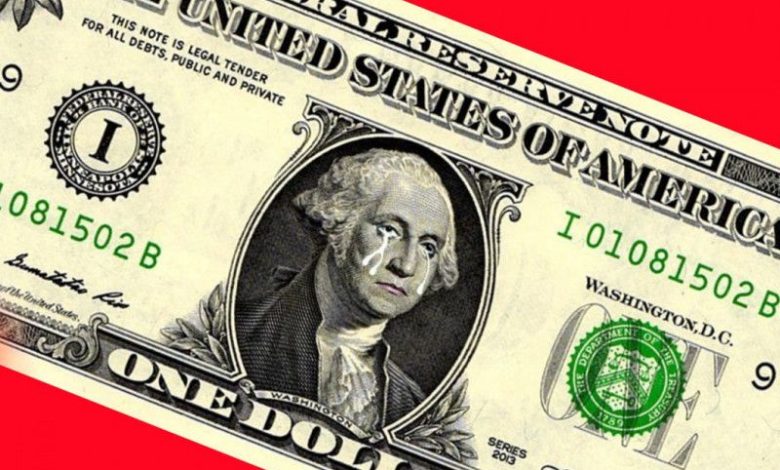
Donald Trump wants Greenland. Not influence, not cooperation – ownership. And he has paired that demand with something he knows well: tariffs. Lots of them. Against Europe. Against France in particular. Against anyone who might say no. The bond market is starting to get nervous.
In private correspondence with the Prime Minister of Norway, Trump has suggested that after being denied the Nobel Peace Prize, he no longer sees much value in “talking about peace” at all. Control, not compromise, is now the point. This is how Greenland entered the conversation – not as diplomacy, but as consolation.
On its face, this sounds like one of those ideas that gets floated loudly and then fades away. Markets, at least at first, seemed to shrug. As one Wall Street Journal columnist put it, investors appeared unsure how to react to a “new world order” that was too strange to price properly. When reality is hard to model, denial can feel like a strategy.
But denial never lasts forever. Across Europe, stocks have already taken the hint. Paris, Amsterdam, Berlin, Zurich, and London all opened the week sharply lower after Trump issued what amounted to an ultimatum: sell Greenland or face higher tariffs. The reaction suggests markets are no longer laughing this off. They are recalibrating.
More important, though, is where the real discomfort is showing up – not in flashy tech stocks, but in the bond market. This is where the story gets serious. Bond investors are not known for drama. They wear sensible shoes and worry about boring things like credibility and repayment. But when they get nervous, they tend to move first, and with consequences. U.S. Treasury yields have jumped past 4.25%, with some banks now expecting the 10-year yield to hit 4.5% within months. The reason is simple and unsettling: Europe is not just America’s ally. It is also America’s biggest creditor.
The fear is that European governments and investors could retaliate not only with tariffs on more than $100 billion of U.S. goods, or by shutting American companies out of contracts, but by reducing their holdings of U.S. assets. Some analysts have gone further, warning that Treasurys are no longer viewed as the unquestioned safe haven they once were. Instead, safety is flowing into gold and silver – hence gold soaring past $4,700 an ounce for the first time.
This matters because the logic forms a loop, and not a friendly one. If the White House alienates major creditors, demand for U.S. debt weakens. If demand weakens, borrowing costs rise. If borrowing costs rise, deficits become harder to finance. And suddenly, fiscal strength looks a lot less solid than advertised.
That loop is tightening just as other sources of uncertainty pile up. The Supreme Court is weighing the legality of Trump’s sweeping tariffs, with implications not just for trade but for the independence of the Federal Reserve itself. The Fed’s autonomy is already under scrutiny, with looming decisions about its leadership. Add in Trump’s upcoming address at the World Economic Forum in Davos, and you have markets bracing for surprises rather than stability. Even the VIX, Wall Street’s anxiety gauge, which had been oddly calm – has crept toward the level that signals something more than routine stress.
The thing is, tariffs are not free. A report from the Kiel Institute found that Americans are bearing nearly the full cost of U.S. tariffs. That means higher prices at home, even when the policy is framed as toughness abroad.
Meanwhile, the rest of the world is adjusting. China is trying to revive domestic demand to fight deflation. Japan’s long-term bond yields are surging as voters push for tax cuts that could strain public finances. The U.K. is stuck with unemployment near pandemic-era highs. Europe, already struggling with stagnant growth, would be devastated by a full-blown trade war, but that does not mean it would blink first.
A wave of earnings reports arrives just as traders are questioning the broader outlook. Netflix, 3M Company, United Airlines, US Bancorp, and others are due to release quarterly results this week.
Today’s economic highlights:
On today’s agenda: the 1-year and 5-year Loan Prime Rates in China; in the United Kingdom, employment change, average earnings including bonus, and the unemployment rate; in Germany, the annual PPI; in Spain, the balance of trade; in China, the year-to-date FDI; the ZEW Economic Sentiment Index for the Euro Area and Germany; in the United States, the API crude oil stock change. See the full calendar here.
- Dollar index: 98,523
- Gold: $4,727
- Crude Oil (BRENT): $64.39 (WTI) $59.82
- United States 10 years: 4.28%
- BITCOIN: $90,950
In corporate news:
- A U.S. regulator rejected the proposed merger filing by Union Pacific and Norfolk Southern, calling it incomplete.
- Alibaba-backed Moonshot AI reached a $4.8 billion valuation in a new funding round.
- Microsoft-backed OpenAI hit $20 billion in 2025 revenue, tripling from 2024 as compute capacity expanded.
- IBM and e& launched an enterprise-grade agentic AI platform built on IBM watsonx Orchestrate.
- Coherent introduced a bondable diamond technology for significantly improved thermal management in electronic devices.
- The UK Gambling Commission accused Meta of ignoring illegal gambling ads on its platforms.
- PhonePe, backed by Walmart, received approval from India’s SEBI for an IPO amid record fundraising in Indian markets.
- Ecolab and CDP partnered to launch a water-use efficiency index for corporate benchmarking.
- Houlihan Lokey agreed to acquire a controlling interest in Audere Partners and bought Mellum Capital’s real estate advisory arm.
- GSK will acquire RAPT Therapeutics for $2.2 billion to expand in food allergy treatments.
- Baidu‘s AI assistant Ernie reached 200 million monthly active users.
- BHP increased its copper production guidance for the fiscal year through June.
- Stratolaunch received investment and board representation from Elliott in the hypersonic flight sector.
- Tesla is restarting its Dojo AI supercomputer project to enhance self-driving and robotics.
- Micron plans to acquire a Taiwanese chip plant for $1.8 billion to meet memory product demand.
- OpenAI plans to introduce ads on ChatGPT as competition and funding needs intensify.
Analyst Recommendations:
- Biomarin Pharmaceutical Inc.: Canaccord Genuity upgrades to buy from hold and raises the target price from USD 84 to USD 98.
- Enphase Energy, Inc.: Goldman Sachs upgrades to buy from neutral with a price target raised from USD 29 to USD 45.
- Exact Sciences Corporation: Mizuho Securities downgrades to neutral from outperform and raises the target price from USD 85 to USD 105.
- Intel Corporation: HSBC upgrades to hold from reduce and raises the target price from USD 26 to USD 50.
- Penumbra, Inc.: Canaccord Genuity downgrades to hold from buy and raises the target price from USD 359 to USD 374.
- Philip Morris International, Inc.: Jefferies downgrades to hold from buy and reduces the target price from USD 220 to USD 180.
- Regions Financial Corporation: Keefe Bruyette & Woods downgrades to market perform from outperform with a target price of USD 31.
- Solstice Advanced Materials Inc.: RBC Capital upgrades to outperform from sector perform and raises the target price from USD 50 to USD 75.
- Solventum Corporation: Mizuho Securities upgrades to outperform from neutral with a price target raised from USD 85 to USD 100.
- Us Foods Holding Corp.: Morgan Stanley initiates coverage with a market weight rating and a target price of USD 92.
- Albemarle Corporation: BMO Capital Markets maintains its outperform rating and raises the target price from USD 145 to USD 210.
- Axalta Coating Systems Ltd.: Citi maintains its buy recommendation and raises the target price from USD 37 to USD 45.
- Charles River Laboratories International, Inc.: Jefferies maintains its buy recommendation and raises the target price from USD 205 to USD 255.
- Duolingo, Inc.: JP Morgan maintains its overweight recommendation and reduces the target price from USD 300 to USD 200.
- Micron Technology, Inc.: TD Cowen maintains its buy recommendation and raises the target price from USD 300 to USD 450.
- Netflix, Inc.: Arete Research maintains its neutral recommendation and reduces the target price from USD 1084 to USD 108.
- Norwegian Cruise Line Holdings Ltd.: JP Morgan maintains its overweight recommendation and reduces the target price from USD 40 to USD 28.
- Nuscale Power Corporation: RBC Capital maintains its sector perform recommendation and reduces the target price from USD 32 to USD 21.
- Sandisk Corporation: Citi maintains its buy recommendation and raises the target price from USD 280 to USD 490.
- Seagate Technology Holdings Plc: Citi maintains its buy recommendation and raises the target price from USD 320 to USD 385.
- Servicenow, Inc.: Morgan Stanley maintains its overweight recommendation and reduces the target price from USD 263 to USD 210.
- V.f. Corporation: JP Morgan maintains its neutral recommendation and raises the target price from USD 14 to USD 17.
- Western Digital Corporation: Citi maintains its buy recommendation and raises the target price from USD 200 to USD 280.