Investors warned not to chase commodity surge amid oil shock
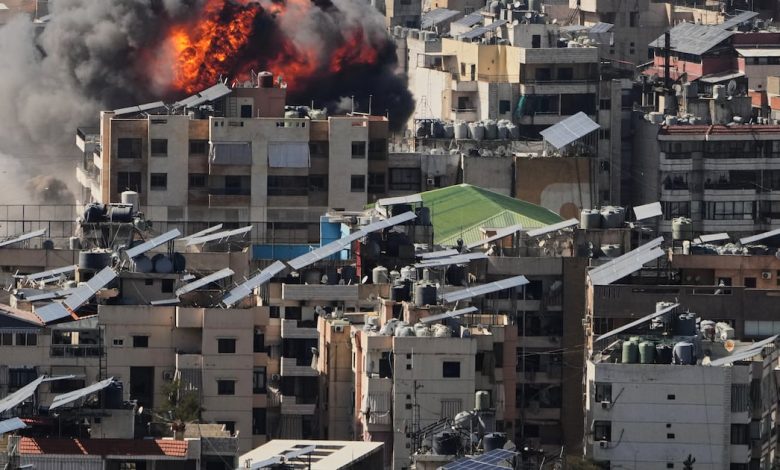
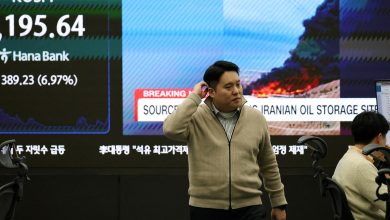
Markets remain volatile as the Middle East conflict enters its third week, with an energy supply shock and geopolitical tensions driving uncertainty across global equities.
BNN Bloomberg spoke with Tim Regan, managing director and portfolio manager at Kingwest & Company, who said investors should avoid chasing commodity spikes and instead focus on companies with stable and predictable earnings.
Key Takeaways
- The closure of the Strait of Hormuz has triggered a major energy supply shock, contributing to volatility and downward pressure on global equities.
- Rising oil and gas prices are increasing inflation concerns and could complicate central banks’ plans to cut interest rates.
- Supply disruptions could extend beyond energy, threatening global supplies of fertilizers and sulfur.
- Prolonged geopolitical tensions could weigh on global growth and heighten recession risks, particularly outside North America.
- Investors should avoid chasing commodity rallies and instead focus on businesses with durable earnings and predictable economics.
Read the full transcript below:
ROGER: As the conflict in the Middle East enters its third week, markets remain on edge as the energy supply shock threatens supplies of fertilizer and sulfur. My next guest warns investors not to get caught chasing commodity spikes.
Joining me now is Tim Regan, managing director and portfolio manager at Kingwest & Company. Tim, we don’t want to go running into commodities today — is that the message? Thanks for joining us.
TIM: Well, thank you for having me.
ROGER: Thanks for running up here and joining us.
TIM: Yes. When we talk about commodities — and they’re flying right now — we’ve seen these cycles before. Commodities are very volatile over long periods of time, and commodity stocks really don’t create much value at all.
When you get surges in prices and the stocks go up with about a two beta to the underlying commodity price, you can bet that pretty soon they’ll come down. This time is no different than 2007 or 2008, or even five or six years ago.
What we’re seeing is a big commodity cycle where prices are flying. This is the time you want to peel back and maybe not own them.
ROGER: Are you saying get right out — not own them — or just not buy more?
TIM: We’re right out of commodities, other than oils. We did have one mine — Lundin — that we sold in early February. We sold it when it spiked up again. I think it’s trading around where we sold it now, but we made our money.
We’ve seen this game too many times to know that this time is no different. It won’t last. Wait for the commodity cycle to peter out and buy the stocks at the bottom.
ROGER: Any idea when it might peter out? There’s been talk that gold could keep surging.
TIM: Not a clue.
ROGER: When or what do you think?
TIM: Really, not a clue — because no one knows. Most of what’s going on is geopolitical. It’s not just Iran. Maybe toward the end of the year when we have midterm elections in the U.S., you could get a divided House in Congress.
Maybe that alleviates some of the fear trade that’s going on. There are a lot of factors at play. So for now we’re avoiding commodities.
ROGER: Sometimes we forget that U.S. midterms really are a geopolitical factor. They’re our neighbours, but it’s a big event.
TIM: Well, does Trump get neutered politically? If you look at everything going on today — not just Iran but trade talks coming up — does Trump try to resolve things so Republicans have a shot at retaining the House and Senate?
I don’t know, but that seems to be his modus operandi.
ROGER: You said you’re still in oil though, right?
TIM: Yes. On our Canadian side we have about 10 per cent in oils. We’re probably a little underweight, but oil is going to be a great business for Canada if we can actually move more of it.
If Mr. Carney follows through with his plan to build new pipelines and pump more oil south, it should be fantastic for Canada.
ROGER: Are you seeing rising demand for Canadian oil after what’s unfolded in Iran — particularly with the Strait of Hormuz?
TIM: Sure. I’ve heard some statistics suggesting demand has risen a bit, but it also just makes sense. We’re an oil-exporting nation with a ton of oil.
The U.S. needs oil and ships it in from the Gulf. They have a neighbour to the north that can pipe it south, and they already have refineries that can handle our heavy crude. It just makes too much sense. Hopefully sense prevails where politics sometimes doesn’t.
ROGER: Do you see Canada building more refineries or facilities to process oil domestically?
TIM: Possibly. But I read yesterday the U.S. is building its first new refinery in 20 or 30 years. Refineries had been operating at overcapacity.
Oddly enough, people don’t realize we’re actually using less gasoline in North America than we were 20 years ago. That’s because engines are more efficient and driving demand has flattened.
So do we need more gasoline refineries? Probably not. But we do need terminals that convert gas into liquid to export to other countries. That’s LNG — not a refinery — and we’ll likely see more of those.
ROGER: Let’s get some of your stock picks. First up, Secure Waste Infrastructure.
TIM: Secure Waste Infrastructure was previously known as Secure Energy. They’re an environmental services company. Their main business is wastewater in the oil and gas sector, and they also do metal recycling.
So they’re really more of an environmental company. We like it quite a bit — strong management, good growth, high returns on capital, and it’s a business that isn’t going away.
ROGER: With all the expansion talk in energy, that would support the business.
TIM: Absolutely.
ROGER: A couple more before we run out of time — SmartCentres.
TIM: SmartCentres is a great real estate play. Like other REITs, it’s been knocked around because of valuation concerns over the past five years.
But Mitch Goldhar is a great CEO who creates a lot of value. The yield is almost seven per cent right now, and we think the company is worth about $35 per share.
Another thing people don’t realize is they have zoning for condos above many of their retail locations, including along the Eglinton LRT and elsewhere in Ontario. Those projects aren’t being developed yet, but that optionality could be worth a lot in the future once the condo cycle improves.
ROGER: Any concern about retail demand in a downturn?
TIM: They’re anchored by Walmart, and there was more concern during COVID. Now people are back shopping.
Will we have a recession one day? Probably. Will people stop shopping? No. Spending might be curtailed, but this is an enduring franchise. We’re not worried.
ROGER: Let’s sneak in one more: Allegion.
TIM: Allegion is a company most people don’t know, but they probably use its products every day. It’s the world’s largest lock-and-key maker.
They produce electronic locks — the kind you likely used to enter this building. The company is based in Ireland and was spun off from Ingersoll Rand in 2013.
It’s a global business. Fourth-quarter earnings were a bit light because of weakness in residential locks, but the core business is commercial. Even with that, earnings should grow about 15 per cent this year.
Again, it’s a great enduring franchise that people use every day.
ROGER: I’m going to check the lock when I walk out the door. Tim, thanks very much for joining us today.
TIM: You’re very welcome. Thank you.
ROGER: That was Tim Regan, managing director and portfolio manager at Kingwest & Company.
—
This BNN Bloomberg summary and transcript of the March 16, 2026 interview with Tim Regan are published with the assistance of AI. Original research, interview questions and added context was created by BNN Bloomberg journalists. An editor also reviewed this material before it was published to ensure its accuracy and adherence with BNN Bloomberg editorial policies and standards.