Maine’s young people are ready to talk politics. Are you?
Linnaea Herring is a senior at Yarmouth High School. Nathaniel Zuckerberg is a senior at Bates College. Both are members of the Youth ACT Research Lab at Bates College.
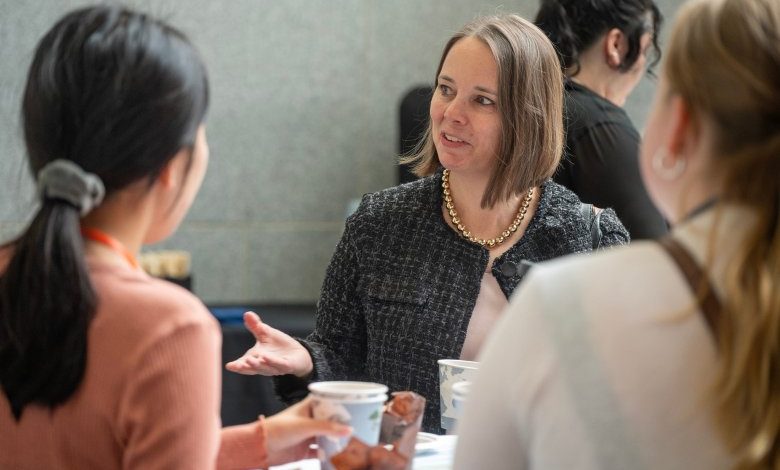
Since 2022, high school students from across Maine have risen early on cold December mornings, boarded buses and headed for the Augusta Civic Center for Can We? Connect. As they shuffle into a large auditorium, they are immediately instructed to sit with strangers, generally a scary proposition.
But these students charge ahead, knowing their task is to seek out new perspectives. They spend the rest of their day in breakout rooms, engaging in difficult conversations with people who hold vastly different viewpoints. Students from hunting families, lobstering towns and urban centers come together to discuss issues ranging from capitalism to religion to immigration.
These young Mainers are all participants in the Can We? Project, a statewide educational organization that supports constructive dialogue across differences. Though most are not yet able to vote, teen participants navigate these conversations keenly aware of the political polarization plaguing their communities and nation.
While political divisions in our purple state are high, the students in Augusta each December prove that conversation about these very topics is possible and transformative.
As part of the Youth Lab at Bates College, a developmental psychology research lab run by Assistant Professor Elena Maker Castro and including Bates College student members Dionne Chen, Yuleibi De Los Santos and Ariya Tayal, and Yarmouth High School members Grace Keaney and Aubrey Favreau, we write as past participants and current researchers of the Can We? Project.
For those of us writing to you as past Can We? Project participants, we attest to the power of dialogue not only to learn about current events and others’ experiences but also to form our own opinions. It can be easy for us, as young people, to accept the beliefs reverberating through our homes and schools. But when we engage in active dialogue, we are forced to voice these opinions as our own and consider why we hold them and what evidence supports them.
Polarization is one reason young people like us are so desperate for conversations. We grow up hearing only one side and are naturally inquisitive about other perspectives. Simultaneously, through our lab’s youth development research with Can We? participants, we have found that teenagers are cognitively and socioemotionally ready and eager to practice dialogue.
We have seen how the Can We? Project creates a developmentally potent space that meets young people where they are. Students in the program receive clear messages: they are capable of active civic engagement, and their voices matter. Students are encouraged to “swim toward the shark” (the shark being an unknown person with an unknown opinion).
They also actively reflect on their experiences — as one student acknowledged, you should practice dialogue like you would build any muscle — with deliberate, repeated engagement.
Not every student can participate in Can We? this year. But as we approach the 2026
elections, we believe youth across Maine deserve every opportunity for meaningful political dialogue. Building upon our research and experience, we ask every adult with a young person in their life to start that political conversation you may have avoided.
Please swim toward the shark. While this is undoubtedly daunting, we suggest these tips to meet adolescents where they are developmentally.
First, we encourage adults to approach conversations with curiosity and a genuine interest in listening to learn from others’ perspectives. Set a clear intention to avoid imposing your beliefs. Second, we suggest integrating multiple perspectives into the conversation to support adolescents as they develop their reasoning and critical thinking skills.
We recognize providing a range of perspectives can be difficult, especially for parents who may want children to share their moral and ideological compasses. But we must trust young people to be capable, critical and motivated thought partners and citizens. Youth are our future voters and leaders, and adults owe them every opportunity to advance their thinking and beliefs.
Credit: Source link