Massachusetts dentists fear Healey’s ‘shortsighted’ MassHealth cap proposal
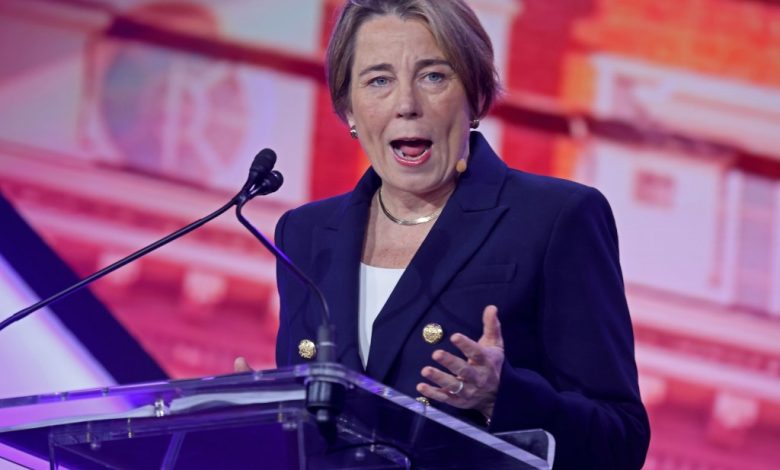
Dentists across Massachusetts fear that Gov. Maura Healey’s proposal to place a $1,000 annual cap on MassHealth dental coverage would drastically reduce services for nearly 2 million Bay Staters.
Oral health advocates are pressing the Healey administration to restore full adult dental benefits under MassHealth in the governor’s $63.4 billion budget request for next fiscal year. Under a $1,000 annual cap, they fear a sharp decline in access to preventive and restorative care.
State officials, though, argue that President Trump’s One Beautiful Bill is causing them to balance sustainability and costs, as they fear a loss of about $3.5 billion in annual federal healthcare funding once the act is fully implemented.
The Healey administration estimates an annual cap on dental benefits could save $120 million. State Rep. Russell Holmes, a Boston Democrat, is urging officials to consider an annual cap of $2,500.
Holmes says that a dentist in his Mattapan district has told him that 80% of his clients are on MassHealth, the state’s Medicaid program. The dentist worries that a cap wouldn’t allow him to provide the maximum care possible.
“I am very thankful to have dentists in the Mattapan area focused on MassHealth,” Holmes said during a budget hearing on Friday, “but he’s concerned that many of them will go out of business if we take it to this level.”
The cap does not apply to pediatric dental benefits.
Bay Staters with MassHealth already face challenges in accessing dental care.
The Massachusetts Health Policy Commission reported in 2021 that roughly 45% of dentists across the state accepted MassHealth, with 78 dentists per every 100,000 population, a rate it said was higher than the national average.
MassHealth spent roughly $270 million on adult dental services last fiscal year, according to officials.
Health and Human Services Secretary Kiame Mahaniah described the proposal to cap MassHealth adult dental benefits at $1,000 annual as a “tough decision.” He admitted that he’s “very aware” that many Bay Staters would “exceed” the limit with the services they need.
The Healey administration studied adult dental benefit programs in states that Mahaniah said Massachusetts “follows philosophically.” Caps in those states are $750 to $1,500 annually, he added.
“The goal is, ‘How do we maintain the service for a majority of people while being able to sustain all of MassHealth and not swallow up the rest of the budget?’” Mahaniah told the Joint Committee on Ways and Means on Friday.
“In terms of what the amount will be,” the health and human services secretary added, “thankfully, I have a whole Legislature to decide what that cap will be. I would say that a cap is definitely something that’s there.”
The Massachusetts Dental Society, representing over 5,000 dentists, is putting the heat on lawmakers to reconsider the cap proposal.
Society President Steven Spitz, a dentist based in Brookline, wrote a letter earlier this month about how the state is still recovering from a significant reduction in MassHealth adult dental benefits in 2010. About 100,000 fewer adults received care through the program.
Restorative services — fillings, root canals, crowns and dentures — were eliminated under those cuts. The Baker administration fully restored the benefits for adults in the state’s Fiscal Year 2021 budget.
“This access gap led to worse oral health outcomes and higher costs elsewhere in the healthcare system,” Spitz wrote. “Untreated dental disease increasingly resulted in avoidable emergency department visits — settings that are costly and unable to provide definitive dental care. This was all preventable.”
“Any cuts to MassHealth dental funding in FY2027 would risk repeating these same mistakes and compounding prior harm,” he added.
An online petition urging lawmakers to reconsider the cap has collected over 1,400 signatures and drawn feedback from patients and dentists critical of the proposal.
One of those signees, named Allison, highlighted the lost time to work and school each year due to dental care, including dental pain and emergencies.
“How can we reduce that amount without supporting basic preventative care and early intervention?” Allison stated. “This limit is both shortsighted and disrespectful for those among us trying their hardest to get by.”
Credit: Source link