Oil Surges, Global Stocks Slip After Trump Renews Iran Strike Threats
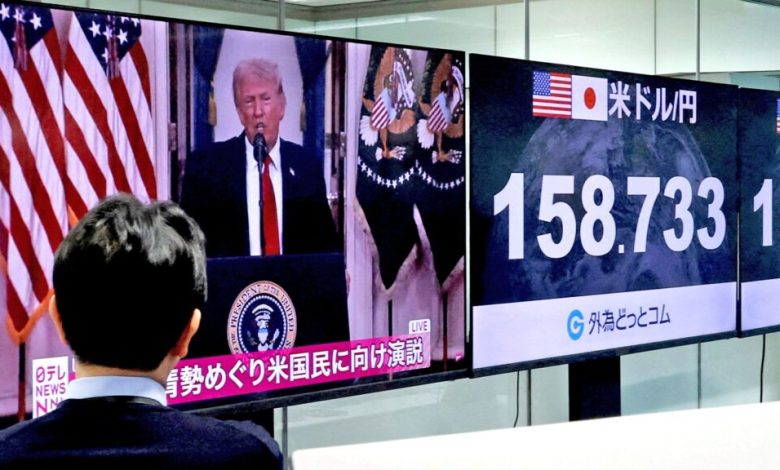
Oil prices climbed sharply once again after U.S. President Donald Trump renewed warnings of intensified military action against Iran, offering no clear roadmap for how the conflict might conclude.
Brent crude briefly exceeded $109 (£82) per barrel, while equities across the United States, Europe and Asia declined following Trump’s address from the White House.
During his remarks, Trump said the United States would achieve its strategic aims in the conflict “very shortly” and indicated that bombing campaigns against Iran would continue for the next two to three weeks, vowing to push the country “back to the Stone Ages.”
Earlier on Wednesday, oil prices had fallen below $100 amid expectations that Trump might outline an exit strategy. Instead, his speech largely reiterated prior statements, disappointing markets.
The ongoing conflict with Iran has caused major disruptions to global oil and gas supplies.
Traffic through the Strait of Hormuz, a vital shipping route, has largely come to a standstill after Iran warned it would target tankers attempting to pass through, in retaliation for U.S. and Israeli strikes that began on 28 February.
Trump said in his address that the U.S. no longer depends on Middle Eastern energy and called on other nations to act to restore shipping flows disrupted by the war.
He said: “To those countries that can’t get fuel, many of which refuse to get involved in the decapitation of Iran… build up some delayed courage, go to the Strait and just take it.”
Markets reacted swiftly, with oil prices spiking moments after the televised speech.
Brent crude, the global benchmark, rose by more than 8% on Thursday before easing slightly.
West Texas Intermediate, the U.S. benchmark that had seen more moderate gains earlier in the conflict, also surged, briefly surpassing $110 per barrel in New York trading before pulling back.
Alberto Bellorin, founder and managing director at InterCapital Energy, described the jump as a “clear market reality check following the earlier optimism for an imminent ceasefire.”
He noted that Trump’s remarks offered no “concrete timeline” for reopening the Strait of Hormuz and warned that a return to normal conditions could be “months away rather than weeks.”
Bellorin added that Trump’s appeal for other countries to intervene has dampened expectations for a quick resolution to disruptions in global energy supplies.
Despite this, Trump maintained in his speech that oil and gas flows would recover rapidly once the war concludes.
“When this conflict is over, the strait will open up naturally. It will just open up naturally,” he said.
However, Anne-Sophie Corbeau, a former head of gas analysis at BP, cautioned that normalization could take significantly longer.
She pointed to damage across Gulf energy infrastructure from strikes involving Iran, Israel and the U.S., estimating repairs could take between three and five years.
Now with the Center on Global Energy Policy at Columbia, Corbeau told the BBC’s Today programme that disruptions in the Strait of Hormuz are likely to persist, with additional costs for passage potentially becoming a long-term issue.
She said vessels are currently paying fees of around $2 million to transit the strait, warning that if such charges become permanent, it would represent “the worst-case solution” for users.
On Wall Street, major indexes ended mixed after recovering from earlier losses. The S&P 500 and Nasdaq edged up 0.1% and 0.2%, respectively, while the Dow Jones Industrial Average slipped 0.1%.
In the United Kingdom, the FTSE 100 initially fell but closed 0.69% higher. France’s CAC index declined 0.24%, and Germany’s DAX dropped 0.79%, both trimming steeper earlier losses.
Asian markets, however, moved lower following Trump’s remarks, reversing earlier gains.
Japan’s Nikkei 225 fell 2.4%, and South Korea’s Kospi dropped 4.5%.
Markets across the region have remained volatile since the start of the Iran conflict, with Asia particularly exposed due to its heavy reliance on Middle Eastern energy supplies.