Proposal to cut electricity rates by 30% moves forward at State Capitol
Proposal to cut electricity rates by 30% moves forward at State Capitol | CA Politics 360
Californians face the fourth most expensive electricity rates, according to the U.S. Energy Information Administration
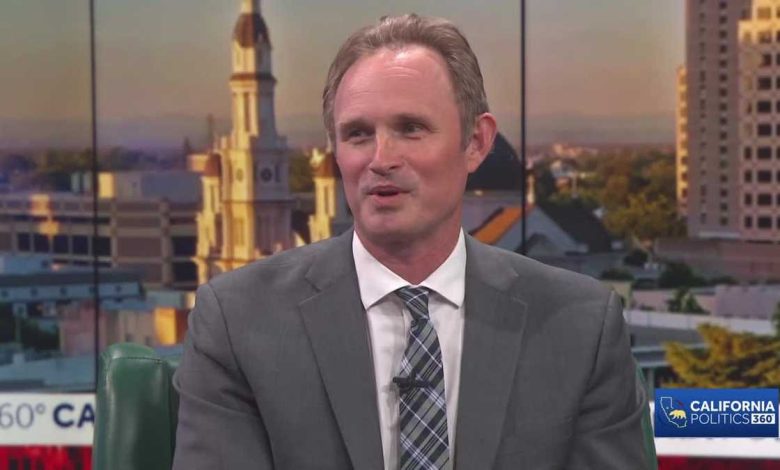
Assembly Member James Gallagher, thank you for joining us. Thank you for being here today. Uh, we’re here to talk about electricity rates. We know, uh, rates have gone up 40% in the past 6 years. You have *** proposal to try to tackle that. What has the response been like from your colleagues on both sides of the aisle? Yeah, I mean, well, since 2013 we’ve had rates go up every year annually on average 12% *** year, and so that’s *** huge increase that we’ve seen way past the inflation. And you know, It’s such *** huge issue for my constituents. I hear about it all the time that the rates just keep going up and up, and you know the whole sort of problem with that is that you know we know and we’ve seen report after report that there are ways we could cut rates and that we could bring down costs for the consumer and so I’m just saying hey it’s about time we did that. Let’s take some of these recommendations. Let’s find ways to actually lower people’s rates. I don’t want to just stop them from going up. I want to stop. I want to actually make them go down because people need relief now. And you did have *** similar proposal that you introduced last year. That one, it’s my understanding, died in the Appropriations Committee. What’s different this year? Have you been able to talk to some of the stakeholders, the California Public Utilities Commission? Well, one, I think the public’s demanding it. I mean, you know, they’ve been struggling to pay the bills here in California and they want to see real action. And so I’m hopeful that we’ll be able to get somewhere this year. Just to give some examples, we know that there have been several programs that have been identified as not cost effective by the PUC. Those are programs that we could tackle to give people relief. There’s the climate credit we could incorporate that into rates instead of people just getting *** 30 to $40 climate credit on one month during the year. We could actually incorporate that into savings and their rates so their rates actually go down. Some of our climate policies, cap and trade, for example, we pay more in electricity rates because of that, and yet that money goes into *** fund that right now is shortchanging wildfire prevention funding. High speed rail is getting *** billion dollars, while wildfire prevention is getting less than $200 million. That’s completely backwards. We should be doing that to reduce the risk so we don’t have these catastrophic wildfires. So there’s lots of things that we can do that could help reduce those rates, and my goal with this legislation is by 30%. I think that’s easily achievable. Speaking of PG&E specifically, their electricity prices have gone down 4 times in the past 2 years. They say it’s now 11% lower than they were in January of 2024. Is that enough? I know that’s what they say. The bottom line is no one sees that in their rates. In fact, the fixed charges have gone up, and so in everybody’s monthly bills, it’s still hundreds of dollars. Two years ago we saw 6 rate increases, and I said 12% annually is what we’ve seen on average. It’s not sustainable. People cannot pay that. And when there’s real ways to reduce rates, I’ll give you another one. I mean they are coming in and going to the PUC with their wildfire mitigation plans and essentially getting those rubber stamped. I’m helping support legislation this year that helps audit those funds, and it’s also part of my legislation 2700. Audit those funds, like, are they doing everything that they are they doing things that they need to do, or are they doing more than is really necessary? And if so, then that should be given back in rebates, reductions in rates to consumers, to ratepayers, and so these are all things that we could look into that ultimately would help lower rates. On that note, you have been speaking to people impacted by, uh, wildfires. You were joined today by the mayor of the town of Paradise. Um, what are you hearing from those wildfire survivors? That they want to be compensated, I mean, pre 10054 legislation, many of these wildfire victims, the campfire and the tubs fire, were not fully compensated for the losses that they experienced in those wildfires to the tune of 30% or more% that they did not get any compensation out of the wildfire trust fund. So this is the other thing that 2700 seeks to do. We’ve now seen PG&E had *** $2.4 billion profit last year. This is obviously *** company that’s rebounded, that’s doing better now, that has these huge profits. Why can’t they ensure that these victims are compensated? And that’s where my bill 2700 instructs the PUC to come up with mechanisms to ensure that those victims are fully and fairly compensated. All right, and are you, I guess, hopeful, you know what’s next in the process? What are you expecting as far as this bill, the possibility of it making it to the governor’s desk? You know, this has taken way too long. We should, we should have been doing this years ago. I’ve been an advocate for reducing our rates and ensuring that our victims are compensated. I passed legislation that made those wildfire victims settlement payments tax-free. At the state level, I work with Congressman LaMalfa, you know, the late Congressman LaMalfa, to get those tax-free at the federal level, so we need to keep doing this to make sure that our victims who lost everything, and you heard some of their stories today at this press conference, just terrible stories of what they went through in that fire, right? And with anybody else, if you cause loss to someone, you have to compensate them, you have to pay them. And it shouldn’t be any different here, right? And *** lot of people got paid after we passed this legislation. PGE came out of bankruptcy. They made record profits last year. The Subro insurance, they got paid. Attorneys got paid, but these victims still haven’t been paid their full compensation. It’s wrong. And again, it’s something this isn’t rocket science. We can do this. And in addition, we can give everyone relief by reducing their rates by just doing some of the things that have been recommended for quite some time. Another example of something that I think is *** big one is we mandate certain forms of energy that are more expensive. We have the renewable portfolio Standard. They won’t even count large scale hydro water power that is zero emission. They don’t count that towards *** renewable portfolio standard that costs us, but we can make that change and say, yes, hydro power is clean power. It’s renewable power. That should count towards this mandate and that way we can get relief on rates through the utility companies as well. So there’s so many different things that have been reported on for years that have come out from different agencies, even the PUC, and we’re just demanding that it be done. Let’s do this now. Let’s give people relief now. It’s long past time. All right, we’ll be following up to see what happens with the bill. Thank you for joining us, Assembly Member James.
Proposal to cut electricity rates by 30% moves forward at State Capitol | CA Politics 360
Californians face the fourth most expensive electricity rates, according to the U.S. Energy Information Administration
Updated: 8:25 AM PDT Apr 12, 2026
A proposal to reduce electricity rates by 30% moved forward at the State Capitol this week.“It’s such a huge issue for my constituents. I hear about it all the time. The rates just keep going up and up,” said Republican Assembly Member James Gallagher in an interview on California Politics 360.Californians face the fourth most expensive electricity rates, according to the U.S. Energy Information Administration. Data from the EIA analyzed by UC Berkeley’s Energy Institute at Haas revealed electricity rates have risen almost 40% in California from 2019 to 2025.“We’ve seen report after report, there are ways that we can cut rates and that we can bring down costs for the consumer. I’m just saying, ‘Hey, it’s about time we did that.’ Let’s take some of these recommendations, let’s find ways to actually lower people’s rates,” Gallagher said.The legislation authored by the Chico Assembly Member would require the California Public Utilities Commission to outline recommendations that would decrease the kilowatt-per-hour rates for electricity. Gallagher said the rates would need to be lowered by at least 30% by Jan. 1, 2028.“We know there’s been several programs that have been identified as not cost-effective by the PUC (Public Utilities Commission). Those are programs we can tackle to give people relief,” Gallagher said. “There’s the climate credit. We can incorporate that into rates. Instead of people getting a $30-$40 climate credit on one month during the year, we can actually incorporate that into savings in their rates, so their rates actually go down.”“Some of our climate policies, Cap and Trade, for example, we pay more in electricity rates because of that, and yet that money goes into a fund that right now is shortchanging wildfire prevention funding. High-speed rail is getting a billion dollars while wildfire prevention is getting less than $200 million. That’s completely backwards. We should be doing that to reduce the risk so we don’t have these catastrophic wildfires,” Gallagher said.The legislation would also direct the CPUC to re-examine “verified restitution shortfalls for victims of wildfires caused by electrical corporations occurring before July 12, 2019.” The bill would then have the CPUC address those issues with the electrical corporations.KCRA has reached out to PG&E for a statement on Gallagher’s proposed legislation.“PG&E is focused on delivering safe, reliable and clean energy service at the lowest possible cost. We’ve cut residential electric bundled rates five times since early 2024, lowering rates by 13%. That’s about $25 less a month or $300 less a year on a typical customer bill. For vulnerable customers receiving the low-income discount, rates are down 23%. Our electric prices have been stabilized and are going down, even while the U.S. Energy Information Administration expects national electricity prices to rise by nearly 10% between 2024 and 2026. PG&E is neutral on the bill.”We also reached out to the California Public Utilities Commission for a comment, but we haven’t heard back yet.Gallagher’s legislation now heads to the powerful Appropriations Committee. A similar bill the Assembly Member authored last year did not pass the Appropriations Committee. Gallagher hopes this year will be different.“I think the public is demanding it. They have been struggling to pay the bills here in California, and they want to see real action. I am hopeful we will be able to get somewhere this year,” Gallagher said.
A proposal to reduce electricity rates by 30% moved forward at the State Capitol this week.
“It’s such a huge issue for my constituents. I hear about it all the time. The rates just keep going up and up,” said Republican Assembly Member James Gallagher in an interview on California Politics 360.
Californians face the fourth most expensive electricity rates, according to the U.S. Energy Information Administration. Data from the EIA analyzed by UC Berkeley’s Energy Institute at Haas revealed electricity rates have risen almost 40% in California from 2019 to 2025.
“We’ve seen report after report, there are ways that we can cut rates and that we can bring down costs for the consumer. I’m just saying, ‘Hey, it’s about time we did that.’ Let’s take some of these recommendations, let’s find ways to actually lower people’s rates,” Gallagher said.
The legislation authored by the Chico Assembly Member would require the California Public Utilities Commission to outline recommendations that would decrease the kilowatt-per-hour rates for electricity. Gallagher said the rates would need to be lowered by at least 30% by Jan. 1, 2028.
“We know there’s been several programs that have been identified as not cost-effective by the PUC (Public Utilities Commission). Those are programs we can tackle to give people relief,” Gallagher said. “There’s the climate credit. We can incorporate that into rates. Instead of people getting a $30-$40 climate credit on one month during the year, we can actually incorporate that into savings in their rates, so their rates actually go down.”
“Some of our climate policies, Cap and Trade, for example, we pay more in electricity rates because of that, and yet that money goes into a fund that right now is shortchanging wildfire prevention funding. High-speed rail is getting a billion dollars while wildfire prevention is getting less than $200 million. That’s completely backwards. We should be doing that to reduce the risk so we don’t have these catastrophic wildfires,” Gallagher said.
The legislation would also direct the CPUC to re-examine “verified restitution shortfalls for victims of wildfires caused by electrical corporations occurring before July 12, 2019.” The bill would then have the CPUC address those issues with the electrical corporations.
KCRA has reached out to PG&E for a statement on Gallagher’s proposed legislation.
“PG&E is focused on delivering safe, reliable and clean energy service at the lowest possible cost. We’ve cut residential electric bundled rates five times since early 2024, lowering rates by 13%. That’s about $25 less a month or $300 less a year on a typical customer bill. For vulnerable customers receiving the low-income discount, rates are down 23%. Our electric prices have been stabilized and are going down, even while the U.S. Energy Information Administration expects national electricity prices to rise by nearly 10% between 2024 and 2026. PG&E is neutral on the bill.”
We also reached out to the California Public Utilities Commission for a comment, but we haven’t heard back yet.
Gallagher’s legislation now heads to the powerful Appropriations Committee. A similar bill the Assembly Member authored last year did not pass the Appropriations Committee. Gallagher hopes this year will be different.
“I think the public is demanding it. They have been struggling to pay the bills here in California, and they want to see real action. I am hopeful we will be able to get somewhere this year,” Gallagher said.
Credit: Source link