Sam Altman Resets OpenAI Priorities Ahead of High-Stakes IPO
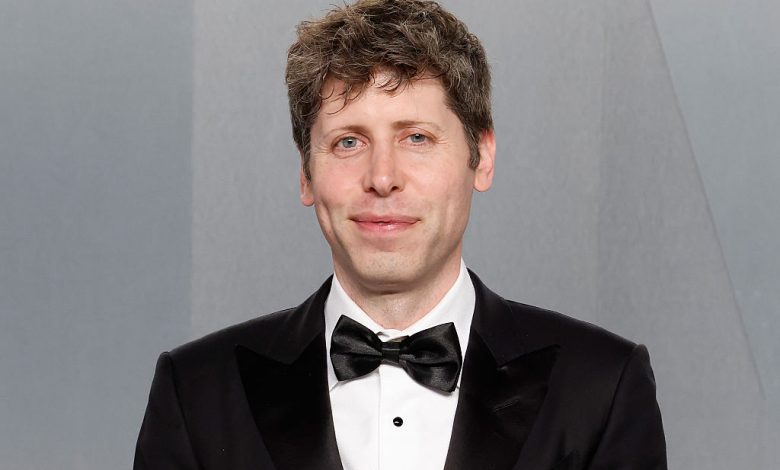
OpenAI CEO Sam Altman recently made two moves that say more about the company’s future than any product launch could. On March 23, he stepped down as chairman of Helion Energy, the fusion startup he has backed for more than a decade, as OpenAI explores a large-scale power deal with the company. A day later, OpenAI pulled the plug on its popular video-generating model, Sora, saying it would reallocate resources to its next major large language model, codenamed “Spud,” as well as a growing suite of coding agents and enterprise tools.
Together, the decisions point to a CEO stripping away distractions, tightening control and preparing for a highly anticipated IPO. OpenAI has reinforced that shift by strengthening its financial leadership, including appointing former DocuSign CFO Cynthia Gaylor to oversee investor relations.
According to The Information, Altman has also relinquished direct oversight of OpenAI’s safety and security teams to focus on “capital, supply chains, and building data centers at unprecedented scale.” The company has folded its safety team into the research organization led by chief research officer Mark Chen, while moving security under the “scaling” division run by co-founder and president Greg Brockman. At the same time, OpenAI has renamed its product organization—led by Fidji Simo, CEO of applications—to “A.G.I. Deployment.”
Altman has also reportedly narrowed reporting lines, reducing the number of executives directly accountable to him, marking another step toward operational clarity ahead of a potential IPO. Reuters first reported in October 2025 that OpenAI could file as early as the second half of 2026, targeting a valuation of up to $1 trillion. In early-stage discussions, the company has floated raising at least $60 billion in the offering, depending on market conditions and revenue growth.
For much of the past year, Altman described A.I. infrastructure in sweeping terms, invoking figures approaching $1 trillion to reach artificial general intelligence (A.G.I.). That rhetoric is now giving way to something more concrete: roughly $600 billion in compute spending by 2030.
Sora, launched in December 2024, was one of OpenAI’s most compelling demonstrations of how far A.I. had advanced. But it also exposed a fundamental constraint. Forbes estimates that generating a 10-second Sora video costs between $1 and $5 in compute, with higher costs for premium versions. At scale, that could exceed $5 billion annually, or roughly $15 million a day.
OpenAI is now shifting resources toward more profitable enterprise products, particularly coding agents. Internal communications and recent reporting from CNBC and The Information suggest the company is “orienting aggressively” toward enterprise use cases, with ChatGPT evolving from a general-purpose chatbot into a productivity layer—a front end for software development, business operations and knowledge-work automation.
As OpenAI leans into enterprise systems, it is also confronting another constraint: energy. Training and running advanced A.I. models at scale requires enormous amounts of electricity, making power one of the industry’s most significant bottlenecks. Altman has long argued that solving A.I. at scale requires solving energy at scale, and OpenAI’s interest in Helion reflects that reality.
His departure from Helion clears a potential conflict as OpenAI explores a partnership with the fusion startup. Reports suggest a deal could grant OpenAI access to as much as 12.5 percent of Helion’s projected output—roughly 5 gigawatts by 2030 and up to 50 gigawatts by 2035.
Helion has yet to begin commercial power generation but is moving quickly from prototypes toward grid-tied fusion plants. The company is currently constructing Orion, its first commercial facility in Washington state, with development beginning in July 2025 and a target of delivering an initial 50 megawatts to Microsoft by 2028. If that timeline holds, Orion could serve as a template for scaling to multi-gigawatt fleets over the following decade.
Altman built his reputation on ambitious, system-level thinking, often speaking in abstractions about the future of intelligence. Now, he is operating as a CEO preparing a company for public markets, where ambition must be matched with discipline and vision must translate into returns. Altman must convince investors that OpenAI can turn unprecedented capital expenditure into sustainable returns while still pursuing the long-term goal of A.G.I.