Seven U-M projects selected for first round of grant
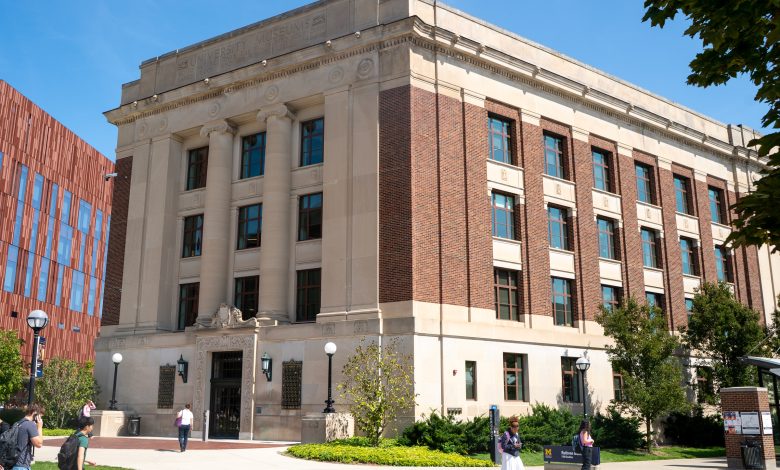
Seven research projects led by University of Michigan faculty were selected as recipients of the University’s Building Better Futures grant program. The grant was established to support rigorous, multidisciplinary research projects that improve quality of life, strengthen communities and create opportunities. The Office of the Vice President for Research and the National Center for Institutional Diversity choose the grant recipients who will receive $500,000 for their research.
The research projects aim to address pressing social challenges including improving health equity during pregnancy, supporting Washtenaw County’s efforts to address structural racism in policy-making and identifying how mobile phone applications can be more inclusive for small farmers.
In an interview with The Michigan Daily, Geoffrey Thün, associate vice president of research for the social sciences, humanities and the arts, said the OVPR prioritized multidisciplinary research projects when selecting grant recipients.
“In selecting research projects for this initial round of the program, we really wanted to identify those that were multidisciplinary, met the stated mission of the program and had clearly articulated potential impacts and benefits to society,” Thün said.
Emily Dove-Medows, assistant nursing professor and Building Better Futures grant recipient, studies methods to help end preventable morbidity related to racism. In an interview with The Daily, Dove-Medows, who is also a certified nurse midwife, said she hopes to build trust between pregnant women and their obstetric providers to reduce negative communication in health care.
“My hypothesis is that by improving communication, by reducing blame and by making sure that our patients understand that we know that there are these external factors that drive health, we can create openness,” Dove-Medows said. “And that will help create trust, that will help create people feel like we’re aligned.”
LSA junior Rand Alsaman, Dove-Medows’ assistant student researcher, told The Daily the grant will help create an arts-based intervention training program used to enhance communication strategies between providers and pregnant women. The intervention strategy will work to eliminate disparities and inequalities in health care.
“I’m a future professional dentist, and as a future professional, I feel everyone should be knowledgeable about any health care disparities or inequities and how to really navigate that and sort of address it,” Alsaman said. “Our project is in relation to that. It’s addressing a systemic inequity.”
Another grant recipient was Dr. Karl Desch, associate professor of pediatrics. Desch told The Daily his research aims to develop a micro-scale blood monitoring device to reduce the amount of blood drawn from newborns.
“This is particularly neonatal specific, but from my standpoint, it’ll help us take care of these super small babies,” Desch said. “Some of them are less than 500 grams, and as you can imagine, if you need to draw three or four milliliters of blood from a baby who’s less than 500 grams, that is a significant portion of their overall blood volume.”
Dr. Nora Becker, assistant professor of internal medicine, studies the financial strain of pediatric type 1 diabetes. In an interview with The Daily, Becker said the grant will fund a data purchase examining the financial impact type 1 diabetes has on families, specifically looking at changes to employment and insurance coverage.
“Finances impact health, and for that, we need longitudinal data, repeated observations for the same people over time,” Becker said. “So that’s really what the data is. (We’re) creating a new data source with this project that will then enable research methods that were not previously possible.”
Meha Jain, associate professor of geospatial data sciences and food systems and grant recipient, said her research aims to help small farmers translate weather advisory alerts into SMS, as many have limited access to a smartphone or internet connectivity.
“Thanks to the Building Better Futures initiative grant, Chaiti Bhagawat, one of my leading student research assistants, will be able to actually spend a whole summer in the field speaking with farmers, trying to understand how they consume information, share information and what their experiences may have been with previous information dissemination campaigns and smartphone applications,” Jain said.
History professor Rita Chin was also a grant recipient. Chin’s research focuses on race-based policy making in Washtenaw County. Chin told The Daily the funding will help compile a large report with data on housing, environment and basic services from students and faculty groups.
“Our hope is that we will both be able to tell the history of Black residents in the county, going all the way back to the beginning of the county but then also be able to identify key moments and key issues that emerged over time,” Chin said.
These findings will inform the Advisory Council on Reparations’ recommendations to the Board of Commissioners in Washtenaw County.
Chin also said she has an interest in overlapping maps, a method of comparing changes in an area’s development. The grant money, Chin said, will hopefully illuminate societal issues that pertain in Washtenaw County through its city planning’s history.
“You can overlay all of these different kinds of basic services or environmental things or green spaces,” Chin said. “And so we’re going to have money. We have money in the budget, to build better futures to do that kind of work, which will be, I think, really cool.”
Daily News Contributors Tara McIntosh and Kathryn Pyne can be contacted at taramcin@umich.edu and kathrypy@umich.edu.