StubHub Hit With Securities Investigations Amid Sharp Post-IPO Decline
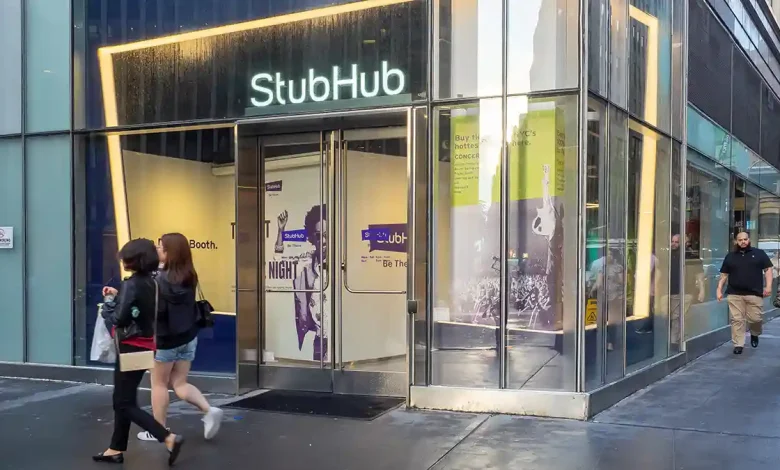
People walk outside of a StubHub storefront operation in New York (Ajay Suresh from New York, NY, USA, CC BY 2.0 via Wikimedia Commons)
StubHub is facing an escalating wave of securities-fraud investigations, with more than a dozen major shareholder-rights law firms announcing probes in the days following the company’s steep post-IPO stock drop. The investigations center on whether StubHub misled investors or withheld material information about its financial condition ahead of its September public offering.
The most prominent firms initiating inquiries include Glancy Prongay & Murray LLP, Kirby McInerney LLP, Pomerantz LLP, and several others commonly involved in high-profile securities litigation. Their notices identify a similar trigger point: StubHub’s November 13 quarterly earnings release, its first as a public company, disclosed negative free cash flow of $4.6 million for Q3 2025. That represented a 143 percent swing from the prior year, when the business produced more than $10 million in positive free cash flow.
The company’s stock immediately fell more than 20 percent on the earnings news, closing at $14.87 on November 14 — nearly 37 percent below its IPO price of $23.50. Analysts responded with downgrades and lowered price targets as investors questioned the company’s near-term prospects.
The pressure intensified days later when the United Kingdom’s Competition and Markets Authority announced an investigation into StubHub’s pricing and fee practices under the Digital Markets, Competition and Consumers Act. Coupled with the UK government’s move to ban resale above face value, the regulatory climate overseas has cast new uncertainty over StubHub’s core business model. The stock slid again on the CMA announcement, and by Friday morning, shares briefly traded below $10 in intraday activity.
Law-firm notices cite the combination of deteriorating financial results, heightened regulatory exposure, and rapidly declining share price as central to their investigations into whether StubHub or its leadership made misleading statements or omitted key information during the IPO process or in subsequent public communications.
Advertisement

The surge of legal scrutiny lands at a volatile moment for the ticketing industry. Regulators in the US, UK, and EU are increasingly targeting resale platforms over pricing transparency, fee structures, and consumer protection. With the UK preparing to effectively eliminate for-profit ticket resale and US agencies signaling tougher enforcement on online pricing practices, investors are growing more cautious about publicly traded secondary-market operators.