Student loans payback 2026 | Borrowers will see wage garnishments start in January on defaulted education loans
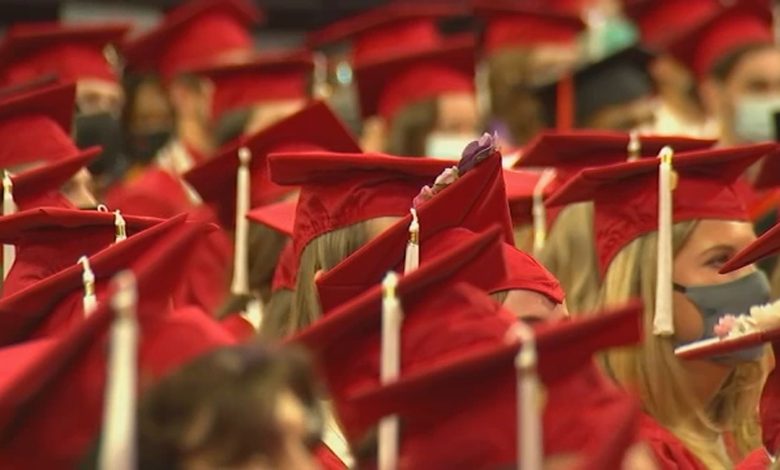
RALEIGH, N.C. (WTVD) — Student loan borrowers who are severely delinquent in their payments will have their wages garnished starting next month.
“From a collector’s perspective, it certainly gets people’s attention. From a borrower who’s struggling perspective, it can hit where it hurts. I tell borrowers all the time, if you think you can’t afford your payments now, wait till you see how unaffordable it’s going to be if you default and they do start garnishing your wages because most of the time the amount they’re going to garnish is going to be more than the payment amount,” said Betsy Mayotte, President of the Institute of Student Loan Advisors.
More than 40 million Americans are carrying student loan debt, representing about 1 in 8 people. About 5 million Americans have defaulted on their payments, meaning they haven’t paid their debts for at least 270 days.
“You’re going to want to be proactive, figure out how to get the loan out of default. You can do something called a rehabilitation, consolidation. You can get into an income-driven repayment plan, and you should go and talk to your servicers about those options,” said Winston Berkman-Breen, Legal Director with Protect Borrowers.
The Department of Education expects wage garnishment notices to be sent to about 1,000 borrowers in default in January, with that number set to increase on a month-to-month basis.
“It’s really a failure of the system to even wind up in this point because if you’re truly very low income and can’t afford to make payments, there are options to help you along the way. That being said, some of the more affordable options have been taken offline recently. I don’t think it’s at all a failure on the individual borrower to have gotten to this point,” said Berkman-Breen.
In a statement to ABC News, Ellen Keast, Department of Education Press Secretary for Higher Education, wrote:
“We are evaluating ways to improve the fiscal health of the nearly $1.7 trillion student loan portfolio to safeguard the interests of both students and taxpayers.”
“Student loans are the symptom of the problem. The actual problem is the cost of education,” said Mayotte.
According to the Education Data Initiative, the average cost of college has more than doubled this century.
“I’ve been talking to families for decades, that you need to evaluate the cost-benefit analysis. If you’re taking out $150,000 student loans for an undergraduate degree for a career where you, at best, can hope to make $60,000 or $70,000, the return on investment just isn’t there,” said Mayotte.
Further, Mayotte encouraged families to consider community college or more-affordable state schools before transferring into “a dream school.”
“Seventy per cent of students change schools and or majors before they finish their undergraduate degree,” Mayotte said.
Education Data Initiative reports that the average student loan debt in North Carolina is $38,929, tied with Hawaii for seventh-highest nationally. Further, $53.5 billion in student loan debt belongs to state residents.
“Student loan debt is not just a young person’s issue. I think that’s something that both citizens as well as policymakers don’t necessarily understand. Half of all student loan borrowers over the age of 30. A quarter are over the age of 45,” Mayotte shared.
Separately, earlier this month the Department of Education moved to eliminate the Saving on a Valuable Education (SAVE) plan, which was passed under the Biden administration.
“The law is clear: if you take out a loan, you must pay it back,” Under Secretary of Education Nicholas Kent said in a release following a proposed joint settlement earlier this month. “Thanks to the State of Missouri and other states fighting against this egregious federal overreach, American taxpayers can now rest assured they will no longer be forced to serve as collateral for illegal and irresponsible student loan policies.”
“If you’re going to be forced effectively to pick another repayment plan at some point in the next six months, your options are limited. You’re going to need to go and see which is going to be the most affordable repayment plan. You could do that through StudentAid.gov or by contacting your student loan servicer. A lot of borrowers qualify for one of these debt cancellation programs,” said Berkman-Breen.
Both Berkman-Breen and Mayotte expressed concerns about the impact these changes to student loan payment plans could have on the economy.
“People budgeted for mortgages or apartment rents or daycare or thought maybe they could finally get rid of that clunker car and now they’re not going to be able to get a payment that low. Add to that the what appears to be the elimination of the health care subsidies. All of those things are going to hit at the same time. I do think we’re already headed to a historically high default rate for student loans,” said Mayotte.
“We all benefit when we have people who are spending their dollars locally or supporting small businesses, opening small businesses. We also all benefit when we have people who their profession requires them to go to school, and can then make decisions that are best for them in their profession, not their debt,” said Berkman-Breen.
Copyright © 2025 WTVD-TV. All Rights Reserved.