Technical Analysis of Key U.S. Indexes, ETFs, and Popular St…
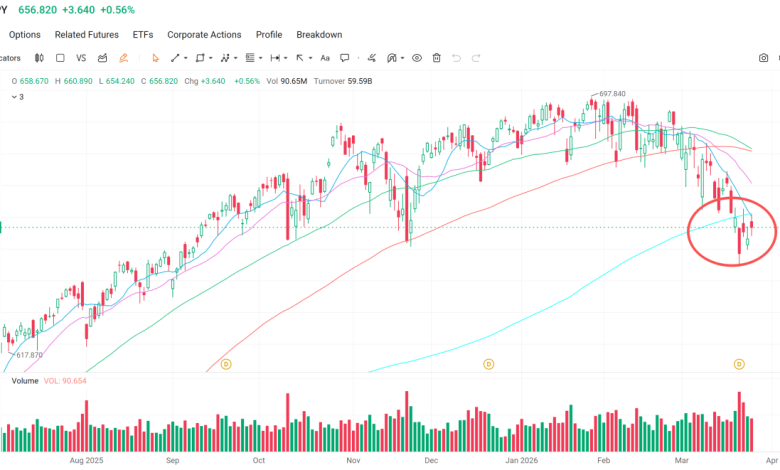
The recent technical backdrop for U.S. equities has been defined by choppy index action, heavy headline sensitivity, and limited overnight follow-through. At the same time, the VIX has retreated from above 30 to 25.33, suggesting that sentiment has improved somewhat, but volatility remains elevated. A more meaningful easing in market stress would likely require the VIX to move back toward 20 and then break below it.
1 Technical Analysis of Major Index ETFs
Among cross-asset ETFs, crude oil and gold remain the two most important instruments to watch.
Within the higher-momentum areas of the market, optical communications and memory/storage are worth watching.
For investors who are already heavily positioned, the priority is to control drawdowns first. Two strategies are particularly suitable. The first is a covered call, which means selling call options against an existing stock position to collect premium and reduce holding costs in a choppy market, at the expense of capping some upside. The second is a protective put, which means buying put options while continuing to hold the underlying position, thereby adding downside protection to the portfolio. This approach is suitable for investors who are concerned about another sharp market leg lower and want to lock in risk in advance.
For investors who are lightly positioned, a cash-secured put is a more suitable way to wait for a better entry point. In practice, this means selling a put at a price level where you would be willing to buy the index or stock. If the option expires unexercised, you keep the premium; if you are assigned, you acquire the position at a lower net cost. This strategy is appropriate for investors who are not bearish on the market outlook, but also do not want to chase prices higher during a high-volatility period.
Before investing in an ETF, you should read both its summary prospectus and its full prospectus, which provide detailed information on the ETF’s investment objective, principal investment strategies, risks, costs, and historical performance (if any). You can find prospectuses on the websites of the financial firms that sponsor a particular ETF, as well as through your broker.
Investment returns will fluctuate and are subject to market volatility, so that an investor’s shares, when redeemed or sold, may be worth more or less than their original cost. ETFs are subject to market volatility and the risks of their underlying securities, which may include the risks associated with investing in smaller companies, international securities, commodities, fixed income, and more. An ETF may trade at a premium or discount to its net asset value (NAV).