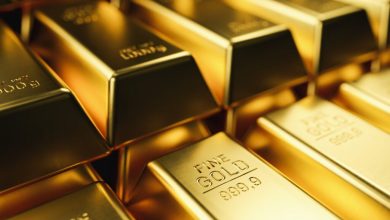
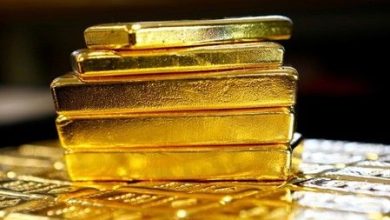
The bull market for gold has begun, with prices set to soar to $6,500 by 2026!

At the start of 2026, the global precious metals market is undergoing a dramatic realignment. Amid shifting geopolitical dynamics, the long-term bullish case for gold has not only been reinforced but has transitioned significantly from the base-case scenario to a strong bull-market outlook; meanwhile, the silver market, after experiencing a speculative frenzy, is quietly showing signs of weakening. Helen Amos, Managing Director and Commodities Analyst at BMO Equity Research, disclosed this latest assessment for the first time in an exclusive interview with BNN Bloomberg, providing global investors with clear and profound guidance.
Investor enthusiasm for gold continues to rise, driven by multiple reinforcing factors.
Amos pointed out that despite recent noticeable volatility in gold prices, investor enthusiasm for precious metals and the mining sector remains undiminished. Gold and copper remain the top choices in BMO’s commodity allocation for this year. She emphasized, “There are too many positive factors stacking up.” These include robust growth momentum in emerging market economies, deepening trends toward deglobalization, and the acceleration of de-dollarization – all structural changes that provide solid support for precious metals.
At the same time, both retail and institutional investors have shown remarkable resilience in their interest. Amos observed that every time gold prices experience a brief pullback, they almost invariably form a solid base within a short period. This “buy on dips” market behavior fully demonstrates investors’ long-term confidence in gold. It is the combined effect of these multi-dimensional drivers that keeps the gold market vibrant.
In-depth Analysis of BMO’s Bullish Scenario: Gold Prices Could Approach $6,500 and Continue Rising
 BMO’s highest forecast for gold is particularly striking. According to its regression model, gold prices could approach $6,500 per ounce by the end of 2026 and climb further to $8,600 per ounce by the end of 2027. The core logic behind this prediction is that if investment demand maintains the strong pace seen in the first year of Trump’s second term, combined with central banks maintaining high levels of gold purchases and continuous inflows into ETFs, then gold prices will easily surpass historical highs.
Amos explained in detail that the model is mainly based on four key variables: global central bank gold purchase demand, changes in ETF holdings, movements in the US Dollar Index, and yields on 10-year Treasury Inflation-Protected Securities (TIPS). Although gold’s actual fluctuations have made it difficult for the model to keep pace, these four factors still effectively explain its long-term performance. She specifically mentioned that even projecting slightly above historical levels of central bank gold purchases and ETF inflows would be sufficient to push gold prices near $6,500, “which clearly shows that the current market environment makes it very easy for gold to rise.”
Geopolitical risks escalate sharply as the base-case scenario undergoes significant upward revision.
Notably, BMO’s initial base-case scenario predicted a pullback in gold prices in the coming months. However, Amos admitted that this scenario was based on data calculations from December 2025, and since entering January 2026, the global geopolitical situation has undergone drastic changes. Tensions in Venezuela, disputes related to Greenland, and concerns about the Federal Reserve’s independence erupted within weeks, tilting the risk balance significantly toward a bullish scenario.
“The original base-case scenario no longer applies,” Amos said bluntly. “All current risks have shifted upward.” This judgment implies limited downside potential for gold prices in the short term, while upside potential has been further amplified.
The silver market requires a high degree of caution as the physical balance is quietly loosening.
Compared to the optimistic outlook for gold, Amos is notably more cautious about silver. She pointed out that silver is still fundamentally driven by its industrial attributes rather than being a pure safe-haven asset. The current supply and demand balance in the physical silver market has begun to show signs of easing, primarily due to global solar installations having peaked and excessive speculative enthusiasm among retail investors during the period from December 2025 to January 2026.
“A large amount of options trading and speculative capital had previously driven up silver prices, but these forces are now rapidly receding,” Amos analyzed. “After the price retreated to a reasonable range, the previous sharp volatility also damaged silver’s traditional reputation as a safe-haven asset.” Although she stated that she would continue to monitor any new changes that might alter silver’s investment characteristics, the physical market has essentially passed its tightest phase, and investors should remain on the sidelines.
Summary: The bullish window for gold has opened, while silver needs to wait for the right opportunity.
Overall, the latest views of Helen Amos, Chief Analyst at BMO, paint a starkly contrasting picture for the precious metals market in 2026: Gold, driven by multiple structural advantages and geopolitical catalysts, is facing a historic bull market opportunity; whereas silver, affected by slowing industrial demand and the retreat of speculative fervor, faces short-term adjustment pressures.
For investors, this means maintaining an active allocation in gold and copper sectors while adopting a more prudent stance toward silver. Although future market trends still hold uncertainties, the core message conveyed by Amos is clear and firm: In the current environment, the long-term upward logic for gold has significantly strengthened, while silver needs to await clearer signals of supply and demand improvement. Global capital is reassessing precious metals allocations with unprecedented intensity, and 2026 may become a bumper year for gold.
At 08:56 Beijing Time, spot gold was reported at $5,002.79 per ounce.