The SPDR Gold ETF Has Been Good to Long-Term Investors. Here’s Why.
Key Points
-
The SPDR Gold ETF offers investors exposure to the gold market.
-
However, gold prices have been volatile, and even though they’ve risen lately, they’ve gone long periods without doing much.
-
Investors in SPDR Gold need to be able to handle ups and downs.
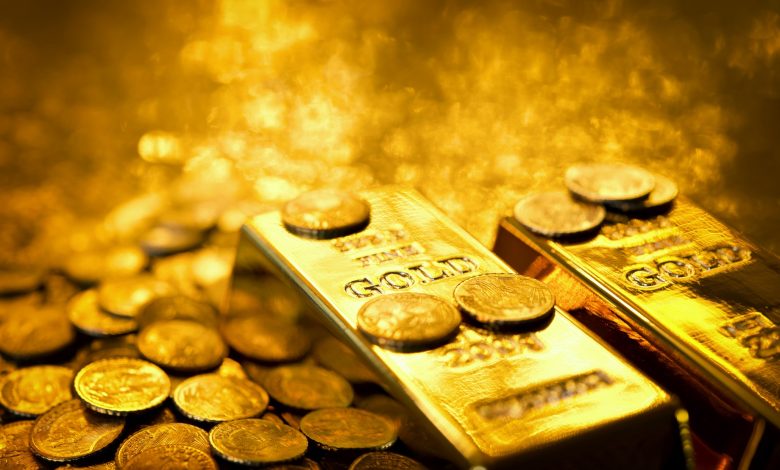
The SPDR Gold ETF (NYSEMKT: GLD) broke new ground in the world of exchange-traded funds. Rather than just giving investors an ownership interest in shares of companies, SPDR Gold represented a way for fund shareholders to get an indirect interest in an actual physical commodity. The ETF revolutionized the gold market, disrupting a business model that until then had relied on coin dealers and precious metals experts that made it expensive and logistically challenging to buy and sell physical gold.
With gold having recently soared above the $5,000 per ounce mark, shareholders in SPDR Gold have made out quite well lately. But as you’ll see in this second article in a three-part series on the ETF for the Voyager Portfolio, SPDR Gold hasn’t moved straight up, and it has gone for long periods of time without doing much in the way of performance for its investors.
Will AI create the world’s first trillionaire? Our team just released a report on the one little-known company, called an “Indispensable Monopoly” providing the critical technology Nvidia and Intel both need. Continue »
Image source: Getty Images.
What a difference a year makes
ETF investors are notorious for looking at a fund only after it has risen sharply, and that’s been the case with the SPDR Gold ETF. Over the past year, the fund has jumped 73%, culminating a three-year period in which SPDR Gold has generated average annual returns of 39%. Even when you look back over the past five years, SPDR Gold has done extremely well, returning about 24% annually and outperforming even some of the strongest stock indexes over the same period.
However, when you look back further, SPDR Gold’s returns have been a lot spottier. Between 2018 and 2022, the fund had three years when it lost money. Before that, gold had numerous boom and bust periods, rising sharply for a time only to give up most or all of those gains thereafter.
Nevertheless, when you look all the way back to the fund’s inception in 2004, SPDR Gold has done well for itself. Average annual returns amount to 11.85%. That compares to gold’s own return of 12.3% per year, but the math works out just about right because SPDR Gold charges an expense ratio of 0.40% annually to its shareholders.
How shares of SPDR Gold have devalued over time
Despite that performance, there’s one aspect of SPDR Gold that investors should know. It has to do with expenses and how the gold ETF makes sure it collects the fee it’s due.
Most ETFs own assets that generate income. As a result, those funds’ investors never see their fund sell stocks. Instead, to pay fees, the ETF will take some of the dividend income it receives.
Gold, though, doesn’t generate income. Indeed, SPDR Gold has to pay not only its own management expenses but also the costs of storage, insurance, and other overhead from taking care of its physical gold. So the only way that SPDR Gold can get the cash to pay those expenses is by selling off a tiny portion of its gold on a regular basis.
The result of those transactions is that one share of SPDR Gold no longer represents one-tenth of an ounce of the precious metals. Instead, the current ratio is 0.0918827 ounces of gold for each share. Again, that’s pretty consistent with 22 years’ worth of expenses of around 0.40% per year. But it means that even though gold is still slightly above $5,000 per ounce, shares of SPDR Gold closed the week closer to $460.
What’s next for SPDR Gold?
Hopefully, you now have a better understanding of what SPDR Gold ETF is and why it has done so well lately. To conclude this three-article series for the Voyager Portfolio, you’ll find out how many analysts feel about the precious metals market and whether SPDR Gold can keep adding to its recent gains.
Should you buy stock in SPDR Gold Shares right now?
Before you buy stock in SPDR Gold Shares, consider this:
The Motley Fool Stock Advisor analyst team just identified what they believe are the 10 best stocks for investors to buy now… and SPDR Gold Shares wasn’t one of them. The 10 stocks that made the cut could produce monster returns in the coming years.
Consider when Netflix made this list on December 17, 2004… if you invested $1,000 at the time of our recommendation, you’d have $514,000!* Or when Nvidia made this list on April 15, 2005… if you invested $1,000 at the time of our recommendation, you’d have $1,105,029!*
Now, it’s worth noting Stock Advisor’s total average return is 930% — a market-crushing outperformance compared to 187% for the S&P 500. Don’t miss the latest top 10 list, available with Stock Advisor, and join an investing community built by individual investors for individual investors.
*Stock Advisor returns as of March 15, 2026.
Dan Caplinger has no position in any of the stocks mentioned. The Motley Fool has no position in any of the stocks mentioned. The Motley Fool has a disclosure policy.