The Supreme Court’s conservatives could significantly alter the 2026 election
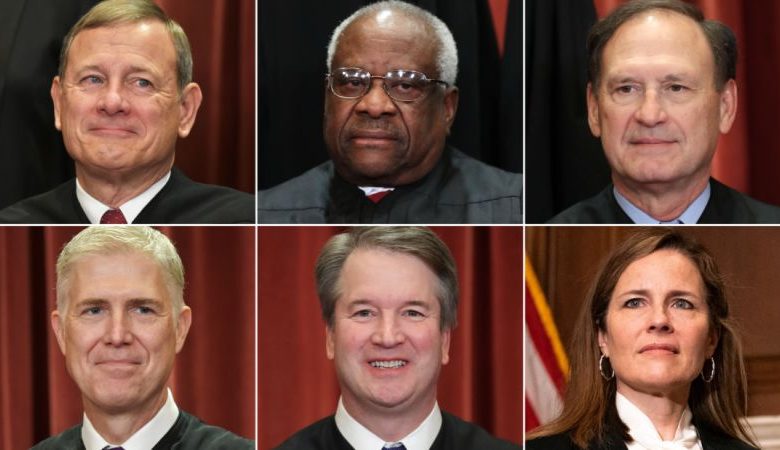
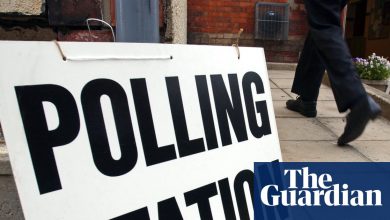
The Supreme Court on Monday appeared ready to limit mail-in ballots, a move that would reinforce the justices’ pattern of shrinking voter protections and that has, at bottom, favored Republican interests and the Trump administration.
And at a time when some justices publicly minimize their internal divisions, Monday’s case testing whether mail-in ballots may be received after Election Day exposed the chasm between the left and right with respect to ballot access.
The case is one of two major Supreme Court disputes that could significantly affect the upcoming midterm elections. The court is expected to rule this spring on a pending case from Louisiana that involves the reach of a Voting Rights Act provision intended to protect against race discrimination.
The consequences of election-law disputes to democracy cannot be overstated. Who votes determines who obtains public office. And who holds office determines the policies, funding and other government benefits that shape the lives of all Americans.
Conservative justices expressed suspicion Monday that a Mississippi law permitting ballots with a timely postmark to be received within five business days of the election is valid under federal election laws. Those statutes, dating to 1845, establish the Tuesday after the first Monday in November as the date for federal elections.
As a practical matter, the Republican National Committee and other challengers to the Mississippi law and similar measures say such late-arriving ballots generate uncertainty and add to post-election chaos.
Liberal justices, meanwhile, emphasized regard for today’s widespread absentee-voting practices. About 30 states, to varying degrees, allow ballots that were mailed by Election Day to be counted if received soon after.
Among those supporting Mississippi are the Democratic National Committee and civil rights groups that emphasize people’s reliance on absentee voting for reasons of age or disability, work or educational responsibilities, and military service. They say a change would upset the expectations of millions of American voters who rely on absentee ballots and who, because of prevailing state practices, believe that a ballot that arrives just after Election Day will still be counted.
During the intense two hours of arguments, frustration on the left wing was palpable. “The people who should decide this issue are not the courts but Congress,” senior liberal Justice Sonia Sotomayor said.
Right-wing justices poked holes in Mississippi’s claims and suggested they believed that, historically, Congress wanted all ballots to be received by a single national election day.
Conservative Justice Brett Kavanaugh latched onto arguments that late-arriving ballots bring concerns of fraud. And perhaps to counter claims by civil rights activists about the potential harm to certain classes of voters, he challenged Mississippi Solicitor General Scott Stewart at one point: “Would you say that the states that require receipt by Election Day are disenfranchising voters?”
“No,” Stewart replied. “A reasonable ballot deadline does not do that. I would (add an) asterisk just there are the practical barriers for those overseas military voters.”
Under the Constitution, states are responsible for the “times, places and manner” of elections, but Congress can “make or alter” such regulations. At the heart of the case is a series of federal statutes that set the election date for presidential electors and members of Congress.
“The Election Day statutes adopt a simple rule: States must make a final choice of officers by Election Day,” Stewart told the justices. He said that mandate is satisfied when voters “make their individual selections by Election Day,” even if the mailed ballot does not arrive then.
Stewart, defending a statute adopted by the state’s Republican-controlled legislature, noted that the statutes do not preclude any deadline extensions and that for decades Congress has respected state policies allowing the counting of ballots received after Election Day.
Lawyer Paul Clement, representing the RNC and other challengers, told the justices that Mississippi’s view defies federal law and would lead to further confusion in election results.
“If somebody in Gulfport the day after the election asks is the election over, the commonsense answer is no, it’s not. The ballots are still coming in,” Clement said. “And if somebody asks who won, the truthful answer is we don’t know why yet. The ballots are still coming in. And they may trickle in for weeks or months. And, in fact, they may trickle in for weeks or months with or without a postmark in differing ways in differing states. That reality gives the lie to the idea that we have a uniform national election day.”
Conservative justices voiced such fears of open-ended and extreme possibilities.
“You have a variety of line-drawing problems,” Justice Samuel Alito told Stewart, noting that a few states accept ballots weeks after an election. “So there’s no limit? Except I suppose the day when the presidential electors have to be appointed or the day when the next Congress begins …”
Alito also raised the specter of fraudulent ballots.
“Some of the briefs have argued that confidence in election outcomes can be seriously undermined if the apparent outcome of the election, on the day after the polls close, is radically flipped by the acceptance later of a big stash of ballots that flip the election,” Alito said.
Claims of fraud, raised without specific evidence, have been routine for the Trump administration, which argued with the Republican Party against the Mississippi law. President Donald Trump has sought to end most mail-in voting and is pressuring Congress to adopt a federal elections overhaul bill that would add strict voter-identification and proof-of-citizenship requirements.
“Obviously, they’ve sounded the antifraud theme,” Stewart said as he responded to Alito, adding, “They haven’t cited a single example of fraud from post-Election Day ballot receipt in this century.”
Monday’s clash between the Democratic-appointed liberals on the bench and the Republican-appointed conservatives mirrored October’s hearing over the Voting Rights Act.
Justices on the right signaled they are likely to curtail the reach of the 1965 Voting Rights Act, intended to ensure equal access to the polls for Black voters and other racial minorities. That would buttress the court’s pattern, too, as in recent decades the conservative majority has erased multiple protections under the milestone law.
In dispute in that Louisiana case are “majority-minority” districts, used to remedy congressional maps that diluted the voting power of Black and Hispanic voters and to give them an opportunity to elect a preferred candidate.
Federal courts have traditionally ordered the creation of race-conscious districts after a finding that a state legislature discriminated as it drew map lines.
Several justices on the conservative wing have made clear they believe such race-conscious measures, tracing to the 1960s, simply are no longer needed in contemporary America.
A similar ideological split arose in the dueling positions Monday.
Kagan questioned whether, if Mississippi and its allies lose, federal Election Day statutes might later be found to preempt other established state practices.
“Once we say that these statutes, which don’t say anything, actually have some significant preemptive effect, where are going to end up?”
Credit: Source link