The White House No Longer Has a Crypto Czar. The CLARITY Act Has Never Needed One More.

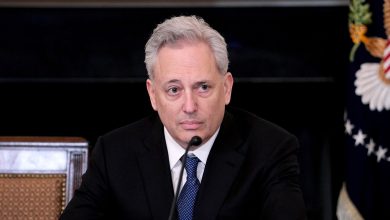
David Sacks confirmed on March 26 that his 130-day term as White House AI and crypto czar has expired. The administration will not appoint a replacement. The most critical stretch of crypto legislation in years now moves without its chief White House advocate.
The intelligence layer for fintech professionals who think for themselves.
Primary source intelligence. Original analysis. Contributed pieces from the people defining the industry.
Trusted by professionals at JP Morgan, Coinbase, BlackRock, Klarna and more.
Join the FinTech Weekly Clarity Circle →
David Sacks confirmed on March 26 that his tenure as the White House’s AI and crypto czar is over. The departure was not a resignation and not a reassignment. Special government employees are permitted to serve no more than 130 days over a twelve-month period under federal law. Sacks told Bloomberg Television that he had used up that time. The role is now vacant.
The White House does not plan to appoint a replacement.
What the Czar Role Actually Did
Sacks was the first person to hold the combined AI and crypto advisory role inside the Trump White House. His contribution to the digital asset agenda was specific and documented. He coordinated the White House’s position during the passage of the GENIUS Act — the stablecoin legislation that established the first federal regulatory framework for payment stablecoins.
He hosted the closed-door sessions between banking and crypto representatives that produced the stablecoin yield compromise in March. When the crypto industry fractured over the CLARITY Act in January, he posted publicly that “no bill is better than a bad bill” was a losing position — a direct, public rebuke of the largest US crypto exchange at the moment it mattered most.
He was, in the language of Washington, the person with the direct line to the President on digital assets. That direct line no longer exists inside the executive branch in operational form.
The Institutional Shift
PCAST is an advisory council. It produces reports and recommendations. It does not negotiate legislative text with Senate staff. It does not broker compromises between banking lobbyists and crypto executives in closed-door Capitol Hill sessions. The shift from czar to PCAST co-chair is a shift from operational policy influence to external advisory status. Those are different jobs.
What Sacks Carries Into PCAST
The transition is not a disappearance. Sacks co-chairs PCAST alongside Michael Kratsios, Director of the White House Office of Science and Technology Policy. The council’s thirteen initial members include Marc Andreessen and Fred Ehrsam — both of whom backed the CLARITY Act when the crypto industry split in January, and both of whom, as FinTech Weekly reported, now sit inside the most senior presidential technology advisory structure in American government. Sacks retains access to the president through that structure.
What he no longer has is the operational mandate to drive a specific legislative outcome on a specific timeline. Patrick Witt, who served as Executive Director of the White House Crypto Council under Sacks, remains in position. The institutional knowledge did not leave when the czar did.
But the direct line did.
Editor’s note: We are committed to accuracy. If you spot an error or have additional information, please email [email protected].