These Two Crypto ETFS Offer Strong Exposure to Bitcoin
Investing in cryptocurrencies can be tricky, but these ETFs may make it simpler for investors to get involved in the booming market.
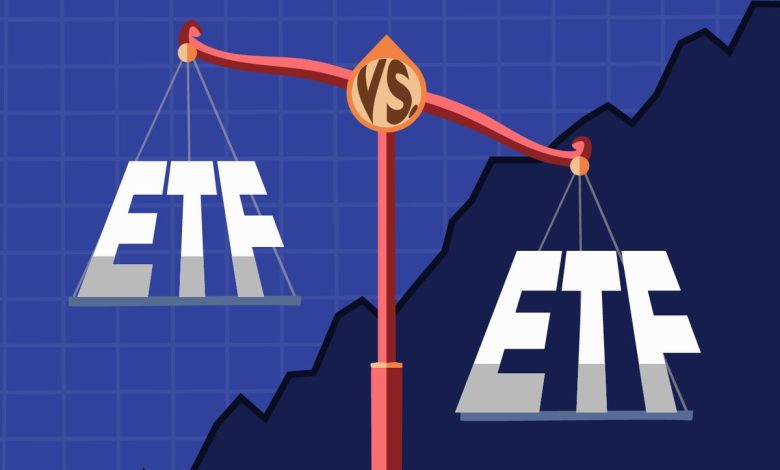
Both the Fidelity Wise Origin Bitcoin Fund (FBTC +0.12%) and CoinShares Bitcoin Mining ETF (WGMI +4.71%) offer exposure to Bitcoin (BTC 0.91%), but their approaches differ: FBTC tracks spot Bitcoin itself, while WGMI holds shares of companies tied to Bitcoin mining and infrastructure. This comparison unpacks their costs, performance, risks, and what’s inside to help clarify which ETF may appeal to a crypto-focused portfolio.
Snapshot (cost & size)
| Metric | FBTC | WGMI |
|---|---|---|
| Issuer | Fidelity | CoinShares |
| Expense ratio | 0.25% | 0.75% |
| 1-yr return (as of Jan. 24, 2026) | -14.53% | 92.48% |
| AUM | $17.41 billion | $341.93 million |
Beta measures price volatility relative to the S&P 500; beta is calculated from five-year weekly returns. The 1-yr return represents total return over the trailing 12 months.
WGMI has a higher expense ratio, but it has shown significant price gains over the last 12 months, while FBTC has fallen in price.
Performance & risk comparison
| Metric | FBTC | WGMI |
|---|---|---|
| Max drawdown (2 y) | -32.64% | -62.79% |
| Growth of $1,000 over 2 years | $1,922 | $2,604 |
What’s inside
WGMI currently invests in 25 companies, primarily in the technology sector. Its top holdings include IREN Ltd. (IREN +8.30%), Cipher Mining (CIFR +1.03%), and Hut 8 Corp. (HUT +5.81%) The fund has been trading for nearly four years and has increased in price by approximately 87.56% within that span.
FBTC, by contrast, is a single-asset trust that tracks the daily price of BTC using a Bitcoin price feed. Barely two years old, the ETF’s price has risen 85.57% since its inception.
What this means for investors
As with most cryptocurrencies, investors must be aware of the risks associated with crypto-related ETFs. FBTC especially carries a higher risk because it’s been on the market for only 2 years and holds BTC solely. So the fund’s price can be highly volatile and reliant on the coin’s success, as cryptocurrencies are generally more volatile than stocks.
And while WGMI’s holdings are actual stocks, many of its top holdings are tied to the crypto market, so it can carry a higher risk than many other ETFs.
It should also be noted that no beta measurement is provided for either ETF. The beta measures price volatility relative to the S&P 500, and is often calculated from five-year weekly returns. And since both funds are less than five years old, that type of measurement isn’t applicable at the moment. They also don’t offer dividends.
What’s interesting with WGMI is that it may gradually become less of a Bitcoin mining ETF, as many mining companies, including those in the ETF, are actively transitioning to or incorporating high-performance computing (HPC) and AI data center operations.
Common reasons for transitions include diversifying revenue streams and/or moving away from mining, which has become increasingly controversial due to concerns about environmental impact. So if investors don’t mind the transition that WGMI is undergoing, it’s still a great option for indirect exposure to crypto.
Glossary
ETF (Exchange-traded fund): A fund that trades on stock exchanges like a stock, holding a basket of assets.
Spot bitcoin ETF: An ETF that holds actual bitcoin, aiming to track its market price directly.
Bitcoin mining: The process of validating bitcoin transactions and creating new coins using specialized computing hardware.
Crypto-infrastructure companies: Businesses providing hardware, software, or services that support cryptocurrency networks and mining operations.
Expense ratio: Annual fund operating costs expressed as a percentage of the fund’s average assets.
Assets under management (AUM): The total market value of assets a fund or manager oversees for investors.
1-year return: The fund’s total percentage gain or loss over the most recent 12-month period.
Total return: Investment performance including price changes plus any income or distributions, assuming reinvestment.
Beta: A measure of an investment’s volatility compared with a benchmark index, typically the S&P 500.
Max drawdown: The largest peak-to-trough percentage loss over a specified time period.
Volatility: The degree to which an investment’s price moves up and down over time.
Diversification: Spreading investments across different assets to reduce the impact of any single holding’s performance.
For more guidance on ETF investing, check out the full guide at this link.