Turmoil in Japanese bond market
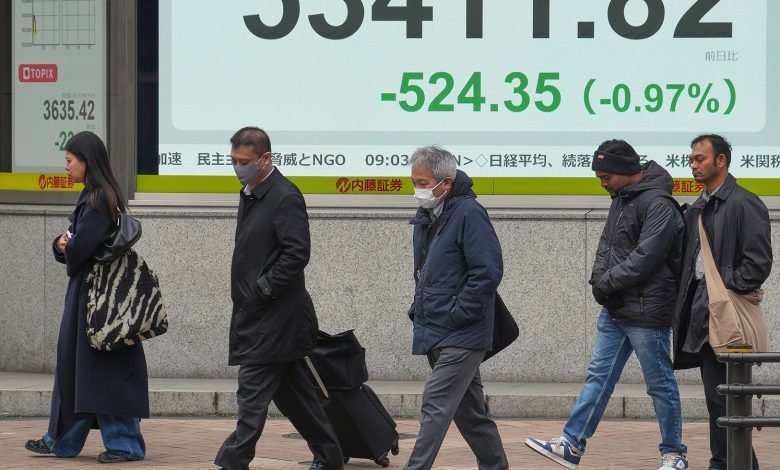
Is Japan heading toward a “Liz Truss moment?” That is a question increasingly being raised in financial circles amid a sharp rise in the yield (interest rate) on government bonds this week.
The reference is to the crisis that was sparked in September-October 2022 when the UK bond market went into turmoil after the Truss Tory government sought to fund major tax cuts for the corporations and the wealthy by increasing debt.
The crisis required intervention by the Bank of England and resulted in the rapid end of the Truss government.
The situation in Japan is not as serious, at least not yet. But there are concerns that the stimulus package of the government of the recently installed prime minister Sanae Takaichi has the potential to create a fiscal and financial crisis.
After taking office in October, Takaichi announced a $135 billion stimulus package in November. This week she doubled down and announced the calling of an election on February 8 in which she would seek a mandate for further measures, including a cut in the consumption tax.
Announcing the election, Takaichi said she was seeking a mandate for what she described as a “major policy change.”
Japan had to break free of old fiscal constraints and end excessive fiscal austerity and implement large scale investment and tax cuts to stimulate growth, she said.
But with no plan as to how the tax cuts were to be funded, the $7.6 trillion bond market went into turmoil. The clear implication was that it would be funded through increased debt, which already stands at over 200 percent in relation to GDP.
Last Tuesday, the day after the election announcement, the yield on 10-year bonds hit 2.35 percent, their highest level since February 1999. The yield on the 40-year bonds went to 4.2 percent, the first time it has gone over 4 percent since it was introduced in 2007.
The Japanese Government Bond (JGB) markets experienced significant volatility with some traders describing it as the “most chaotic trading day in years.” Matters were not improved when there was a very weak auction for 20-year bonds, leading to a cycle of “selling, heightened anxiety, and more selling.”
Yuuki Fukumoto of the Japan-based NLI Research Institute told Bloomberg: “There is no clear funding source for the consumption tax cut, and the market expects it to be financed through government bond issuance.”
She said the bond market was the “canary in the coal mine” and that “it’s hard to see a scenario where buying bonds makes sense.”
Problems are emerging for Japan’s financial institutions. The Bank of Japan is caught between pressure to keep interest rates low while at the same time needing to keep them high enough to control inflation which has started to rise after years of stagnation and even deflation.
The country’s life insurers, which are heavy investors in government bonds, face paper losses on their holdings as the price of bonds falls and their yield rise. (The two have an inverse relationship.)
Bloomberg reported that four of Japan’s largest life insurers said they had around $60 billion of unrealised losses on their domestic JGB holdings for the latest fiscal year which was four times higher than for the previous year. It should be recalled that potential major losses by insurance companies were at the centre of the UK crisis in 2022.
Japan has the highest debt to GDP ratio of any major economy and perhaps may be considered to something of an outlier. But its bond market is being closely watched both because it plays a major role in the global financial system and because the rise of debt is afflicting all the major economies.
Speaking to Bloomberg Television at the World Economic Forum in Davos, Ken Griifin, the head of the major hedge fund Citadel, said the selloff of Japanese bonds was an “explicit warning” that the US had to improve its financial position.
US government debt is now at $38 trillion—a historical record—with an interest bill of $1 trillion a year.
“The bond vigilantes can come out and exact their price,” he said. “What happened in Japan is a very important message to the House and the Senate. You need to get our fiscal house in order.”
Griffin repeated a claim often made that while the situation is serious, the US had time to be able to deal with it.
“The US has so much wealth that we can maintain this level of deficit spending for some period of time,” he said. “But the longer we wait to change direction, the more draconian will be the consequences of that change.”
However, the ability of the US to maintain record debt levels—increasing at a rate that all major financial institutions say is unsustainable—depends on the inflow of money into the US debt market from the rest of the world.
And that is being called into question as reflected in the ongoing fall in the value of the dollar and the move into gold which is continuing to reach record highs and is now pushing to $5,000 an ounce.
While no action has been taken, it was significant that a research note from Deutsche Bank this week raised the prospect that the European powers could use the “capital weapon” rather than trade and tariffs, by withdrawing money from the US Treasury market in response to US President Trump’s attacks over Greenland.
Concerns over the rise in yield in long-term bond market yields are also apparent in Europe.
The Financial Times reported this week that European governments were increasingly turning to the shorter end of the market, where yields are lower, to finance their debts “to limit the damage from a rise in borrowing costs.” According to Barclays, the average maturity for debt issued across the euro zone will go below 10 years for the first time since 2015.
The move to the shorter end lowers costs but it leaves the government debt market more exposed to fluctuations in interest rates because the borrowings must be refinanced more frequently.
The Wall Street Journal has also pointed to the significance of the events in the Japanese market in an editorial published earlier this week. It gave the thumbs down to the proposed stimulus package saying such measures had done little or nothing to boost the economy in the past and only added to debt.
It then went on to highlight the international implications saying Tokyo’s normalisation of monetary policy and its dire fiscal situation “rank among the more serious threats to global financial stability.”
As a leading proponent of the savage measures demanded by finance capital to be implemented against the working class in the US and rest of the world, it concluded: “Japan is an extreme case of a high-debt low-growth policy model that infects most other Western economies. How Tokyo does or doesn’t fix this will serve as a lesson—and perhaps a warning—the world over.”