Unprecedented! The U.S. to directly intervene in crude oil futures trading; will Treasury Secretary Bessent return to his old trade?

The conflict in the Middle East has caused a surge in oil prices, prompting the U.S. Treasury Department to consider an “unprecedented” measure: direct intervention in crude oil futures. The specific approach may involve “selling the near end of the futures curve while buying the far end” to lower the price of near-month contracts and calm market panic. However, analysts are skeptical about the actual effectiveness of Treasury intervention, arguing that the impact of financial instruments depends on whether physical supply can be restored.
The U.S. Treasury Department is evaluating direct action in the crude oil futures market to suppress the surge in oil prices triggered by the conflict with Iran. This would represent a rare, or even potentially ‘unprecedented,’ intervention in financial markets by Washington, aimed at influencing price expectations rather than utilizing physical crude oil supplies.
According to a Reuters report, a senior White House official revealed that the U.S. Treasury Department is expected to announce a series of measures addressing rising energy prices as early as March 5 (Thursday), which may include direct intervention in the oil futures market. Due to the lack of clarity on specific details, the official declined to disclose specifics in advance, stating that they did not wish to preempt the Treasury’s announcement.
The sharp volatility in the market is the immediate cause prompting this intervention. Since the outbreak of conflict with Iran last Saturday, concerns over disruptions to crude oil supplies from the Middle East have driven U.S. crude oil futures prices up by nearly 21%, directly raising fuel costs and sparking fears of a rebound in inflation.
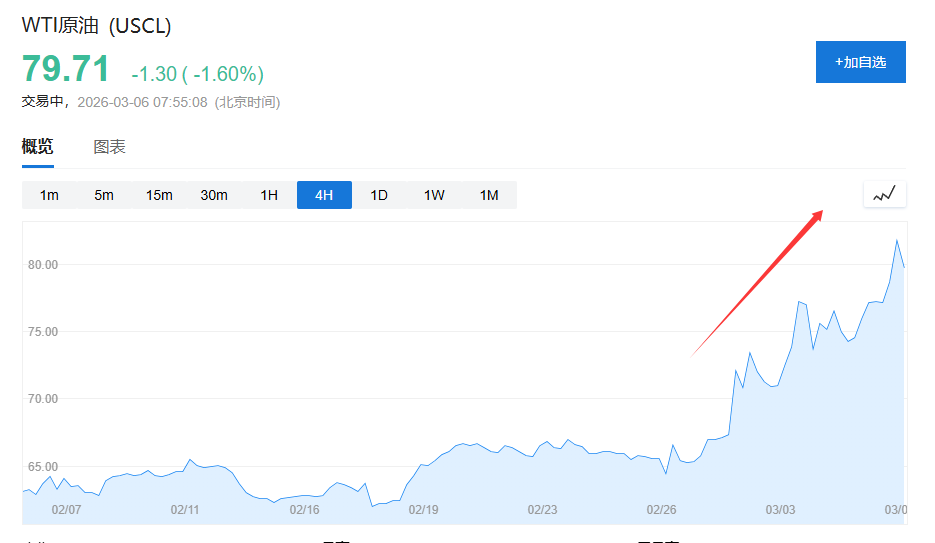
Despite heightened attention from the energy market regarding the Treasury’s potential intervention, President Trump remains calm. He explicitly stated that the current priority is military action rather than intervening in short-term oil prices, and he expects prices to quickly fall once the conflict concludes.
Bessent Returns to His Roots
The idea of intervening in the futures market is closely tied to U.S. Treasury Secretary Bessent’s extensive financial background.
Bessent previously served as the Chief Investment Officer of Soros Fund Management and later founded the macro hedge fund Key Square Group, boasting decades of experience in currency, bond, and commodities trading.
From an operational perspective, Phil Flynn, a senior analyst at Price Futures Group, described this move as ‘a highly creative out-of-the-box approach’ and noted that the specific strategy might involve ‘selling the front end of the futures curve while buying the back end’ to lower near-term contract prices and ease market panic. Flynn also pointed out that the Treasury’s traditional functions focus on fiscal policy, debt management, and occasional exchange rate interventions, with no prior involvement in commodities like oil.
Precedent Reference: Historical Experience of ESF and Quantitative Easing
Although intervention in the oil futures market is unprecedented, the U.S. government’s use of financial tools to stabilize markets is not without precedent.
During the 2008 financial crisis, the Federal Reserve implemented quantitative easing through large-scale purchases of mortgage-backed securities and Treasury bonds. The Treasury Department’s Exchange Stabilization Fund (ESF) intervened last October to purchase pesos and provide a $20 billion swap line for Argentina to support its currency. Established during the Great Depression, the fund had total assets of $220.85 billion as of January 31 this year. It has historically supported Federal Reserve lending facilities during multiple crises, including the global financial crisis from 2008 to 2009, the COVID-19 pandemic, and the U.S. banking crisis in 2023.
Additionally, Mexico has long implemented a program called the “Hacienda hedge” to protect oil revenues, which was once the largest financial oil transaction globally. However, this hedge targets physical oil inventories, fundamentally differing from purely financial instruments.
Analysts: Short-term deterrent effect unlikely to resolve supply gaps
Multiple market analysts expressed skepticism about the actual effectiveness of Treasury intervention, noting that the scope of financial tools depends on whether physical supplies can be restored.
John Paisie, President of Stratas Advisors, stated that the move might suppress speculative behavior by making traders aware that the U.S. government is on the opposing side, potentially moderating the rise in oil prices. “However, it does not address the issue of physical supply disruptions — the closure of the Strait of Hormuz has significant implications, and there is no spare capacity outside the Gulf region. Ultimately, if a substantial amount of oil supply remains disrupted, financial operations will not work, and traders will continue to bet on rising oil prices because the price should naturally be higher.”
Tony Sycamore, an IG market analyst, argued that even if the Treasury directly intervenes in futures contracts, “it may create a brief pause or scare off some speculative long positions, but I doubt its impact would last more than a day or two. The oil market is vast, global, and driven by real supply and demand fundamentals — especially when shipping through the Strait is already obstructed and threats from Iranian drones are genuine. Verbal pressure or symbolic actions from the Treasury are unlikely to change this situation.”
Ed Meir, an analyst at Marex, pointed out the potential risks: “If they plan to lower prices by selling futures, it is a major gamble and an unprecedented intervention in the crude oil market. The immediate question is: What will they do if prices continue to rise and short positions incur losses? Will they use strategic petroleum reserves for delivery, or keep adding margin and persist regardless?”
Ben Hoff, Head of Commodity Quantitative Research at Société Générale, described this potential move as “unprecedented” and emphasized that the influence of financial instruments in energy markets is ultimately limited. “The devil is in the details; we need to see the specifics of the U.S. government’s plan.”
Market sentiment intensifies: Record-high hedging transactions
While Washington contemplates intervention measures, trading activity in the crude derivatives market has reached a feverish pitch. As WTI crude futures are poised for their largest weekly gain since March 2022, producers and consumers are rushing to enter the market.
According to Energy Aspects data, the volume of hedging transactions by U.S. producers reached a record high on a single day this week since the aggregation of data began in 2023. Traders noted that this week has become the busiest trading period ever experienced for major dealers serving both producers and consumers.
Producers are seizing the rare price window to lock in future sales profits through forward contracts. This sharp sell-off of forward contracts has caused severe backwardation in the WTI futures curve (where near-term contract prices are significantly higher than longer-dated ones), with the spread between June and December soaring from $1.48 to $8.21 in just two weeks. Meanwhile, collar strategies have become more attractive as producers buy put options to protect their downside while selling call options to reduce hedging costs.
In response to this situation, crude oil consumers are equally vigilant. Rob McLeod, Head of Energy Price Risk Solutions at Hartree Partners, stated on LinkedIn that this week served as a profound lesson for airlines that had previously considered hedging ‘too expensive’ or ‘too risky,’ emphasizing that ‘relying on good luck is not a strategy.’