US Stock Futures Slide: S&P 500 Down 0.5%, Nasdaq 0.8%, Dow 0.3%
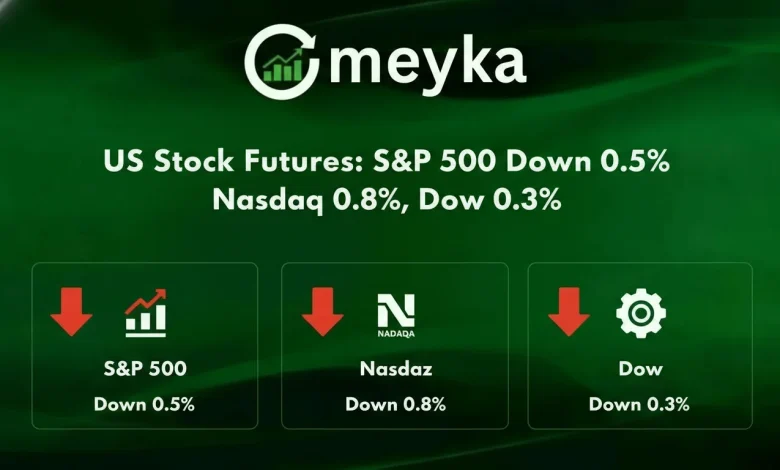
US markets opened with stock futures showing weakness as traders prepared for a new day of trading on Wall Street. Futures tied to the major indexes were in the red early in the session. S&P 500 futures were down about 0.5 %, Nasdaq futures declined around 0.8 %, and Dow Jones futures dropped roughly 0.3 %. These moves suggest investors were cautious ahead of key economic data and corporate earnings reports.
Stock futures provide an early look at how the markets might open when regular trading begins. They are widely watched by traders as a pre-market sentiment indicator. When futures fall, it often reflects uncertainty or concern among investors before the cash market opens.
What Are Stock Futures?
Stock futures are contracts that allow investors to buy or sell a stock index at a set price on a future date. They trade nearly 24 hours a day on exchanges like the Chicago Mercantile Exchange. These contracts are used by traders to hedge risk or speculate on where the market will move.
The main types of stock futures include S&P 500 futures, Dow Jones futures and Nasdaq futures. Each contract reflects expectations about the index’s value when the futures expire. For example, a drop in S&P 500 futures means traders expect the S&P 500 to open lower.
Why Did Futures Fall Today?
Several factors can lead to declines in stock futures, and today’s weakness appears tied to economic uncertainty and earnings expectations. Traders were cautious ahead of key inflation and corporate earnings data. Prior reports showed that futures can soften when economic indicators like inflation figures or Federal Reserve outlooks are due.
Another influence is broader global trends. Overnight moves in European and Asian markets often transmit sentiment to US futures. When markets abroad fall, this can carry over to US contracts before the cash market opens.
Investors also watch central bank decisions. Expectations about interest rate changes by the Federal Reserve play a big role. If traders think rates may rise or stay higher for longer, equity futures often decline because higher rates can reduce future corporate profits.
The Role of Economic Data
Economic data such as inflation and jobs reports can heavily impact stock futures. For example, if inflation numbers come in higher than expected, markets may fear slowing economic growth or tighter monetary policy. This fear can push futures lower.
Conversely, softer inflation or strong employment growth can lift futures because traders may expect the Federal Reserve to ease monetary policy in the future. When that happened in recent sessions, futures climbed as investors reacted positively to cooling inflation expectations.
How Futures Affect the Stock Market
Pre-market moves in futures often set the tone for the regular trading session. A drop in stock futures, like we are seeing today, may signal a weaker open for the S&P 500, Nasdaq and Dow Jones. However, futures are not always perfect predictors of the final market direction after the opening bell.
Stock traders, hedge funds and institutional investors use futures as tools for risk management and speculative trading. A decline in futures may encourage some to sell holdings or reduce exposure before markets open. On the other hand, some may see lower futures as a buying opportunity for value stocks.
Impact on Technology and AI Stocks
The Nasdaq index is heavily weighted toward technology stocks, including many in the AI sector. Because of this, declines in Nasdaq futures often reflect concerns about tech performance or changing risk appetite for growth stocks, especially AI stocks. When economic data or earnings forecasts disappoint, investors may rotate out of tech names into safer sectors, impacting futures tied to technology indexes more sharply.
For example, earnings reports from large tech companies that miss expectations can weigh on Nasdaq futures. At the same time, strong guidance from other sectors may soften the blow for broader indexes like the S&P 500.
What Traders Are Watching Next
With stock futures lower, traders will be watching a few key developments closely:
- Corporate earnings – Earnings season can swing the market significantly. Strong results can lift futures, while weak reports can deepen declines.
- Inflation data – CPI and PPI reports influence expectations about future interest rates. Higher inflation may keep future moves cautious, while cooler inflation can boost risk assets.
- Federal Reserve signals – Any commentary from the Fed regarding rate policy will also shape futures movements. Clarity on future rate decisions often reduces volatility.
What This Means for Investors
For everyday investors, weak stock futures mean markets may open lower. However, moves in futures don’t always indicate long-term trends. Investors should consider broader economic indicators, earnings performance and longer-term investment horizon when making decisions.
For those doing stock research, it helps to look beyond a single session’s movements and examine fundamentals such as corporate earnings, balance sheets and industry trends. Futures provide a short-term snapshot of sentiment but are not the full picture.
Conclusion
Today’s movement in stock futures with the S&P 500 down 0.5 %, Nasdaq down 0.8 % and Dow down 0.3 % shows cautious investor sentiment ahead of economic and earnings announcements. Futures reflect expected market direction before the cash session begins. Various factors including inflation data, Federal Reserve outlook and global market sentiment influence these moves. Traders and investors should consider futures as one of many tools when analysing the broader stock market and planning investment strategies.
FAQs
Stock futures are financial contracts that allow investors to buy or sell an index at an agreed price on a future date. They help traders hedge or speculate on future market movements.
Futures likely fell due to economic uncertainty ahead of inflation and earnings data, as well as cautious sentiment from global markets and rate expectations.
Not always. Futures provide early indications based on investor sentiment but actual market opens can diverge due to new information or overnight developments.
Disclaimer:
The content shared by Meyka AI PTY LTD is solely for research and informational purposes. Meyka is not a financial advisory service, and the information provided should not be considered investment or trading advice