Venezuela Stocks Jump 50% After Maduro Arrest Shocks Markets
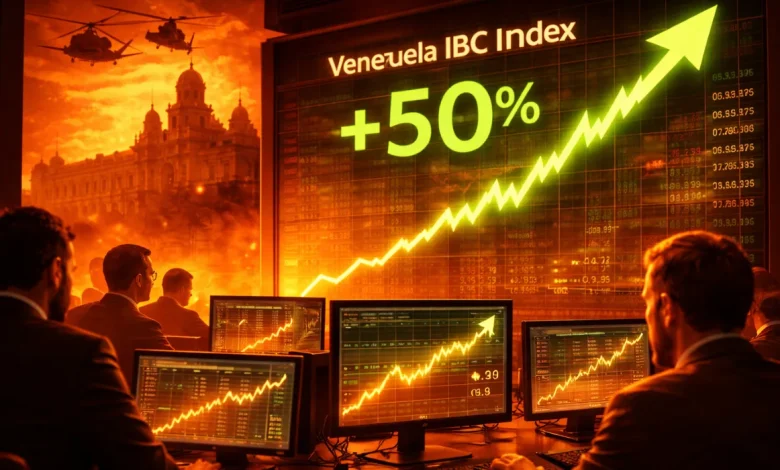
Venezuela’s IBC Index displayed a whole 50% increase in a single trading session on Tuesday. This massive jump was right after the arrest of President Nicolas Maduro by the US. This dramatic move from the US sharpened the investor focus on political change and oil flows.
What Drove The Rally In Venezuela’s Stock Market?
A number of factors, including political shock, investor optimism, expectations of sanctions relief and economic reforms, and the potential of the oil sector, have driven the rally of the Venezuelan stock market.
The primary reason for the surge in the stock market was the positive investor reaction to the US-led strike that removed the Venezuelan President, Nicolas Maduro, from power, putting an end to decades of authoritarian rule and economic stagnation. Markets reacted with optimism, hoping that the new political era would bring in better reforms, laws, and foreign investments.
The widespread anticipation that the new leadership could tone down the pending international sanctions and begin structural economic reforms. Analysts say that if Venezuela’s economy finally stabilizes after years of hyperinflation, currency collapse, and capital flight, the markets could experience a further gain.
Having some of the world’s largest oil reserves, yet low production due to mismanagement and long-standing sanctions, Venezuela has huge potential in the oil sector. With Maduro removed from power, there are speculations that the major international energy companies might return to the country, which in turn can help them to rebuild the dilapidated oil industry, and return to its days of glory. This narrative has particularly fueled the market.
The bullish sentiments are not confined to the equities alone, but have also extended their effect to the Venezuelan sovereign bonds and debt market as well. The bonds have also climbed sharply, based on the hopes of debt restructuring and improved credit prospects.
Reality Of Venezuelan Markets
Despite the tremendous gains in the market within a single day, analysts state that the surge must be viewed with caution.
The Caracas Stock Exchange is relatively small and has thin liquidity, almost illiquid. This means even a modest inflow of capital can shift the market sentiments and respond with exaggerated price moves.
The ongoing political tension, with the government forces and allied militias taking over the country, could result in undermining investor confidence if unrest escalates.
From decayed infrastructure to enormous debt burdens, the country still faces major economic challenges, and reviving the oil industry would require a huge investment. Even if a political transition takes place, the long-term recovery will require high levels of structural changes and sustained investments.
Venezuelan Bond Market Also Makes A Profit
Venezuela’s international sovereign bonds also gained more than two cents on Tuesday after the US strike, extending a rally from the previous session, driven by investor optimism. Bonds issued by Petroleos de Venezuela, a state oil company, also made a gain, with the 2031, 2 cents up to bid at 42.60 cents.
While the bonds have been experiencing a rally since the second term of Trump in January 2025, with many almost tripling in price, the gains are driven by the hopes for regime changes in Venezuela, making way for a gradual debt restructuring.
The Extraordinary Market History Of Venezuela
The relatively new stock market of Venezuela, which started trading in 2018, has always made it to the headlines with its extraordinary returns. In 2019, the stock market jumped to a 4,400% gain, followed by a 1380% in 2020.
Since then, the country’s Index has consistently delivered over 100% returns every year, with the lowest performance being 106% in 2024. This remarkable history of the Venezuelan Index, combined with the current political scenarios, puts the market in a positive light.
What Does It Look Like For The Market Going Forward?
Many global investors and market analysts view this rally as a bet on Venezuela’s economic future. This surge in the market gains is considered a transition from crisis to normalization. The dramatic stock index gain points towards speculation on diminishing political risk, potential sanction rollbacks, and the renewed access to global capital markets.
While analysts warn about the persisting volatility, the rally alone emphasizes how deeply political developments can reshape both investor expectations and asset prices, especially in an emerging market with a significant wealth resource.